
Research lipid catalog
Ionizable Lipid Products
Explore 848 lipid and RNA delivery products. Search the full catalog or browse by research category.
Search covers product name, catalog number, synonyms, available CAS numbers and categories. Spaces, hyphens and common punctuation are ignored. Duplicate legacy records are consolidated under one canonical product result.
3666 products · Showing 3561–3580 · 20 per page
DC Chemicals lipid expertise
Built for ionizable-lipid discovery and RNA delivery research
DC Chemicals supports formulation and delivery research with a broad, searchable portfolio of cationic and ionizable lipids. The current directory brings together 848 unique research-use products, with product specifications, pricing, chemical structures and literature-linked formulation data added as each record is verified.
Our experience spans complex lipid synthesis, purification, analytical release and process development. For custom molecules or larger-scale requirements, our team can discuss route development, technical specifications and scale-up options for the intended research workflow.
Learn about cationic and ionizable lipids →Proprietary innovation · Co-development · GMP
From proprietary lipid design to GMP-grade custom synthesis
DC Chemicals has independently developed ionizable-lipid structures supported by company-owned intellectual property, and selected proprietary lipid programs have advanced to GMP-stage development.
We welcome joint development with customers—from molecular design and lipid synthesis through route and process development. We can also support custom synthesis of GMP-grade ionizable lipids to agreed technical specifications and quality requirements.
Discuss a co-development project →Proprietary ionizable-lipid structuresCollaborative molecular designCustom lipid synthesisProcess development and scale-upGMP-grade project support
Product quick links
Explore ionizable lipids
Browse specifications, pricing and literature-linked product information.
Cat. No.Product NameField of ApplicationChemical Structure
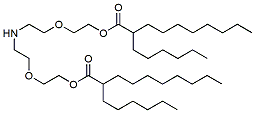
Bis(N-2-ethoxyethyl 2-hexyldecanoate)amine is a cationic lipid-like PEG compound containing a polar alcohol head group, four hydrophobic tails bound by esters, and a tertiary amine linker. The hydrophilic PEG linker increases the water solubility of the compound in aqueous media. Reagent grade, for research purpose. Please contact us for GMP-grade inquiries.
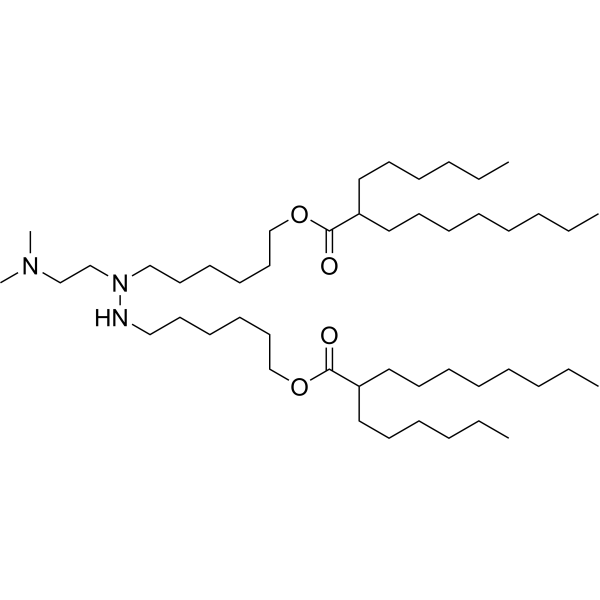
LNP Lipid-6 (Compound Lipid 5) is an ionizable lipid (amino lipid). LNP Lipid-6 can be used to prepare lipid nanoparticles (LNP).
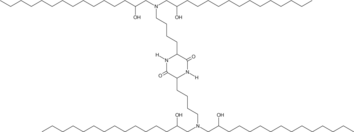
cKK-E15 is an ionizable cationic lipid and a derivative of cKK-E12 that has been used in the generation of lipid nanoparticles (LNPs).1 LNPs containing cKK-E15 and encapsulating Cre mRNA induce the expression of Cre in Kupffer cells, endothelial cells, and hepatocytes in Ai14 mice engineered to express the fluorescent protein tdTomato upon translation of Cre.
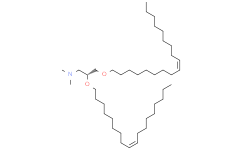
1,2(R)-Dioleyloxy-3-dimethylamino-propane ((R)-DODMA) is an ionizable cationic lipid and an isomer of DODMA
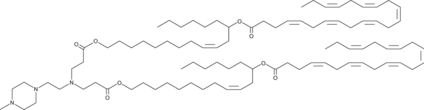
306Oi9-cis2 is an ionizable cationic lipid. WARNING This product is not for human or veterinary use.

Lipid AX4 is an ionizable cationic lipid (pKa = 6.89) that has been used in the formation of lipid nanoparticles (LNPs) for the delivery of mRNA in vivo.

RM 137-15 is an ionizable cationic lipid that has been used in the formation of lipid nanoparticles (LNPs) for the delivery of mRNA in vivo.
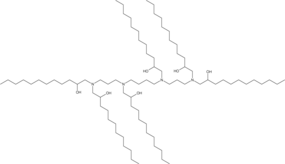
C12-SPM is a polyamine branched-chain lipidoid.
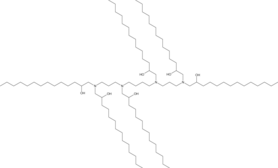
C14-SPM is a polyamine branched-chain lipidoid.1 It has been used in combination with other lipids in the formation of lipid nanoparticles (LNPs) for the delivery of siRNA.
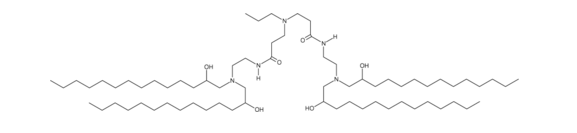
C3-K2-E14 is an ionizable cationic lipid (pKa = 5.5).1 It has been used in the generation of lipid nanoparticles (LNPs) for the delivery of mRNA or siRNA in vitro and in vivo.
(S)-C12-200 is an ionizable cationic lipid (pKa = 7.12) and an isomer of C12-200 (Item No. 36699).1 It has been used in the formation of lipid nanoparticles (LNPs) for the delivery of mRNA in vivo.
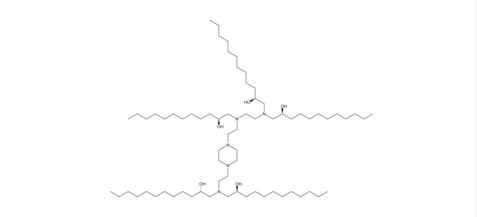
PPPDA-O16B is a disulfide bond-containing ionizable cationic lipid that has been used in the generation of lipid nanoparticles (LNPs) for plasmid delivery in vitro and in vivo.
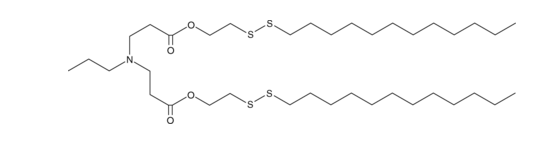
BAmP-O16B is an ionizable cationic amino lipid that has been used in the generation of lipid nanoparticles (LNPs).

Lipid OA2 is an ionizable cationic lipid that has been used in the generation of single-component lipid nanoparticles (LNPs) for the delivery of siRNA.
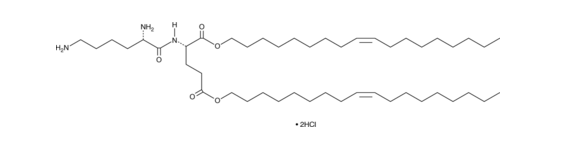
Ionizable lipid 4 is an ionizable cationic lipid (pKa = 6.1) and a hydrogen peroxide-induced rearrangement product of the cationic lipid CA-lipid 5.1 Charge-altering lipid nanoparticles (CALNPs) containing CA-lipid 5 and encapsulating siRNA against EGFP undergo hydrogen peroxide-induced removal of the phenylboronic acid groups from CA-lipid 5 in MCF-7 cells in vitro, generating ionizable lipid 4-containing LNPs with reduced positive charges at physiological pH, facilitating intracellular siRNA release and gene silencing. LNPs containing ionizable lipid 4 and encapsulating siRNA against PLK1 reduce tumor volume in an MCF-7 mouse xenograft model less effectively than CALNPs containing CA-lipid 5.
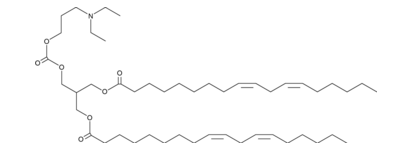
E12CA1A3 is an ionizable cationic lipid (pKa = 6.4) that has been used in the generation of lipid nanoparticles (LNPs) for the delivery of mRNA in vitro and in vivo.1 LNPs containing E12CA1A3 and encapsulating an mRNA reporter induce luciferase reporter expression in mouse bone marrow-derived dendritic cells (BMDCs) and mice. LNPs containing E12CA1A3 are cleared more rapidly from the liver than LNPs containing DLin-MC3-DMA (Item No. 34364) in mice.
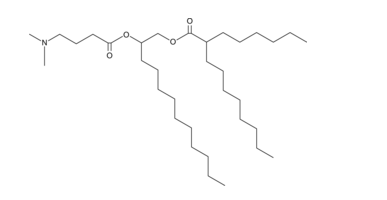
SIL lipid is an ionizable cationic lipid that has been used in the generation of lipid nanoparticles (LNPs) for the delivery of siRNA in vitro.1 LNPs containing SIL lipid and encapsulating siRNA targeting mRNA encoding the purinergic P2X7 receptor decrease protein levels of the purinergic P2X7 receptor, reduce migration in a wound healing assay, and induce apoptosis and necrosis in 4T1 breast cancer cells.
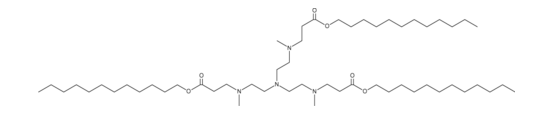
DDAB, also known as dodecyltrimethylammonium bromide, is a cationic surfactant with specific solubility, stability, and storage conditions. 1. Solubility: DDAB is soluble in water and organic solvents such as ethanol and chloroform. It forms clear solutions in water, but can become turbid at high concentrations or low temperatures. It has a higher solubility in organic solvents compared to CTAB. 2. Stability: DDAB is relatively stable under normal storage conditions. However, it can undergo degradation and lose its surfactant properties if exposed to extreme temperatures, humidity, or oxidizing agents for extended periods. It is important to store DDAB in a cool, dry place away from direct sunlight. 3. Storage conditions: DDAB should be stored in a tightly sealed container to prevent moisture absorption and contamination. It is recommended to store it at room temperature (around 20-25°C) or in a refrigerator (2-8°C) to maintain its stability and extend its shelf life.
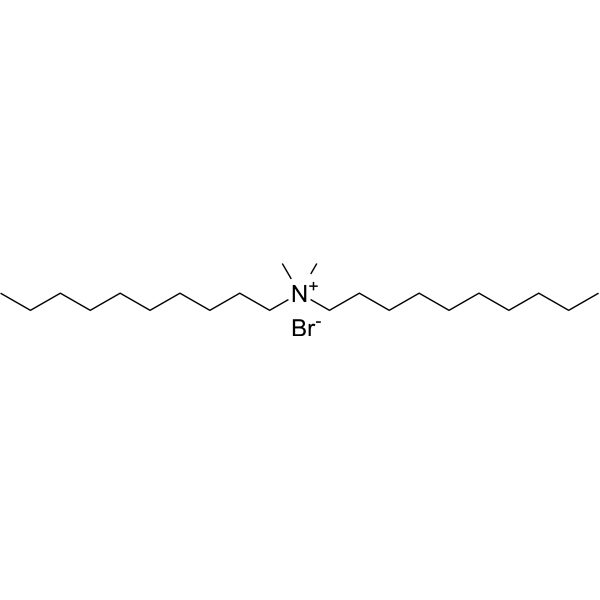
Al-28 is a multi-ionizable aminolipid featuring a central amine and three identical disulfide-linked saturated side chains. The hydrophobic side chains are linked to the central structure by ester as well as disulfide bonds. Disulfide bonds are readily cleaved in the reducing environment of the cell cytoplasm. Ionizable lipids are typically used in the design of nucleic acid lipid nanoparticles, as their pH-dependent positive charge stabilizes the anionic nucleic acids they encapsulate.

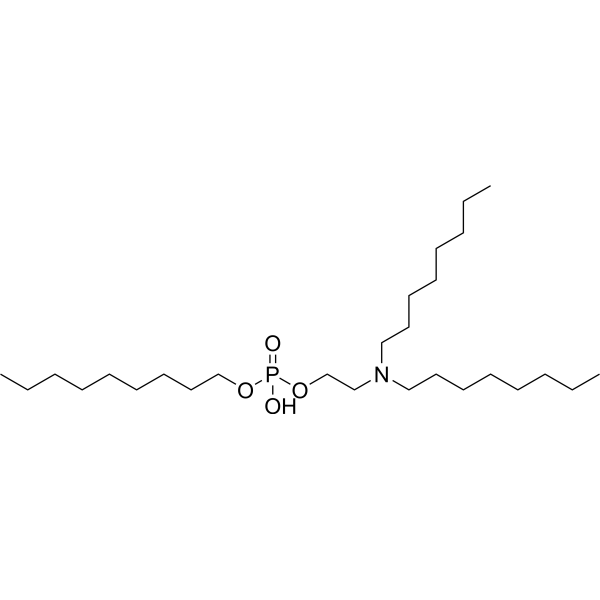
9A1P9 is a multi-tail ionizable cationic phospholipid. 9A1P9 induces membrane destabilization. 9A1P9 can be used for CRISPR-Cas9 gene editing in mice.
No products match this search.
Page 179 of 184 · Browse all 3666 products