Biological Activity
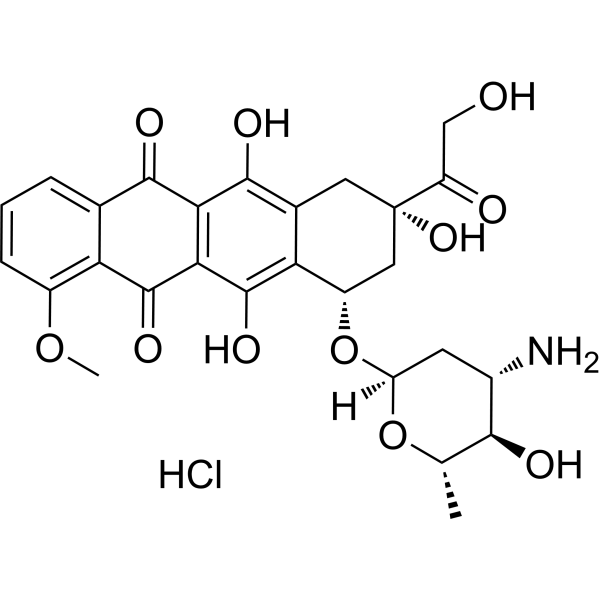
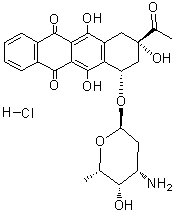
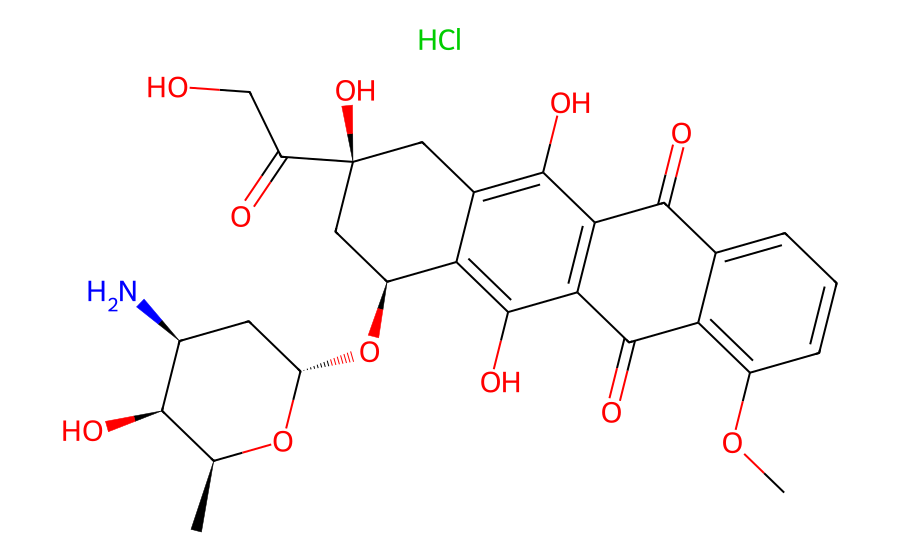
Doxorubicin hydrochloride is a cytotoxic anthracycline antibiotic for the treatment of multiple cancers. The possible mechanisms by which doxorubicin acts in the cancer cell are intercalation into DNA and disruption of topoisomerase-II-mediated DNA repair.
In Vitro
Combination of Doxorubicin and Simvastatin in the highest tested concentrations (2 μM and 10 μM, respectively) kills 97% of the Hela cells[2].
In Vivo
Mice bearing PC3 xenografts are injected with 2, 4 or 8 mg/kg Doxorubicin and tumor volume is measured over time. A dose of 2 mg/kg does not affect tumor growth while higher dosages delay tumor growth initially (p<0.05 at days 18 and 22), 4 mg/kg or 8 mg/kg Doxorubicin significantly reduces levels of c-FLIP in PC3 xenografts[3]. A single intraperitoneal injection 10 mg/kg (Doxorubicin 1) is administered in rats, 10 daily intraperitoneal injections of 1 mg/kg (Doxorubicin 2), or in 5 weekly intraperitoneal injections of 2 mg/kg (Doxorubicin 3). An 80% mortality rate is observed at day 28 in Doxorubicin 1, whereas Doxorubicin 2 and Doxorubicin 3 reached 80% mortality at days 107 and 98, respectively. Fractional shortening decreased by 30% at week 2 in Doxorubicin DOX1, 55% at week 13 in Doxorubicin 2, and 42% at week 13 in Doxorubicin 3[4].
References & source
Published experimental findings depend on the model and assay conditions. They do not guarantee equivalent performance in every application. For laboratory research use only.