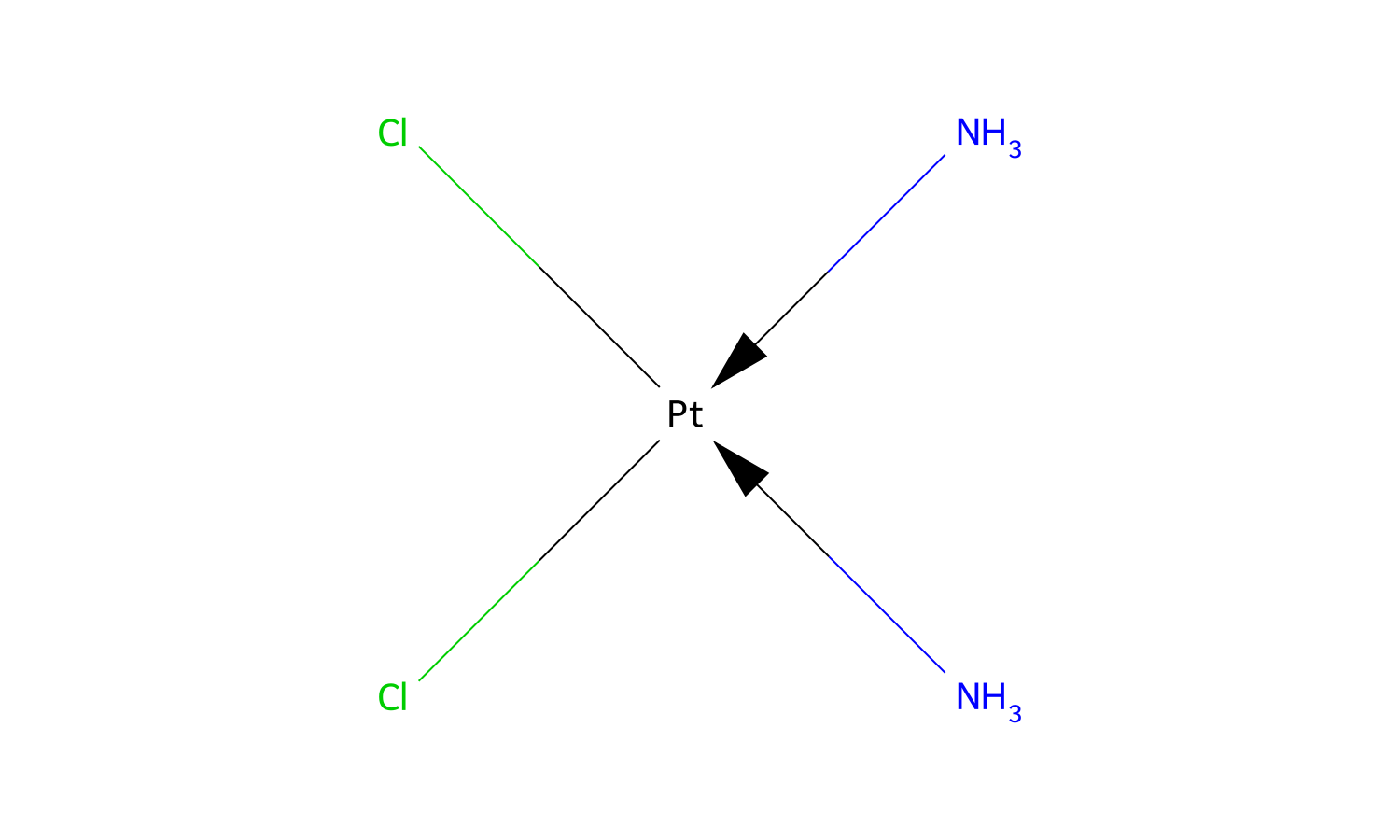
Cisplatin (cis-diamminedichloroplatinum(II)) chemical structure
Chemical structureResearch use onlyView full-size structure
CAT. NO. DC2099Featured

Cisplatin (cis-diamminedichloroplatinum(II))

Pack Sizes & Prices

TotalUS$250
We match the best price and quality on market.
Product overview

Description & Application

Cisplatin is a antineoplastic chemotherapy drug which works by cross-linking with DNA and causing DNA damage in cancer cells.

ParameterValue
Chemical NameCisplatin (cis-diamminedichloroplatinum(II))
CAS No.15663-27-1
Synonymscis-Diaminedichloroplatinum
FormulaH6Cl2N2Pt
M.Wt300.05
SMILES[NH3]->[Pt@SP1](<-[NH3])([Cl])[Cl]
Purity>98%
Storage2 years -20°C Powder, 2 weeks 4°C in DMSO, 6 months -80°C in DMSO
Structure and molecular-weight basisThe extended SMILES uses square-planar stereochemistry and dative bonds to specify the cis-platinum geometry.

Chemical identity references

Biological Activity

Cisplatin is a antineoplastic chemotherapy drug which works by cross-linking with DNA and causing DNA damage in cancer cells.

In Vitro

Cisplatin (CDDP) causes apoptosis of HeLa cells in a dose-dependent manner, with a concentration of 30 μM Cisplatin resulting in death of greater than 90% of the cell population by 24 h of treatment. The kinetics of Cisplatin-induced apoptosis are examined using a 30 μM concentration. Cisplatin Activates the MEK/ERK Signaling Pathway, 20 and 30 μM Cisplatin, both of which results in significant apoptosis, leads to strong activation of ERK[1]. Cisplatin (50 μM) produces time-dependent apoptosis in renal proximal tubular cell (RPTCs), causing cell shrinkage, a 50-fold increase in caspase 3 activity, a 4-fold increase in phosphatidylserine externalization, and 5- and 15-fold increases in chromatin condensation and DNA hypoploidy, respectively[2].

In Vivo

In melanoma-bearing mice, Cisplatin (4 mg/kg B.W.) reduces the size and weight of the solid tumors, and HemoHIM supplementation with Cisplatin enhances the decrease of both the tumor size and weight[3]. Cisplatin administration results in significant increases in the kidney weight as a percentage of the total body weight, urine volume, serum creatinine, and blood urea nitrogenby about 132, 315, 797, and 556% in comparison with the control rats, respectively[4].

References & source

DC Chemicals original product information

Published experimental findings depend on the model and assay conditions. They do not guarantee equivalent performance in every application. For laboratory research use only.
Product documentation

Refer to the certificate supplied with your lot for batch-specific release results.

Handling guide

2 years -20°C Powder, 2 weeks 4°C in DMSO, 6 months -80°C in DMSO

Solution calculator

Related research products

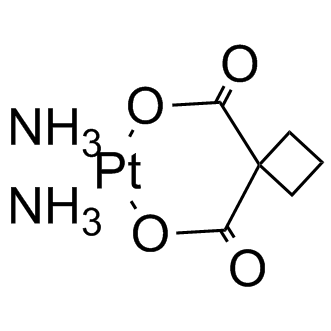
Carboplatin chemical structureDC9095

Carboplatin

Carboplatin (NSC 241240) is a DNA synthesis inhibitor which binds to DNA, inhibits replication and transcription and induces cell death. Carboplatin (NSC 241240) is a derivative of cisplatin and a potent anti-cancer…

View activity & prices
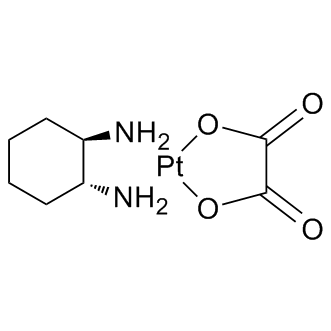
Oxaliplatin chemical structureDC5885

Oxaliplatin

Oxaliplatin is a DNA synthesis inhibitor. It causes DNA crosslinking damage, prevents DNA replication and transcription and causes cell death.

View activity & prices
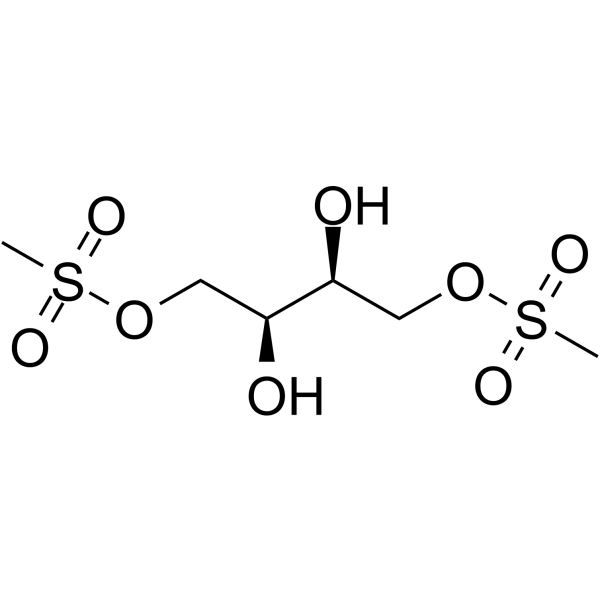
Treosulfan chemical structureDC42454

Treosulfan

Treosulfan (NSC 39069, Treosulphan) is an alkylating agent used for conventional and high-dose chemotherapy regimens. Treosulfan is potently cytotoxic against pancreatic cancer cell lines.

View activity & prices
Cyclophosphamide chemical structureDC9013

Cyclophosphamide

Cyclophosphamide is a synthetic alkylating agent chemically related to the nitrogen mustards with antineoplastic and immunosuppressive activities.

View activity & prices

Cart

Request quotation