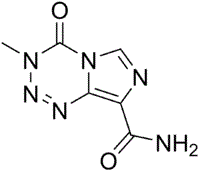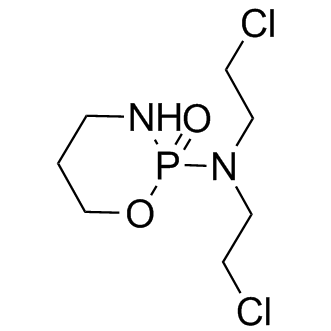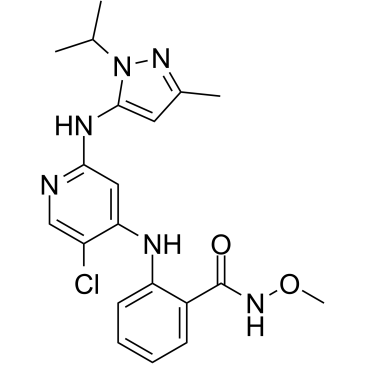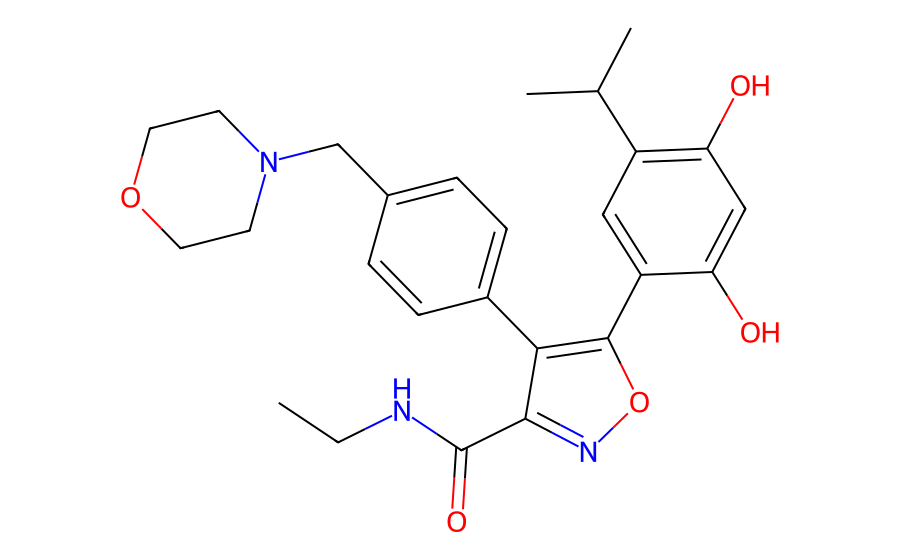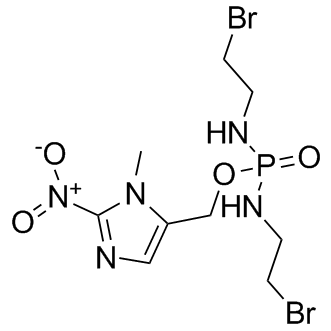
Evofosfamide(TH-302) chemical structure
Chemical structureResearch use only
CAT. NO. DC7689Featured

Evofosfamide(TH-302)

Pack Sizes & Prices

TotalUS$550
We match the best price and quality on market.
Product overview

Description & Application

Evofosfamide (TH-302) is a hypoxia-activated prodrug with IC50 of 10 μM and 1000 μM in hypoxia (N2) and normoxia (21% O2), respectively.

ParameterValue
Chemical NameTH 302; TH302
CAS No.918633-87-1
SynonymsTH 302; TH302
FormulaC9H16Br2N5O4P
M.Wt449.04
SMILESCN1C(=CN=C1[N+](=O)[O-])COP(=O)(NCCBr)NCCBr
Purity>98%
Storage2 years -20°C Powder, 2 weeks 4°C in DMSO, 6 months -80°C in DMSO

Biological Activity

Evofosfamide (TH-302) is a hypoxia-activated prodrug with IC50 of 10 μM and 1000 μM in hypoxia (N2) and normoxia (21% O2), respectively.

In Vitro

Evofosfamide (TH-302) induces γH2AX and apoptosis. Evofosfamide displays hypoxia-selective and concentration-dependent cytotoxic activity that is comparable in both p53-proficient and -deficient cells. Treatment with Evofosfamide (TH-302) alone causes an accumulation of G2/M cells. Inhibition of Chk1 by PF47736 in cells treated with Evofosfamide reduces Evofosfamide (TH-302)-mediated G2/M arrest under both normoxia and hypoxia[1].

In Vivo

Evofosfamide (TH-302) is a hypoxia-activated prodrug known to activate selectively under the hypoxic conditions commonly found in solid tumors. The mean values of normalized Ktrans decrease 69.2% for Evofosfamide (TH-302)-treated mice in Hs766t tumors, decrease 46.1% for Mia PaCa-2 tumors and increase 4.9% in SU.86.86 tumors. Both changes for Hs766t and Mia PaCa-2 treatment groups are statistically significant (P<0.01) when compare to their own control group[2]. A significant reduction in the hypoxic fraction (HF) to 2.1%±4.7% is seen after 95% oxygen breathing (P<0.001), whereas 7% oxygen breathing significantly increase the HF to 29.5%±14.7% (P=0.029). Exposing rhabdomyosarcoma-bearing rats to increasing oxygen conditions abolish the effect of TH-302 and reduce the T4×SV from 20.4±3.5 to 15.3±2.5 days (P=0.007), whereas control animals have an increased T4×SV. Upon combination with radiotherapy, the T4×SV of TH-302-treated tumors decrease from 30.8±5.9 (Evofosfamide (TH-302)+radiotherapy) to 25.7±2.9 days (Evofosfamide (TH-302)+radiotherapy+95% O2)[3].

References & source

DC Chemicals original product information

Published experimental findings depend on the model and assay conditions. They do not guarantee equivalent performance in every application. For laboratory research use only.
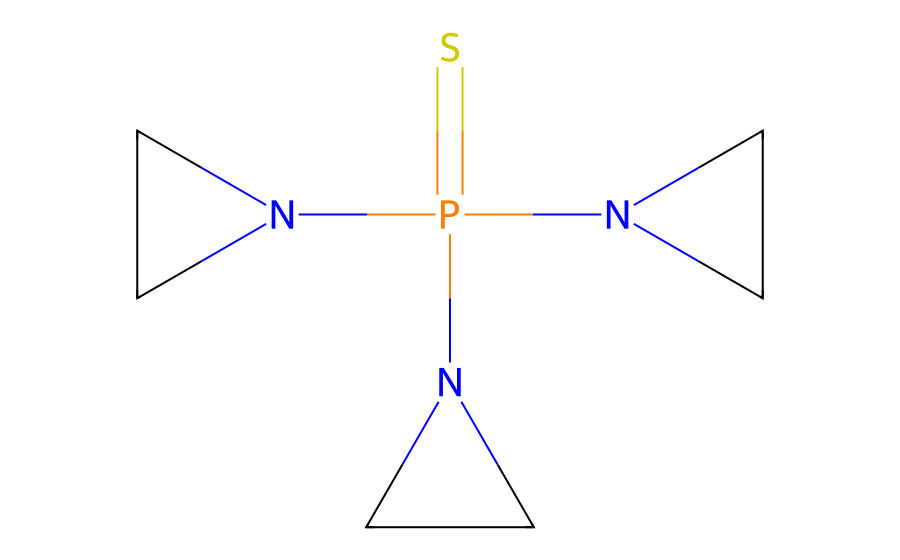
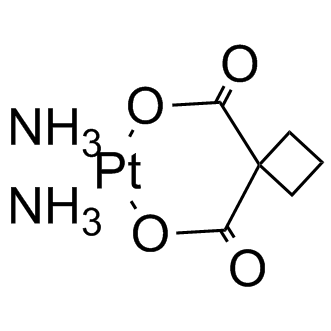
Product documentation

Refer to the certificate supplied with your lot for batch-specific release results.

Handling guide

2 years -20°C Powder, 2 weeks 4°C in DMSO, 6 months -80°C in DMSO

Solution calculator

Related research products

Carboplatin chemical structureDC9095

Carboplatin

Carboplatin (NSC 241240) is a DNA synthesis inhibitor which binds to DNA, inhibits replication and transcription and induces cell death. Carboplatin (NSC 241240) is a derivative of cisplatin and a potent anti-cancer…

View activity & prices
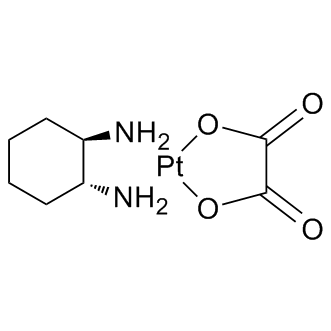
Oxaliplatin chemical structureDC5885

Oxaliplatin

Oxaliplatin is a DNA synthesis inhibitor. It causes DNA crosslinking damage, prevents DNA replication and transcription and causes cell death.

View activity & prices
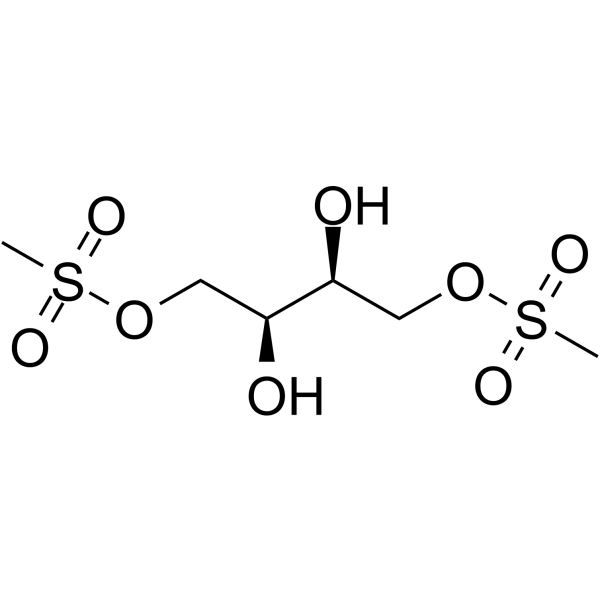
Treosulfan chemical structureDC42454

Treosulfan

Treosulfan (NSC 39069, Treosulphan) is an alkylating agent used for conventional and high-dose chemotherapy regimens. Treosulfan is potently cytotoxic against pancreatic cancer cell lines.

View activity & prices
Cyclophosphamide chemical structureDC9013

Cyclophosphamide

Cyclophosphamide is a synthetic alkylating agent chemically related to the nitrogen mustards with antineoplastic and immunosuppressive activities.

View activity & prices
GSK2256098 chemical structureDC8331

GSK2256098

GSK2256098 is a selective FAK kinase inhibitor, which inhibits growth and survival of pancreatic ductal adenocarcinoma cells.

View activity & prices

Cart

Request quotation