Biological Activity
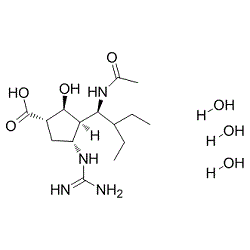
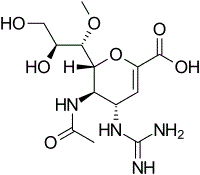
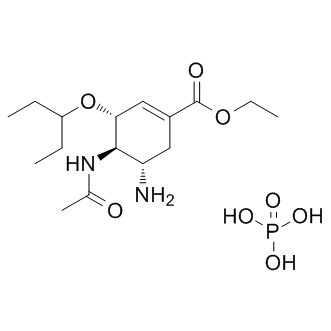
Oseltamivir phosphate (GS 4104) is a neuraminidase inhibitor recommended for the treatment and prophylaxis of influenza A and B.
In Vitro
Oseltamivir phosphate (OP) is a prodrug that is readily absorbed from the gastrointestinal tract after oral administration and is extensively converted predominantly by hepatic esterases to Oseltamivir carboxylate (OC)[1]. Oseltamivir phosphate is a widely used anti-influenza sialidase inhibitor. The metabolic activity of CMA07 and CMT-U27 cell lines is significantly decreased with 305 μM Oseltamivir phosphate treatment (p=0.005 and p<0.0001 respectively) using One Way ANOVA testes. In contrast, no statistically significant alterations are observed with 0.305 μM (p=0.9781), 3.05 μM (p=0.7436) and 30.5 μM (p=0.9623) of Oseltamivir phosphate treatments when compare with control cells. Finally, to assess the effect of Oseltamivir phosphate on CMA07 and CMT-U27 programmed cell death, and given that 305 μM Oseltamivir phosphate treatment impaired cell metabolic activity, a programmed cell death measurement is performed with the TUNEL assay. Twenty-four hour Oseltamivir phosphate treatment, specifically at 305 μM, significantly increases CMA07 (p=0.001) and CMT-U27 (p=0.0002) DNA fragmentation, suggesting promotion of programmed cell death, when compare with lower Oseltamivir concentrations, or with PBS[2].
In Vivo
Oseltamivir phosphate-treated mice present significantly more inflammatory infiltrate in primary tumors (p=0.01). Ki-67 antigen and caspase-3 protein are used to assess CMT-U27 xenograft tumor cell proliferation and apoptosis respectively. Virtually no differences are found in Ki-67 and caspase 3 (p=0.2) expression between Oseltamivir-treated and non-treated mice[2].
References & source
Published experimental findings depend on the model and assay conditions. They do not guarantee equivalent performance in every application. For laboratory research use only.