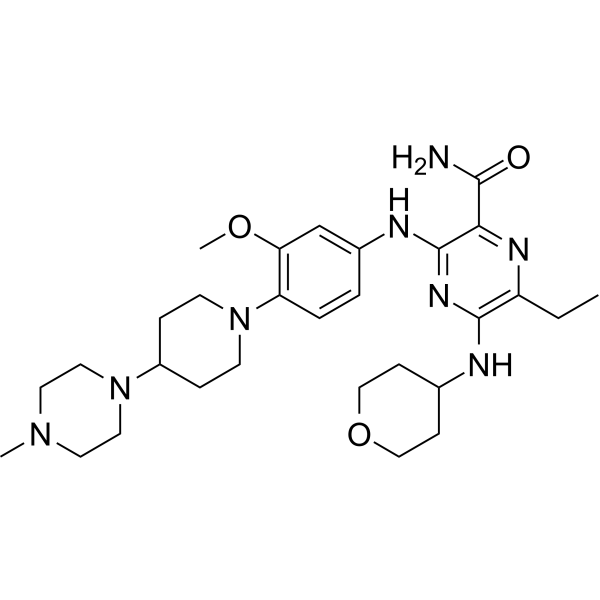
Gilteritinib(ASP2215) chemical structure
Chemical structureResearch use only
CAT. NO. DC8164Featured

Gilteritinib(ASP2215)

Pack Sizes & Prices

TotalUS$450
We match the best price and quality on market.
Product overview

Description & Application

Gilteritinib is a potent FLT3/AXL inhibitor with IC50s of 0.29 nM/0.73 nM, respectively.

ParameterValue
Chemical NameGilteritinib
CAS No.1254053-43-4
SynonymsGilteritinib;6-Ethyl-3-[[3-methoxy-4-[4-(4-methyl-1-piperazinyl)-1-piperidinyl]phenyl]amino]-5-[(tetrahydro-2H-pyran-4-yl)amino]-2-pyrazinecarboxamide;ASP 2215;ASP2215;Xospata;6-Ethyl-3-((3-methoxy-4-(4-(4-methylpiperazin-1-yl)piperidin-1-yl)phenyl)-amino)-5-((tetrahydro-2H-pyran-4-yl)amino)pyrazine-2-carboxamide;66D92MGC8M;2-Pyrazinecarboxamide, 6-ethyl-3-((3-methoxy-4-(4-(4-methyl-1-piperazinyl)-1-piperidinyl)phenyl)amino)-5-((tetrahydro-2H-pyran-4-yl)amino)-;6-ethyl-3-[[3-methoxy-4-[4-(4-methylpiperazin-1-yl)piperidin-1-yl]phenyl]amino]-5-(oxan-4-ylamino)pyrazine-2-carboxamide;2-Pyrazinecar
FormulaC29H44N8O3
M.Wt552.71
SMILESO(C([H])([H])[H])C1C([H])=C(C([H])=C([H])C=1N1C([H])([H])C([H])([H])C([H])(C([H])([H])C1([H])[H])N1C([H])([H])C([H])([H])N(C([H])([H])[H])C([H])([H])C1([H])[H])N([H])C1C(C(N([H])[H])=O)=NC(C([H])([H])C([H])([H])[H])=C(N=1)N([H])C1([H])C([H])([H])C([H])([H
Purity>98%
Storage2 years -20°C Powder, 2 weeks 4°C in DMSO, 6 months -80°C in DMSO

Biological Activity

Gilteritinib is a potent FLT3/AXL inhibitor with IC50s of 0.29 nM/0.73 nM, respectively.

In Vitro

Of the 78 tyrosine kinases tested, Gilteritinib (ASP2215) inhibits FLT3, leukocyte tyrosine kinase (LTK), anaplastic lymphoma kinase (ALK), and AXL kinases by over 50% at 1 nM with an IC50 value of 0.29 nM for FLT3, approximately 800-fold more potent than for c-KIT[1]. Gilteritinib inhibits the activity of eight of the 78 tested kinases by over 50% at concentrations of either 1 nM (FLT3, LTK, ALK, and AXL) or 5 nM (TRKA, ROS, RET, and MER). The IC50s are 0.29 nM for FLT3 and 0.73 nM for AXL. Gilteritinib inhibits FLT3 at an IC50 that is approximately 800-fold more potent than the concentration required to inhibit c-KIT (230 nM). The antiproliferative activity of Gilteritinib is evaluated against MV4-11 and MOLM-13 cells, which endogenously express FLT3-ITD. After 5 days of treatment, Gilteritinib inhibits the growth of MV4-11 and MOLM-13 cells with mean IC50s of 0.92 nM (95% CI: 0.23-3.6 nM) and 2.9 nM (95% CI: 1.4-5.8 nM), respectively. Growth suppression of MV4-11 cells is accompanied by inhibition of FLT3 phosphorylation. Relative to vehicle control cells, phosphorylated FLT3 levels are 57%, 8%, and 1% after 2 h of treatment with 0.1 nM, 1 nM, and 10 nM Gilteritinib, respectively. In addition, doses as low as 0.1 nM or 1 nM result in the suppression of phosphorylated ERK, STAT5, and AKT, all of which are downstream targets of FLT3 activation. To investigate the effects of Gilteritinib on AXL inhibition, MV4-11 cells that expressed exogenous AXL are treated with Gilteritinib. At concentrations of 1 nM, 10 nM, and 100 nM for 4 h, Gilteritinib treatment decreases phosphorylated AXL levels by 38%, 29%, and 22%, respectively[2].

In Vivo

In MV4-11 xenografted-mice, the concentration of Gilteritinib (ASP2215) in tumors is more than 20-fold higher than that in plasma with oral administration of Gilteritinib at 10 mg/kg for 4 days. Treatment of Gilteritinib for 28 days results in dose-dependent inhibition of MV4-11 tumor growth and induces complete tumor regression at more than 6 mg/kg. Further, Gilteritinib decreases tumor burden in bone marrow and prolonged the survival of mice intravenously transplanted with MV4-11 cells[1].

References & source

DC Chemicals original product information

Published experimental findings depend on the model and assay conditions. They do not guarantee equivalent performance in every application. For laboratory research use only.
Product documentation

Refer to the certificate supplied with your lot for batch-specific release results.

Handling guide

2 years -20°C Powder, 2 weeks 4°C in DMSO, 6 months -80°C in DMSO

Solution calculator

Related research products

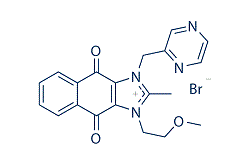
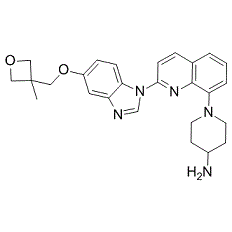
CP-868596 (Crenolanib) chemical structureDC5159

CP-868596 (Crenolanib)

Crenolanib is a potent and selective inhibitor of wild-type and mutant isoforms of the class III receptor tyrosine kinases FLT3 and PDGFRα/β with Kds of 2.1 nM/3.2 nM, 0.74 nM, respectively.

View activity & prices
KW-2449 chemical structureDC8522

KW-2449

KW-2449 is a multi-targeted kinase inhibitor of FLT3, ABL, ABLT315I and Aurora kinase with IC50s of 6.6, 14, 4 and 48 nM, respectively.

View activity & prices
K03861 chemical structureDC9286

K03861

K03861 is a type II CDK2 inhibitor with Kd of 8.2 nM.K03861 inhibits CDK2 activity by competing with binding of activating cyclins.

View activity & prices
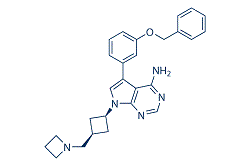
G-749 chemical structureDC7792

G-749

G-749 is a novel FLT3 inhibitor that showed potent and sustained inhibition of the FLT3 wild type and mutants with IC50s of 0.4/0.6/3.5/7.5 nM for Wt Flt3/D835Y/MV4-11/Molm-14 respectively.G-749 showed potent and…

View activity & prices
AZD1152 chemical structureDC7060

AZD1152

AZD1152 is a pro-drug of Barasertib-hQPA, which is a highly selective Aurora B inhibitor with IC50 of 0.37 nM in a cell-free assay.

View activity & prices
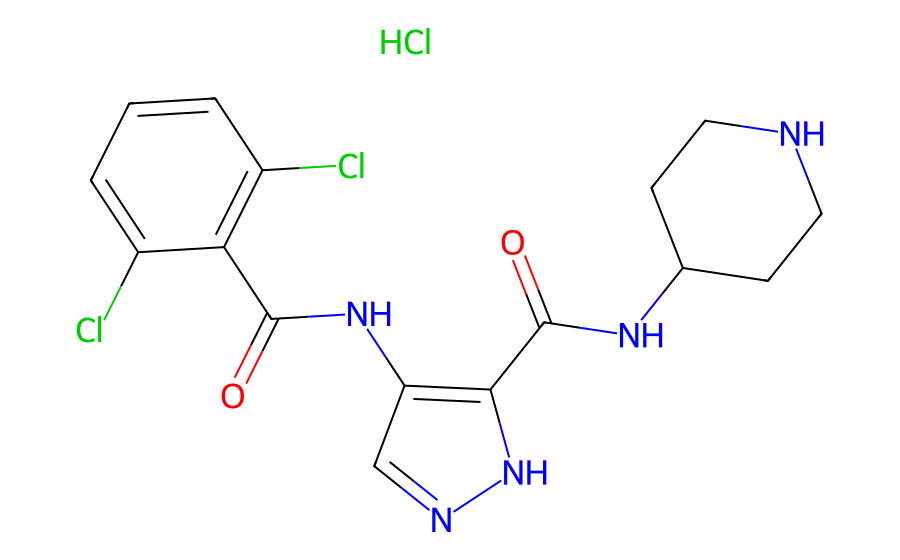
AT7519 HCL chemical structureDC1025

AT7519 HCL

AT7519 Hydrochloride is a potent inhibitor of CDKs, with IC50s of 210, 47, 100, 13, 170, and <10 nM for CDK1, CDK2, CDK4 to CDK6, and CDK9, respectively.

View activity & prices
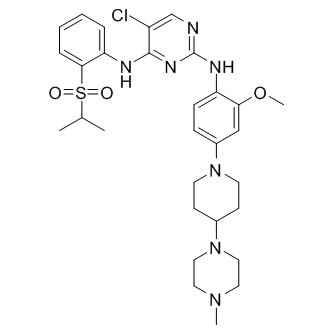
NVP-TAE684 chemical structureDC7303

NVP-TAE684

NVP-TAE 684 is a highly potent and selective ALK inhibitor, which blocks the growth of ALCL-derived and ALK-dependent cell lines with IC50 values between 2 and 10 nM.

View activity & prices

Cart

Request quotation