Biological Activity
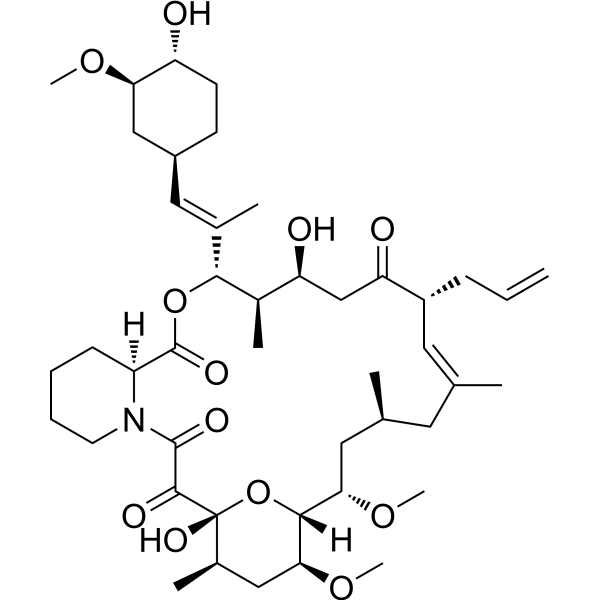
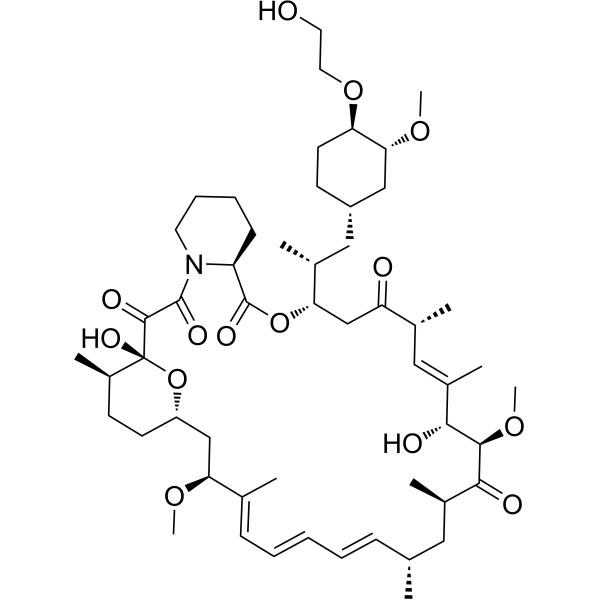
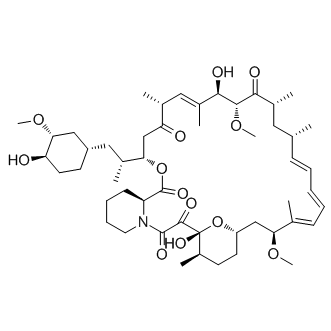
Rapamycin (Sirolimus) is a potent and specific mTOR inhibitor with an IC50 of 0.1 nM.
In Vitro
Rapamycin inhibits endogenous mTOR activity in HEK293 cells with IC50 of 0.1 nM, more potently than iRap and AP21967 with IC50 of 5 nM and 10 nM, respectively[1]. Rapamycin exerts its antitumor effect on malignant glioma cells by inducing autophagy and suggest that in malignant glioma cells a disruption of the PI3K/Akt signaling pathway could greatly enhance the effectiveness of mTOR inhibitors. Rapamycin inhibits cell viability in all three cell lines in a dose-dependent manner, but their sensitivities varied. The IC50 levels of T98G, U87-MG, and U373-MG cells are 2 nM, 1 μM, and >25 μM, respectively[3].
In Vivo
Treatment with Rapamycin (i.p, 1.5 mg/kg) almost completely prevents the hypertrophic increases in plantaris muscle weight and fibre size at 7 and 14 days[4]. WT or LS/+ mice are treated daily Rapamycin (2 mg/kg body weight i.p.) for 4 weeks, follows by an additional 4 weeks of weekly injections of the same dose. There is significant reversal of the abnormal fetal gene expression profile of hearts from Rapamycin-treated LS/+ mice[5].
References & source
Published experimental findings depend on the model and assay conditions. They do not guarantee equivalent performance in every application. For laboratory research use only.