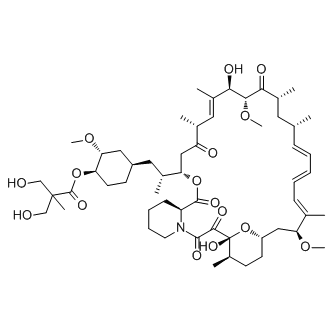
Temsirolimus chemical structure
Chemical structureResearch use only
CAT. NO. DCAPI1488Featured

Temsirolimus

Pack Sizes & Prices

TotalUS$350
We match the best price and quality on market.
Product overview

Description & Application

Temsirolimus is an inhibitor of mTOR with an IC50 of 1.76 μM.

ParameterValue
Chemical NameCCI-779, NSC 683864
CAS No.162635-04-3
SynonymsCCI-779, NSC 683864
FormulaC56H87NO16
M.Wt1030.29
SMILESC[C@@H]1CC[C@H]2C[C@@H](/C(=C/C=C/C=C/[C@H](C[C@H](C(=O)[C@@H]([C@@H](/C(=C/[C@H](C(=O)C[C@H](OC(=O)[C@@H]3CCCCN3C(=O)C(=O)[C@@]1(O2)O)[C@H](C)C[C@@H]4CC[C@H]([C@@H](C4)OC)OC(=O)C(C)(CO)CO)C)/C)O)OC)C)C)/C)OC
Purity>99%
Storage2 years -20°C Powder, 2 weeks 4°C in DMSO, 6 months -80°C in DMSO

Biological Activity

Temsirolimus is an inhibitor of mTOR with an IC50 of 1.76 μM.

In Vitro

Temsirolimus potently inhibits mTOR kinase activity with IC50 of 1.76 μM, similar to that of rapamycin with IC50 of 1.74 μM in the absence of FKBP12. Temsirolimus (10 nM to <5 μM) displays a modest and selective antiproliferative activity via FKBP12-dependent mechanism, but can completely inhibit the proliferation of a broad panel of tumor cells at low micromolar concentrations (5-15 μM), involving FKBP12-independent suppression of mTOR signaling. Temsirolimus treatment at micromolar but not nanomolar concentrations (20 μM) causes a marked decline in global protein synthesis and disassembly of polyribosomes, accompanied by rapid increase in the phosphorylation of translation elongation factor eEF2 and the translation initiation factor eIF2A[1]. Temsirolimus inhibits the phosphorylation of ribosomal protein S6, more potently in PTEN-positive DU145 cells than in PTEN-negative PC-3 cells, and inhibits cell growth and clonogenic survival of both cells in a concentration-dependent manner[2]. Temsirolimus (100 ng/mL) potently inhibits proliferation and induces apoptosis in primary human lymphoblastic leukemia (ALL) cells[3].

In Vivo

CCI-779 (20 mg/kg, i.p.) inhibits the growth of both prostate cancer xenografts, and the rowth of PC-3 tumors is inhibited in a dose-dependent manner and growth inhibition is greater than for DU145 tumors[2]. In the NOD/SCID xenograft models with human ALL, Temsirolimus treatment at 10 mg/kg/day produces a decrease in peripheral blood blasts and in splenomegaly[3]. Administration of Temsirolimus (20 mg/kg, i.p. 5 days/week) significantly delays the growth of DAOY xenografts by 160% after 1 week and 240% after 2 weeks, compared with controls. Single high-dose of Temsirolimus (100 mg/kg, i.p) treatment induces 37% regression of tumor volume within 1 week. Temsirolimus treatment for 2 weeks also delays the growth of rapamycin-resistant U251 xenografts by 148%[4]. Inhibition of mTOR by Temsirolimus improves performance on four different behavioral tasks and decreases aggregate formation in a mouse model of Huntington disease[5]. Administration of Temsirolimus induces significant dose-dependent, antitumor responses against subcutaneous growth of 8226, OPM-2, and U266 xenografts with ED50 of 20 mg/kg and 2 mg/kg for 8226 and OPM-2, respectively, which are associated with inhibited proliferation and angiogenesis, induction of apoptosis, and reduction in tumor cell size[6].

References & source

DC Chemicals original product information

Published experimental findings depend on the model and assay conditions. They do not guarantee equivalent performance in every application. For laboratory research use only.
Product documentation

Refer to the certificate supplied with your lot for batch-specific release results.

Handling guide

2 years -20°C Powder, 2 weeks 4°C in DMSO, 6 months -80°C in DMSO

Solution calculator

Related research products

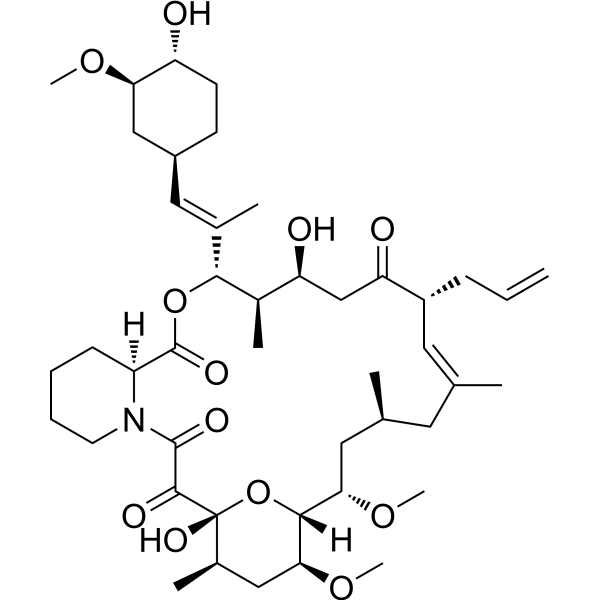
FK-506 (Tacrolimus) chemical structureDC1001

FK-506 (Tacrolimus)

Tacrolimus is a macrocyclic lactone with potent immunosuppressive properties. Tacrolimus binds to FK506 binding protein (FKBP) to form a complex and inhibits calcineurin phosphatase.

View activity & prices
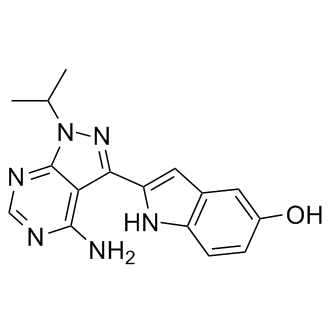
Torkinib (PP242) chemical structureDC7482

Torkinib (PP242)

Torkinib (PP 242) is a selective and ATP-competitive mTOR inhibitor with an IC50 of 8 nM. PP242 inhibits both mTORC1 and mTORC2 with IC50s of 30 nM and 58 nM, respectively.

View activity & prices
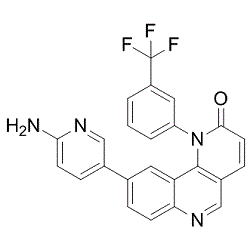
Torin2 chemical structureDC3117

Torin2

Torin 2 is an mTOR inhibitor with EC50 of 0.25 nM for inhibiting cellular mTOR activity, and exhibits 800-fold selectivity over PI3K (EC50: 200 nM). Torin 2 also inhibits DNA-PK with an IC50 of 0.5 nM in the cell free…

View activity & prices
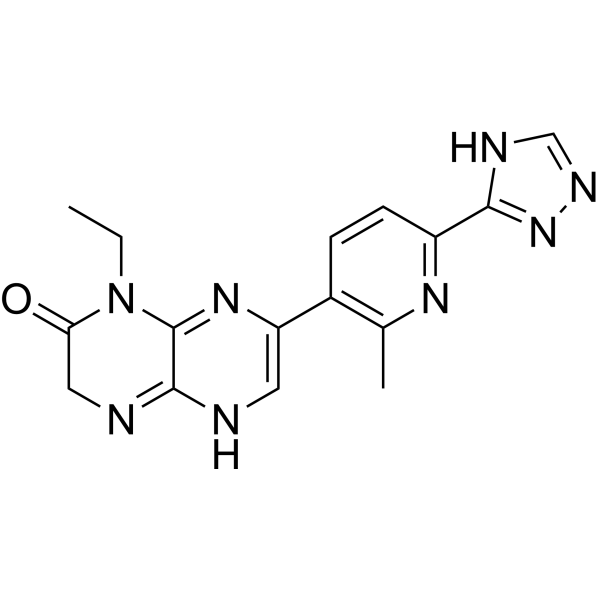
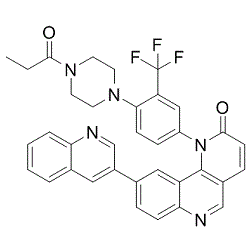
CC-115 chemical structureDC8377

CC-115

CC-115 is a potent and dual DNA-PK and mTOR kinase inhibitor with IC50s of 13 nM and 21 nM, respectively. CC-115 blocks both mTORC1 and mTORC2 signaling.

View activity & prices
Torin1 chemical structureDC3118

Torin1

Torin 1 is a potent inhibitor of mTOR with an IC50 of 3 nM. Torin 1 inhibits both mTORC1/2 complexes with IC50 values between 2 and 10 nM.

View activity & prices
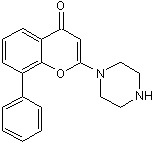
LY-303511(Nv-128) chemical structureDC7210

LY-303511(Nv-128)

LY303511 is a structural analogue of LY294002. LY303511 does not inhibit PI3K. LY303511 enhances TRAIL sensitivity of SHEP-1 neuroblastoma cells. LY303511 reversibly blocks K+ currents (IC50=64.6±9.1 μM) in MIN6…

View activity & prices
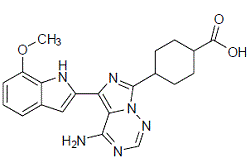
OSI-027 chemical structureDC1006

OSI-027

OSI-027 is an ATP-competitive mTOR kinase activity inhibitor with an IC50 of 4 nM. OSI-027 targets both mTORC1 and mTORC2 with IC50s of 22 nM and 65 nM, respectively.

View activity & prices
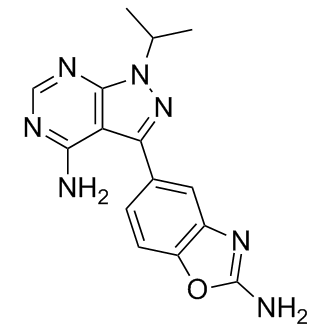
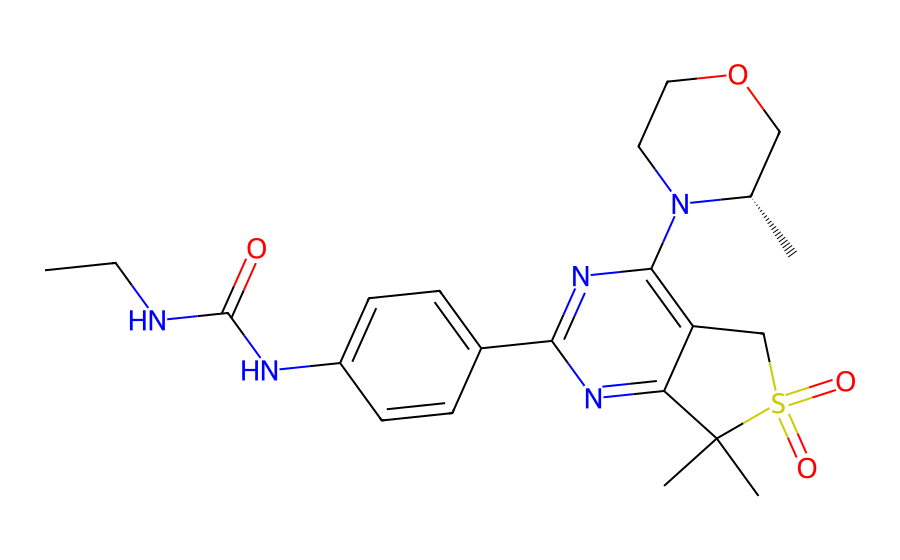
CZ415 chemical structureDC10125

CZ415

CZ415 is a potent and highly selective mTOR inhibitor with a pIC50 of 8.07. CZ415 inhibits mTORC1 and mTORC2 protein complex.

View activity & prices

Cart

Request quotation