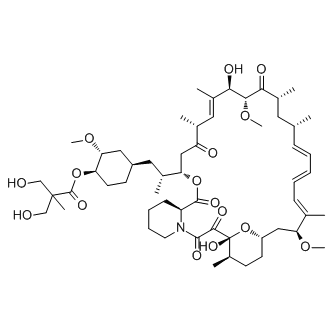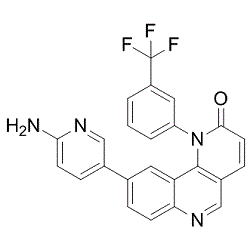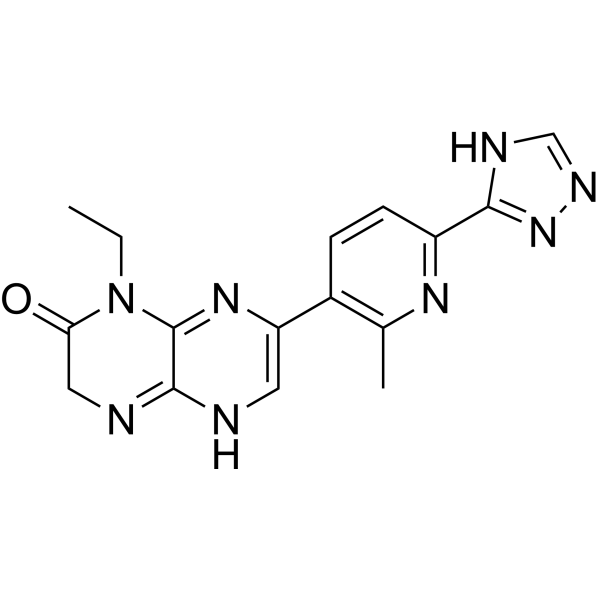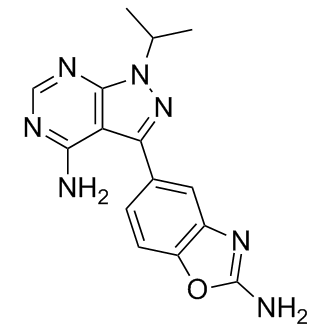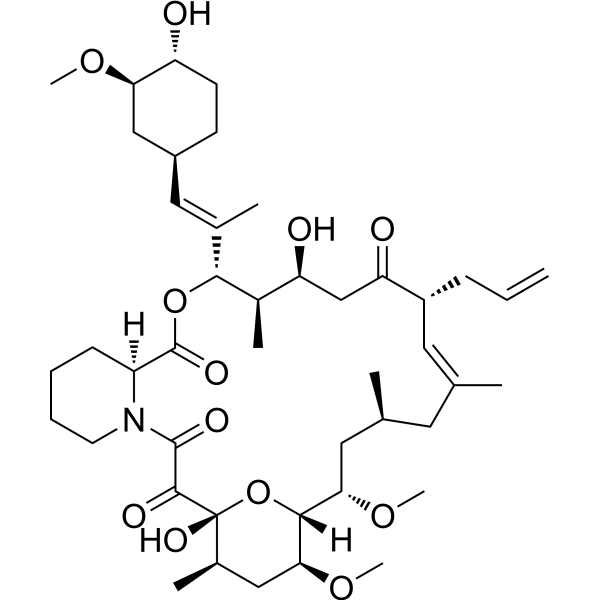
FK-506 (Tacrolimus) chemical structure
Chemical structureResearch use only
CAT. NO. DC1001Featured

FK-506 (Tacrolimus)

Pack Sizes & Prices

TotalUS$150
We match the best price and quality on market.
Product overview

Description & Application

Tacrolimus is a macrocyclic lactone with potent immunosuppressive properties. Tacrolimus binds to FK506 binding protein (FKBP) to form a complex and inhibits calcineurin phosphatase.

ParameterValue
Chemical NameTacrolimus anhydrous
CAS No.104987-11-3
SynonymsTacrolimus;(2-propenyl)-,(3s-(3r*(e(1s*,3s*,4s*)),4s*,5r*,8s*,9e,12r*,14r*,15s*,16r*,18s*;16-dimethoxy-4,10,12,18-tetramethyl-8-3-(2-(4-hydroxy-3-methoxycyclohexyl)-1;19-epoxy-3h-pyrido(2,1-c)(1,4)oxaazacyclotricosine-1,7,20,21(4h,23h)-tetrone,5,6,8,11,12,13,14,15,16,17,18,19,24,25,26,26a-hexadecahydro-5,19-dihydroxy-3-(2-(4-hydroxy-3-methoxycyclohexyl)-14,16-dim;6,8,11,12,13,14,15,16,17,18,19,24,25,26,26a-hexadecahydro-5,19-dihydroxy-5;fr900506;prograf;tsukubaenolide;FK-506;C44H69NO12;FK 506;FK-506 (Tacrolimus);FK506(Tacrolimus);Tacrolimus (FK-506 , FR-900506, Fujimycin,Prograf®,Protopic®,Advagraf®);Tacrolimus solution;Tarcolimus; Fujimycin;Tacrolimus (FK506);ferric oxide;Tacrolimus Impurity;Protopic;FK506;Tacrolimus anhydrous;Modigraf;Protopy;LCP-Tacro;Anhydrous Tacrolimus;Advagraf;8-DEETHYL-8-[BUT-3-ENYL]-ASCOMYCIN;K506;Astagraf XL;Prograf (TN);Tacarolimus;FR 900506;Y5L2157C4J;FK5;Tacrolimus (anhydrous);Prograft;Tacrolimus [USAN];Graceptor;Envarsus;Avagraf;L 679934;Envarsu;17-allyl-1,14-dihydroxy-12-[2'-(4'-hydroxy-3'-methoxycyclohexyl)-1'-methylvinyl]-23,25-dimethoxy-13,19,21,27-tetramethyl-11,28-dioxa-4-azatricyclo[22.3.1.04,9 ]octacos-18-ene-2,3,10,16-tetraone;17-allyl-1,14-di-hydroxy-12-[2-(4-hydroxy-3-methoxy-cyclohexyl)-1-methyl-vinyl]-23,25-dimethoxy-13,19,21,27-tetramethyl-11,28-dioxa-4-aza-tricyclo[22.3.1.04,9] octacos-18-ene-2,3,10,16-tetraone;17-allyl-1,14-dihydroxy-12-[2'-(4'-hydroxy-3'-methoxycyclohexyl)-1'-methylvinyl]-23,25-dimethoxy-13,19,21,-27-tetramethyl-11,28-dioxa-4-azatricyclo[22.3.1.04,9 ]octacos-18-ene-2,3,10,16-tetraone;QJJXYPPXXYFBGM-UHFFFAOYSA-N;MFCD00869853;17-allyl-1,14-dihydroxy-12-[2'-(4'-hydroxy-3'-methoxy -cyclohexyl)-1'-methylvinyl]-23,25-dimethoxy-13,19,21,27-tetramethyl-11,28-dioxa-4-azatricyclo-[22.3.1.04,9 ]octacos-18-ene-2,3,10,16-tetraone;1,14-dihydroxy-12-[1-(4-hydroxy-3-methoxycyclohexyl)prop-1-en-2-yl]-23,25-dimethoxy-13,19,21,27-tetramethyl-17-prop-2-enyl-11,28-dioxa-4-azatricyclo[22.3.1.04,9]octacos-18-ene-2,3,10,16-tetrone;144490-63-1;SY069910;17-Allyl-1,14-di-hydroxy-12-[2-(4-hydroxy-3-methoxy-cyclohexyl)-1-methyl-vinyl]-23,25-dimethoxy-13,19,21,27-tetramethyl-11,28-dioxa-4-aza-tricyclo[22.3.1.04,9]octacos-18-ene-2,3,10,16-tetraone;17-allyl-1,14-dihydroxy-12-[2'-(4'-hydroxy-3'-methoxycyclohexyl)-1'-methylvinyl]23,25-dimethoxy-13,19,21,27-tetramethyl-11,28-dioxa-4-azatricyclo[22.3.1.04,9 ]-octacos-18-ene-2,3,10,16-tetraone;FT-0626431;104987-11-3;17-allyl- 1,14-dihydroxy-12-[2'-(4'-hydroxy-3'-methoxycyclohexyl)1-methylvinyl]-23,25-dimethoxy-13,19,21,27-tetramethyl-11,28-dioxa-4-azatricyclo[22.3.1.04,9 ]octacos-18-ene-2,3,10,16-tetraone;NS00008708;HMS503O21;CAS-104987-11-3;NSC 758659;TACROLIMUS (USP-RS);(3S,4R,5S,8R,9E,12S,14S,15R,16S,18R,19R,26aS)-5,19-dihydroxy-3-{(1E)-1-[(1R,3R,4R)-4-hydroxy-3-methoxycyclohexyl]prop-1-en-2-yl}-14,16-dimethoxy-4,10,12,18-tetramethyl-8-(prop-2...
FormulaC44H69NO12
M.Wt804.02
SMILESO1[C@]2(C(C(N3C([H])([H])C([H])([H])C([H])([H])C([H])([H])[C@@]3([H])C(=O)O[C@]([H])(/C(/C([H])([H])[H])=C(\[H])/[C@]3([H])C([H])([H])C([H])([H])[C@]([H])([C@@]([H])(C3([H])[H])OC([H])([H])[H])O[H])[C@]([H])(C([H])([H])[H])[C@]([H])(C([H])([H])C([C@]([H])(C([H])([H])C([H])=C([H])[H])C([H])=C(C([H])([H])[H])C([H])([H])[C@]([H])(C([H])([H])[H])C([H])([H])[C@@]([H])([C@]1([H])[C@]([H])(C([H])([H])[C@@]2([H])C([H])([H])[H])OC([H])([H])[H])OC([H])([H])[H])=O)O[H])=O)=O)O[H] |c:78|
Purity>98%
Storage2 years -20°C Powder, 2 weeks 4°C in DMSO, 6 months -80°C in DMSO

Biological Activity

Tacrolimus is a macrocyclic lactone with potent immunosuppressive properties. Tacrolimus binds to FK506 binding protein (FKBP) to form a complex and inhibits calcineurin phosphatase.

In Vitro

Tacrolimus (FK506) inhibits calcium-dependent events, such as IL-2 gene transcription, NO synthase activation, cell degranulation, and apoptosis. Tacrolimus also potentiates the actions of glucocorticoids and progesterone by binding to FKBPs contained within the hormone receptor complex, preventing degradation. The agent may enhance expression of the TGFβ-1 gene in a fashion analogous to that demonstrated for CsA. T cell proliferation in response to ligation of the T cell receptor is inhibited by Tacrolimus[1]. Treatment with a low concentration of Tacrolimus (FK506,10 μg/L) does not significantly affect the proliferation of MH3924A cells (P=0.135). Upon treatment with higher concentrations of Tacrolimus (100-1,000 μg/L), the proliferation of MH3924A cells is significantly enhanced (P<0.01). Treatment with AMD3100 at any concentration (10, 50 or 100 μg/L), has no obvious effect on MH3924A cell proliferation (P>0.05). However, when different concentrations of AMD3100 are combined with 100 μg/L Tacrolimus, the in vitro proliferation of MH3924A cells is increased (P<0.01)[3].

In Vivo

The therapeutic effect of Tacrolimus is investigated on progression and perpetuation of colitis by administering Tacrolimus to Dextran sulfate sodium (DSS)-treated mice from Days 10 to 16 or to 23. At Days 17 and 24, colon length is significantly shortened, and colon weight is significantly higher in DSS-treated control animals than in normal animals. In addition, colon weight per unit length in the control group is more than twice that in the normal group. While both 7 and 14 d treatment with Tacrolimus significantly suppresses increases in colon weight per unit length in DSS-treated animals compared with the control group, this treatment does not actually restore the colon shortening. In addition, this inhibitory effect of Tacrolimus on increases in colon weight per unit length is more pronounced with 14-d than 7-d treatment, as shown by the inhibitory percentages (59% vs. 28%)[4].

References & source

DC Chemicals original product information

Published experimental findings depend on the model and assay conditions. They do not guarantee equivalent performance in every application. For laboratory research use only.
Product documentation

Refer to the certificate supplied with your lot for batch-specific release results.

Handling guide

2 years -20°C Powder, 2 weeks 4°C in DMSO, 6 months -80°C in DMSO

Solution calculator

Related research products

Torkinib (PP242) chemical structureDC7482

Torkinib (PP242)

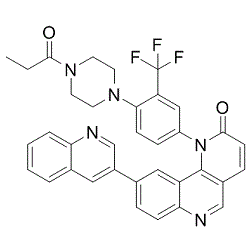
Torkinib (PP 242) is a selective and ATP-competitive mTOR inhibitor with an IC50 of 8 nM. PP242 inhibits both mTORC1 and mTORC2 with IC50s of 30 nM and 58 nM, respectively.

View activity & prices
Torin2 chemical structureDC3117

Torin2

Torin 2 is an mTOR inhibitor with EC50 of 0.25 nM for inhibiting cellular mTOR activity, and exhibits 800-fold selectivity over PI3K (EC50: 200 nM). Torin 2 also inhibits DNA-PK with an IC50 of 0.5 nM in the cell free…

View activity & prices
CC-115 chemical structureDC8377

CC-115

CC-115 is a potent and dual DNA-PK and mTOR kinase inhibitor with IC50s of 13 nM and 21 nM, respectively. CC-115 blocks both mTORC1 and mTORC2 signaling.

View activity & prices
Torin1 chemical structureDC3118

Torin1

Torin 1 is a potent inhibitor of mTOR with an IC50 of 3 nM. Torin 1 inhibits both mTORC1/2 complexes with IC50 values between 2 and 10 nM.

View activity & prices
LY-303511(Nv-128) chemical structureDC7210

LY-303511(Nv-128)

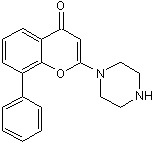
LY303511 is a structural analogue of LY294002. LY303511 does not inhibit PI3K. LY303511 enhances TRAIL sensitivity of SHEP-1 neuroblastoma cells. LY303511 reversibly blocks K+ currents (IC50=64.6±9.1 μM) in MIN6…

View activity & prices
OSI-027 chemical structureDC1006

OSI-027

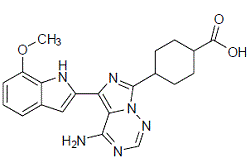
OSI-027 is an ATP-competitive mTOR kinase activity inhibitor with an IC50 of 4 nM. OSI-027 targets both mTORC1 and mTORC2 with IC50s of 22 nM and 65 nM, respectively.

View activity & prices
CZ415 chemical structureDC10125

CZ415

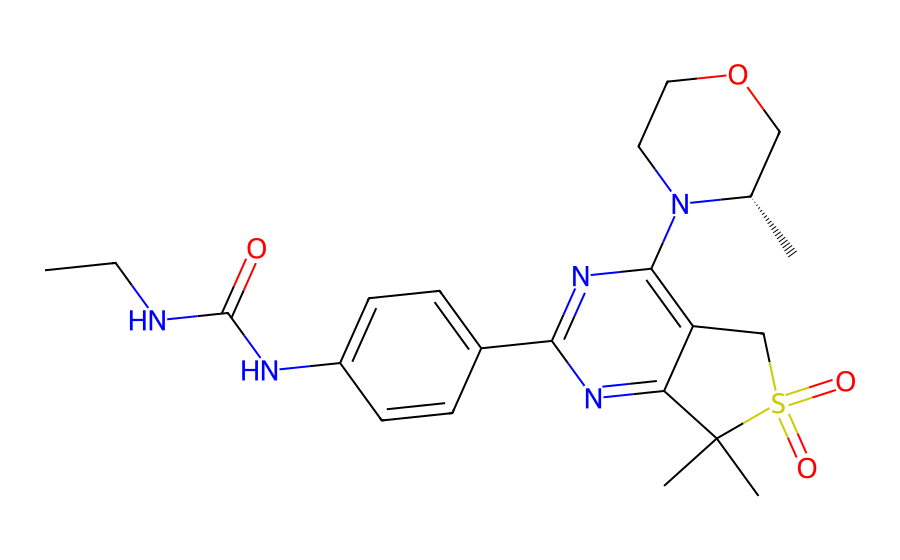
CZ415 is a potent and highly selective mTOR inhibitor with a pIC50 of 8.07. CZ415 inhibits mTORC1 and mTORC2 protein complex.

View activity & prices

Cart

Request quotation