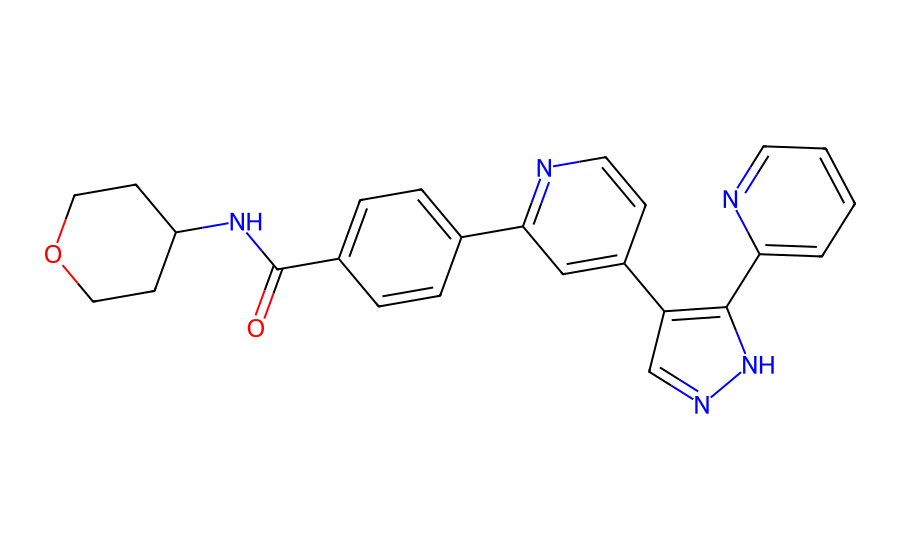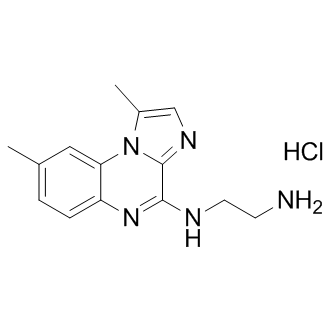
Biological Activity
BMS-345541 is a selective inhibitor of the catalytic subunits of IKK (IKK-2 IC50=0.3 μM, IKK-1 IC50=4 μM). BMS-345541 binds at an allosteric site of IKK.
In Vitro
BMS-345541 inhibits IKK-2 and IKK-1 in dose-dependent manner. BMS-345541 fails to inhibit a panel of both serine/threonine and tyrosine kinases at concentrations as high as 100 μM. MS-345541 at concentrations as high as 100 μM fails to block both the anisomycin-stimulated phosphorylation of c-Jun and LPS-stimulated activation of MAPKAP K2 in THP-1 cells, as well as the EGF-stimulated phosphorylation of STAT3 in H292 cells[1]. BMS-345541 treatment results in a concentration-dependent inhibition of melanoma cell proliferation in SK-MEL-5, A375, and Hs 294T cells. BMS-345541 (0, 100 μM) shows apoptotic features as revealed by TUNEL staining and nuclear condensation[2].
In Vivo
BMS-345541 (10 mg/kg, p.o.) results in prolonged serum drug levels, with concentrations sustained at or above 1 μM for many hours in mice. BMS-345541 dose-dependently inhibits the production of TNFα measured in the serum of animals challenged with an intraperitoneal administration of LPS[1]. BMS-345541 (0, 10, 25, and 75 mg/kg, p.o.) effectively inhibits SK-MEL-5 tumor growth in a dose-dependent manner in the mice. Tumor-bearing mice treated with 75 mg/kg of BMS-345541 show effective inhibition of growth of SK-MEL-5, A375, and Hs 294T tumors by 86±2.8%, 69±11% and 67±3.4%, respectively[2]. BMS-345541 (30 and 100 mg/kg, p.o.) is effective in blocking both clinical and histological endpoints of inflammation and injury in mice[3].
References & source
Published experimental findings depend on the model and assay conditions. They do not guarantee equivalent performance in every application. For laboratory research use only.