Biological Activity
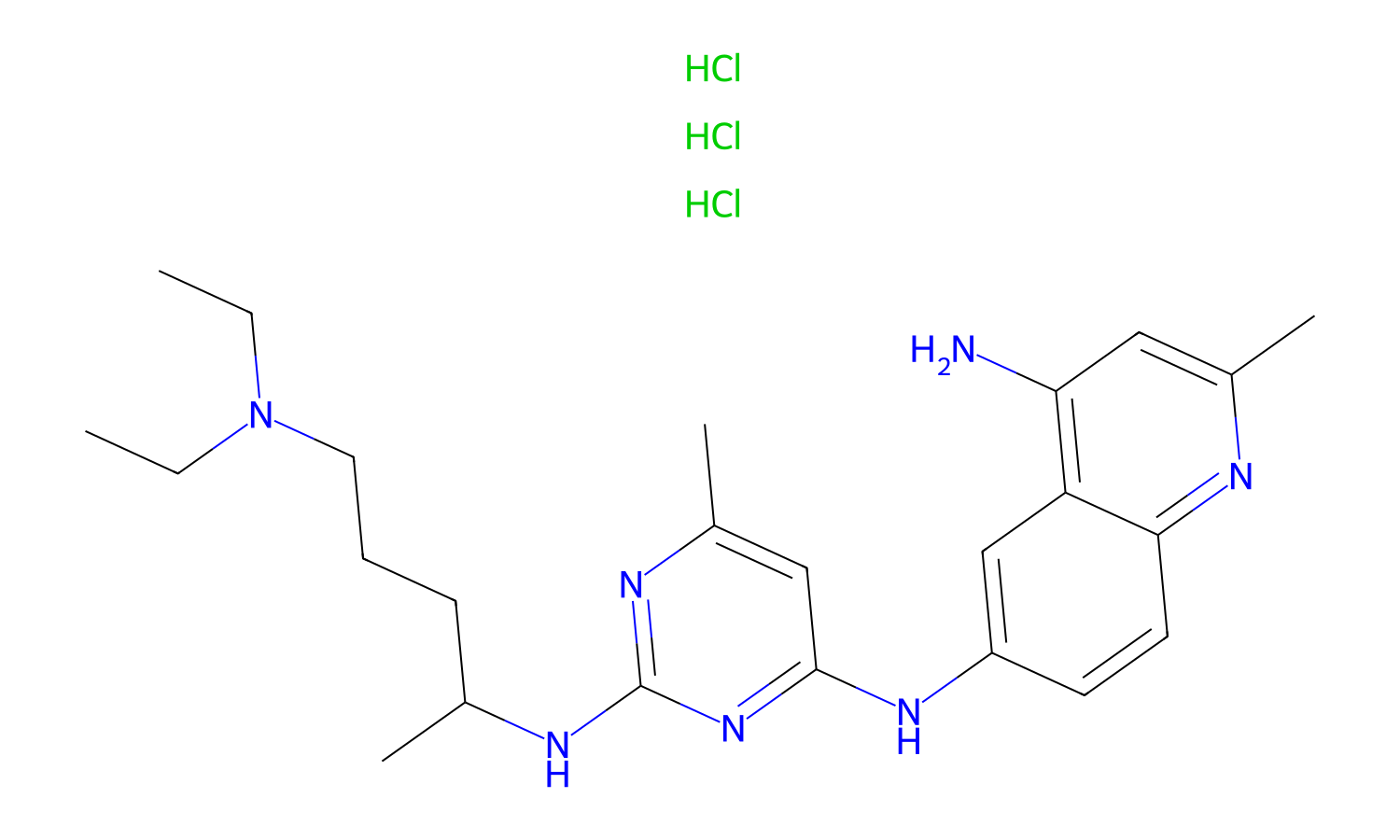
NSC 23766 trihydrochloride is an inhibitor of Rac1 activation.
In Vitro
NSC 23766 (100 μM) treatment effectively inhibits polar body emission in a dose-dependent manner. NSC 23766 (200 μM) increases the percentage of morphologically abnormal spindles of oocytes. In NSC 23766-treated oocytes, the p-MAPK protein expression is significantly decreased[2]. NSC23766 (50 μM) plus 100 ng/mL Jagged1, GDF9 and BMP15, reduces the number of germLine cell cysts and increases the number of primordial follicles[3]. NSC23766 significantly inhibits GTP-Rac1 activity and phosphorylation of Rac1-PAK, ERKs and p38 MAPK in the spinal dorsal horn neurons[4].
In Vivo
NSC23766 (2.5 mg/kg/day, i.p.) significantly attenuates the onset of spontaneous diabetes in NOD mice, without significant effects on the growth (body weights) of the mice. NSC23766 significantly increases the expression of Rac1 and CHOP, a marker for ER-stress, in islets from NOD mice[1].
Kinase Assay
Briefly, fresh spinal cord tissue of the lumbar enlargement is homogenised in the presence of protease and phosphatase inhibitors and lysed with buffer. After being centrifuged at 12,000× g for 5 min at 4°C, the supernatants are collected and incubated with PAK-PBD beads at 4°C on a rotator for 1 h and then the beads are pelleted through centrifugation at 5000× g for 3 min at 4°C. The resulting pellet is resuspended in LaemmLi buffer and boiled for 2 min. The bead samples are subjected to Western blot analysis. Total Rac1 in each sample is also determined by Western blot analysis.
Animal Administration
Balb/c control and NOD mice are at 7 weeks of age and are divided into four groups (n=8/group). At 8 weeks of age two groups of experimental animals (Balb/c and NOD) receive NSC23766 (2.5 mg/kg/day, i.p./daily) and other two groups, which serve as control Balb/c and NOD mice and receive equal volume of saline. The body weights and blood glucose are monitored every week for 34 weeks.
References & source
[1]. Veluthakal R, et al. NSC23766, a Known Inhibitor of Tiam1-Rac1 Signaling Module, Prevents the Onset of Type 1 Diabetes in the NOD Mouse Model. Cell Physiol Biochem. 2016;39(2):760-7.
[2]. Song SJ, et al. Inhibition of Rac1 GTPase activity affects porcine oocyte maturation and early embryo development. Sci Rep. 2016 Oct 3;6:34415
[3]. Zhao L, et al. Rac1 modulates the formation of primordial follicles by facilitating STAT3-directed Jagged1, GDF9 and BMP15 transcription in mice. Sci Rep. 2016 Apr 6;6:23972
[4]. Wang Y, et al. Involvement of Rac1 signalling pathway in the development and maintenance of acute inflammatory pain induced by bee venom injection. Br J Pharmacol. 2016 Mar;173(5):937-50
Published experimental findings depend on the model and assay conditions. They do not guarantee equivalent performance in every application. For laboratory research use only.