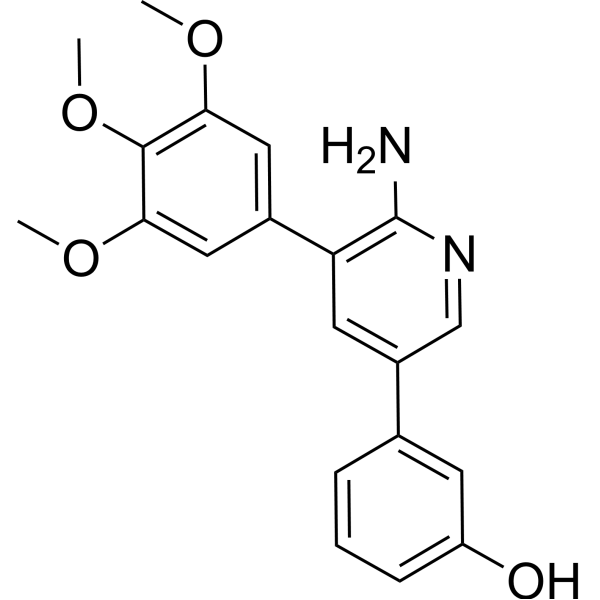
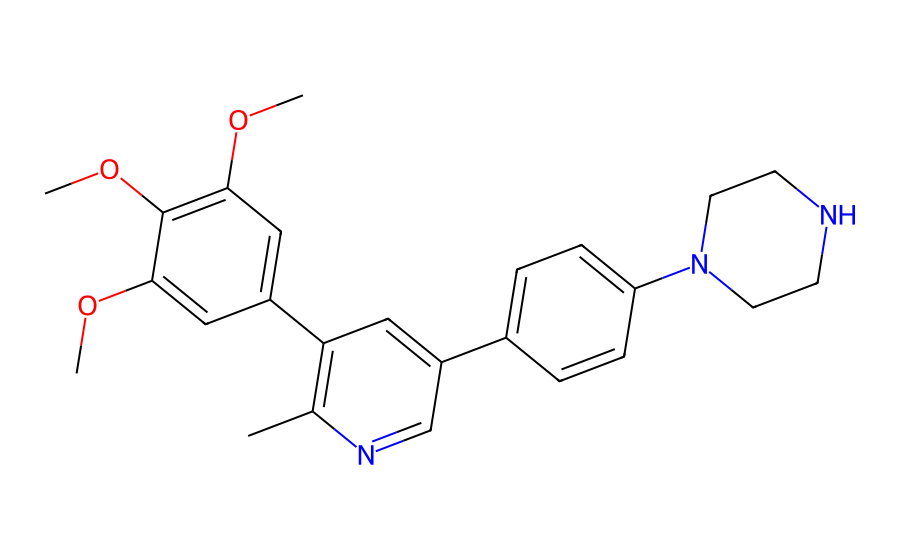
K02288 is a potent inhibitor of ALK, and inhibits ALK1/2/3/6 with IC50s of 1.8/1.1/34.4/6.3 nM; K02288 is less potent against ALK4/5, with IC50s of 302 nM and 321 nM.
K 02288;3-[6-Amino-5-(3,4,5-trimethoxyphenyl)-3-pyridinyl]phenol;K02288;K-02288;3-[(6-Amino-5-(3,4,5-trimethoxyphenyl)-3-pyridinyl]phenol;3-[6-Amino-5-(3,4,5-trimethoxyphenyl)-3-pyridinyl]-phenol;3-[6-Amino-5-(3,4,5-trimethoxyphenyl)pyridin-3-yl]phenol;K02288;3-(6-amino-5-(3,4,5-trimethoxyphenyl)pyridin-3-yl)phenol;A3F;SYN5187;AOB4291;HMS3653M16;BDBM102619;K02288a;BCP09946;s7359;K 02288a;FD5034;SB19486;BC600483;AK175599;Y1876;K02288, >98% (HPLC);SW220200-1;A14311;Phenol
2 years -20°C Powder, 2 weeks 4°C in DMSO, 6 months -80°C in DMSO
Biological Activity
K02288 is a potent inhibitor of ALK, and inhibits ALK1/2/3/6 with IC50s of 1.8/1.1/34.4/6.3 nM; K02288 is less potent against ALK4/5, with IC50s of 302 nM and 321 nM.
In Vitro
K02288 reduces a robust phosphorylation of Smad1/5/8 induced by BMP4 stimulation, with an apparent IC50 of 100 nM. K02288 causes near complete inhibition of Smad2 phosphorylation at 0.5 µM[1]. K02288 binds to ALK1 in an ATP-mimetic fashion with two hydrogen bonds to the kinase hinge. K02288 also inhibits BMP9-ALK1 signalling, and induces a hypersprouting phenotype in HUVECs[2].
In Vivo
K02288 (1 µM) induces dysfunctional angiogenesis in a chick embryo CAM model[2].
Published experimental findings depend on the model and assay conditions. They do not guarantee equivalent performance in every application. For laboratory research use only.
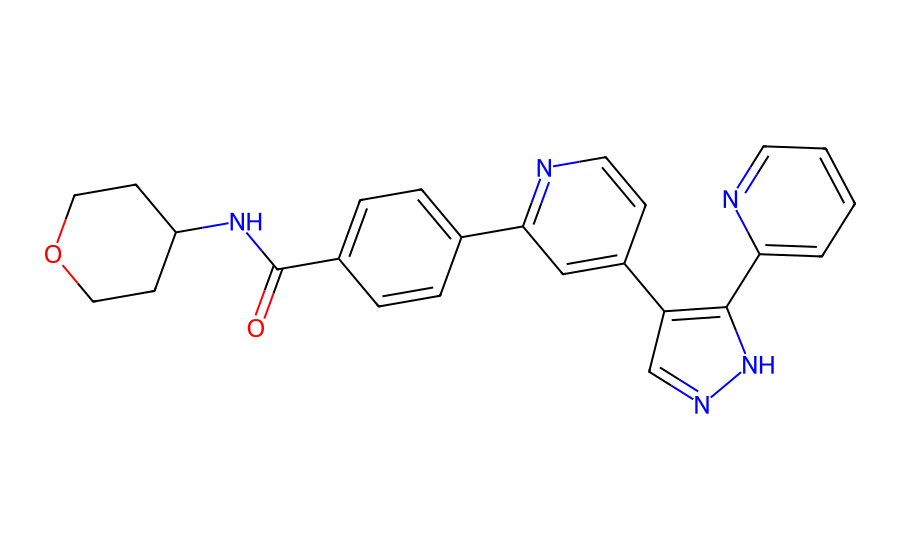
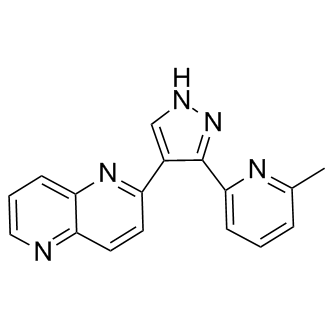
GW788388 is a potent and selective inhibitor of ALK5 with IC50 of 18 nM, and also inhibits TGF-β type II receptor and activin type II receptor activities, without inhibiting BMP type II receptor.
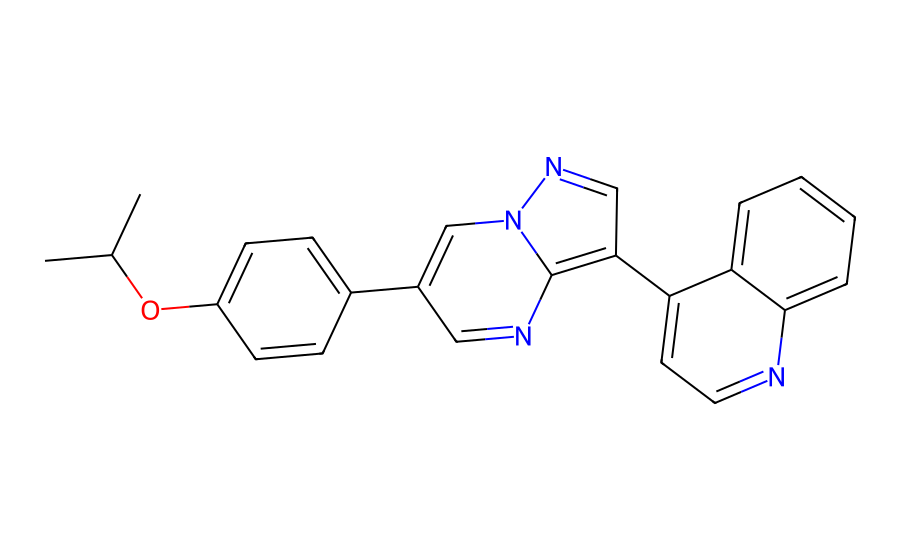
LDN-214117 is a potent and selective ALK2 inhibitor with IC50 of 22 nM; > 100 fold selectivity for ALK5; also inhibits BMP6(IC50=100 nM).IC50 value: 22 nM(ALK2) [1]Target: ALK2 inhibitorLDN-214117 is a highly BMP…
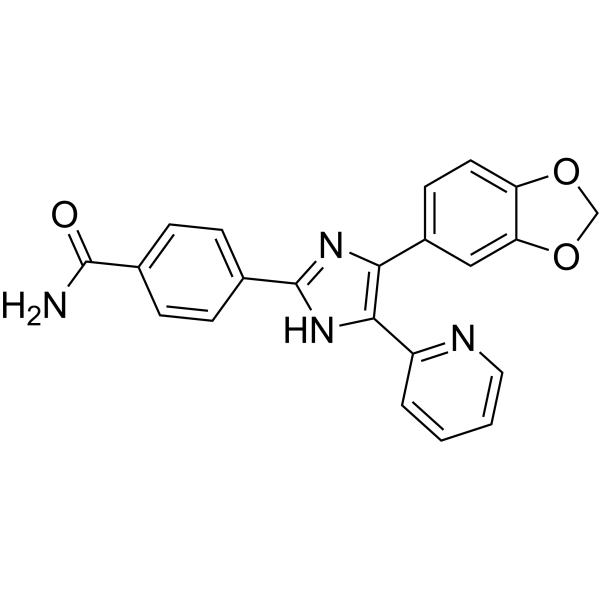
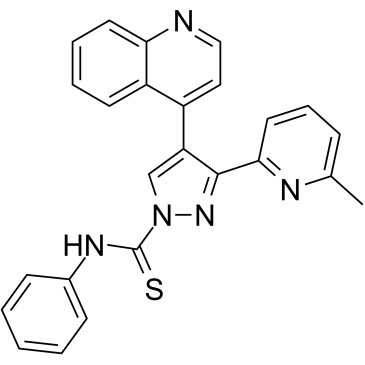
A 83-01 is a potent inhibitor of TGF-β type I receptor ALK5 kinase, type I activin/nodal receptor ALK4 and type I nodal receptor ALK7, with IC50s of 12, 45 and 7.5 nM, respectively.