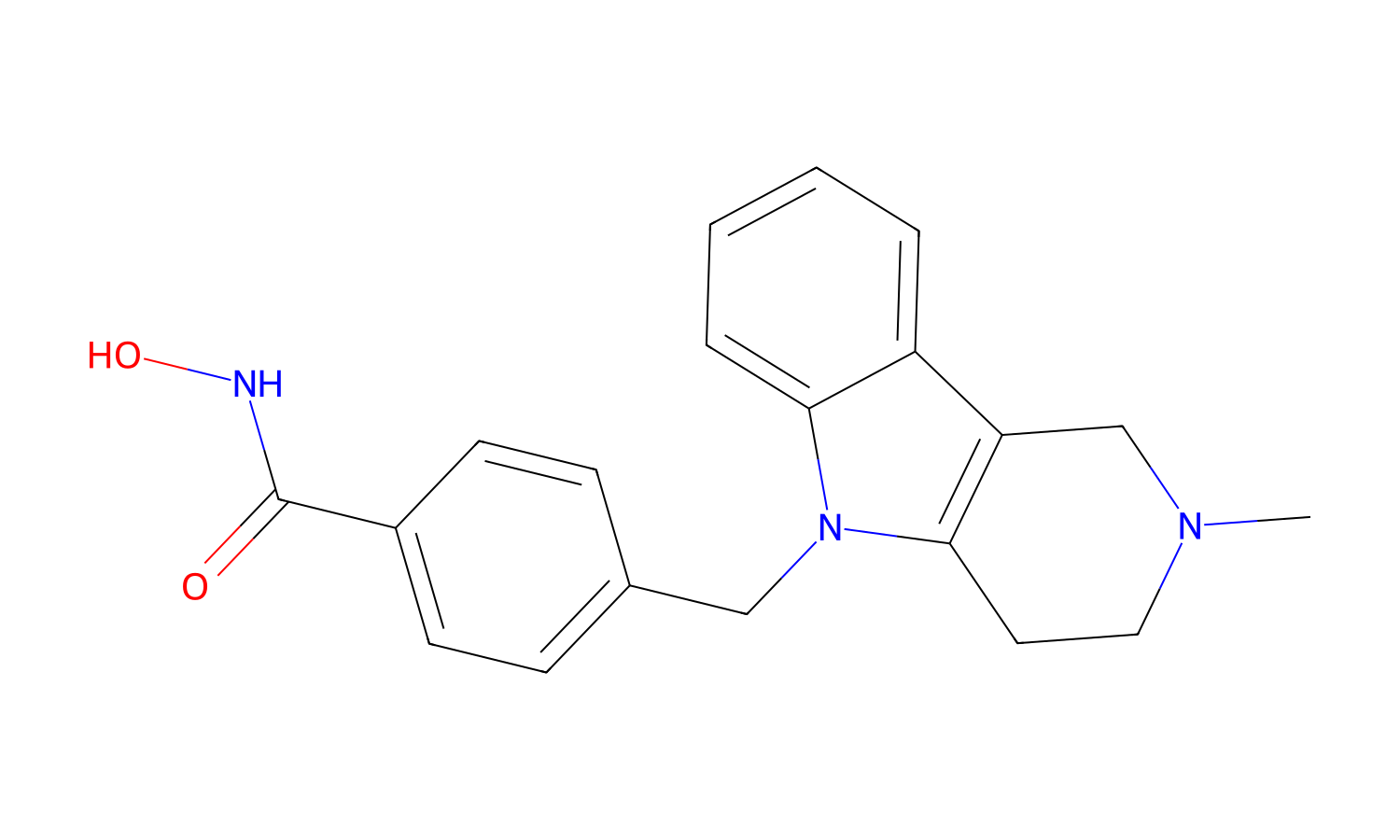
Tubastatin A chemical structure
Chemical structureResearch use onlyView full-size structure
CAT. NO. DC6304Featured

Tubastatin A

Pack Sizes & Prices

TotalUS$300
We match the best price and quality on market.
Product overview

Description & Application

Tubastatin A is a potent and selective HDAC6 inhibitor with IC50 of 15 nM in a cell-free assay, and is selective (1000-fold more) against all other isozymes except HDAC8 (57-fold more).

ParameterValue
Chemical NameTubastatin A
CAS No.1252003-15-8
FormulaC20H21N3O2
M.Wt335.41
SMILESCN1CCc2c(c3ccccc3n2Cc2ccc(C(=O)NO)cc2)C1
Purity>98%
Storage2 years -20°C powder, 2 weeks 4°C in DMSO, 6 months -80°C in DMSO

Chemical identity references

Biological Activity

Tubastatin A is a potent and selective HDAC6 inhibitor with IC50 of 15 nM in a cell-free assay, and is selective (1000-fold more) against all other isozymes except HDAC8 (57-fold more).

In Vitro

Tubastatin A is substantially selective for all 11 HDAC isoforms and maintains over 1000-fold selectivity against all isoforms excluding HDAC8, where it has approximately 57-fold selectivity. In homocysteic acid (HCA) induced neurodegeneration assays, Tubastatin A displays dose-dependent protection against HCA-induced neuronal cell death starting at 5 μM with near complete protection at 10 μM[1]. At 100 ng/mL Tubastatin A increases Foxp3+ T-regulatory cells (Tregs) suppression of T cell proliferation in vitro[2]. Tubastatin A treatment in CC12 cells would lead to myotube formation impairment when alpha-tubulin is hyperacetylated early in the myogenic process; however, myotube elongation occurs when alpha-tubulin is hyeperacetylated in myotubes[3]. A recent study indicates that Tubastatin A treatment increases cell elasticity as revealed by atomic force microscopy (AFM) tests without exerting drastic changes to the actin microfilament or microtubule networks in mouse ovarian cancer cell lines, MOSE-E and MOSE-L[4].

In Vivo

Daily treatment of Tubastatin A at 0.5 mg/kg inhibits HDAC6 to promote Tregs suppressive activity in mouse models of inflammation and autoimmunity, including multiple forms of experimental colitis and fully major histocompatibility complex (MHC)-incompatible cardiac allograft rejection[2].

References & source

DC Chemicals original product information

Published experimental findings depend on the model and assay conditions. They do not guarantee equivalent performance in every application. For laboratory research use only.
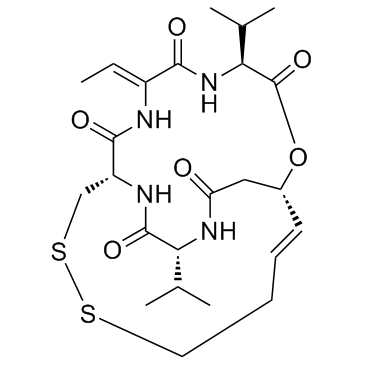
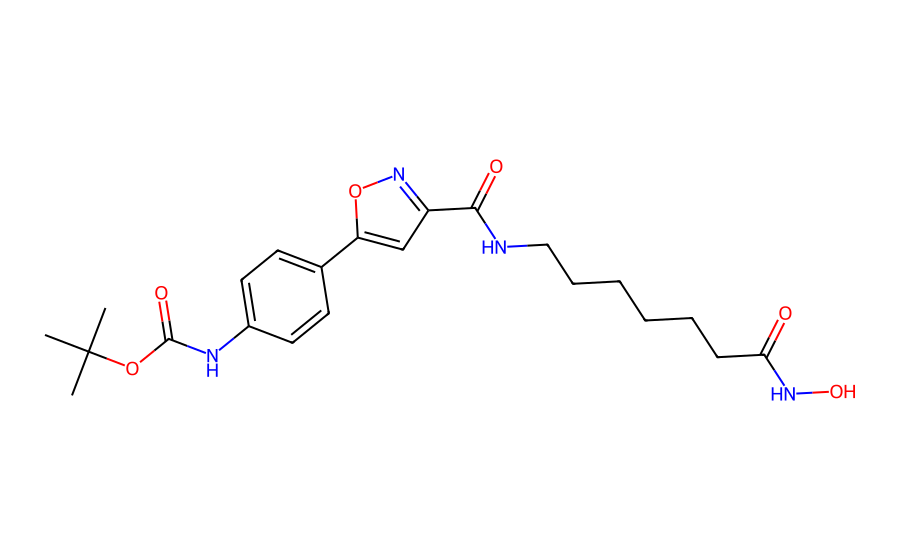
Product documentation

Refer to the certificate supplied with your lot for batch-specific release results.

Handling guide

2 years -20°C powder, 2 weeks 4°C in DMSO, 6 months -80°C in DMSO

Solution calculator

Related research products

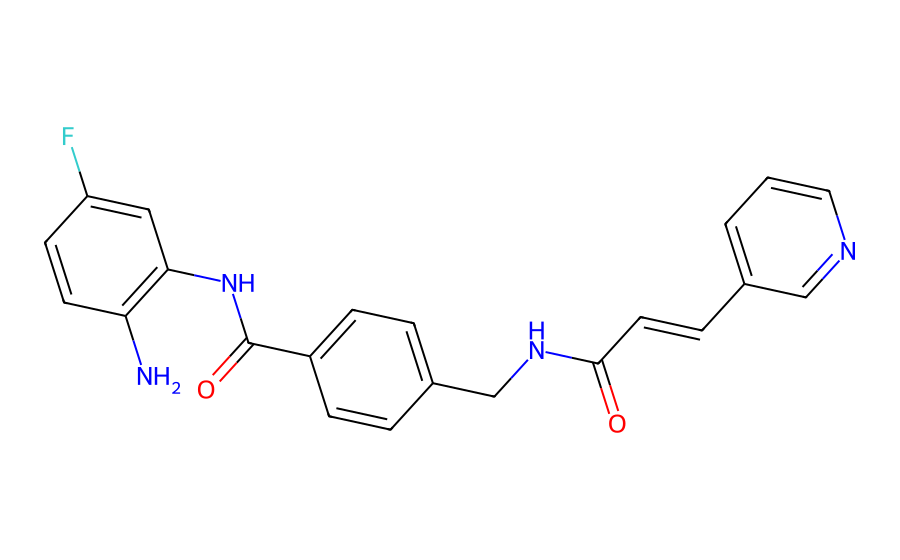
CAY10603 chemical structureDC8036

CAY10603

CAY10603 is a potent and selective HDAC6 inhibitor, with an IC50 of 2 pM; CAY10603 also inhibits HDAC1, HDAC2, HDAC3, HDAC8, HDAC10, with IC50s of 271, 252, 0.42, 6851, 90.7 nM.

View activity & prices
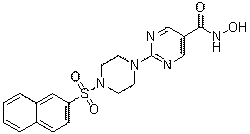
CUDC-907 (PI3K/HDAC InhibitorI) chemical structureDC3110

CUDC-907 (PI3K/HDAC InhibitorI)

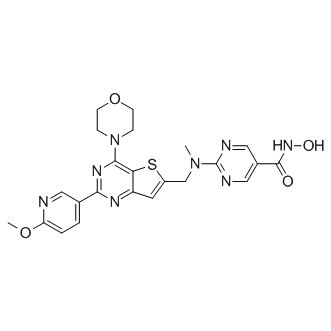
Fimepinostat (CUDC-907) potently inhibits class I PI3Ks as well as classes I and II HDAC enzymes with an IC50 of 19/54/39 nM and 1.7/5.0/1.8/2.8 nM for PI3Kα/PI3Kβ/PI3Kδ and HDAC1/HDAC2/HDAC3/HDAC10 , respectively.

View activity & prices
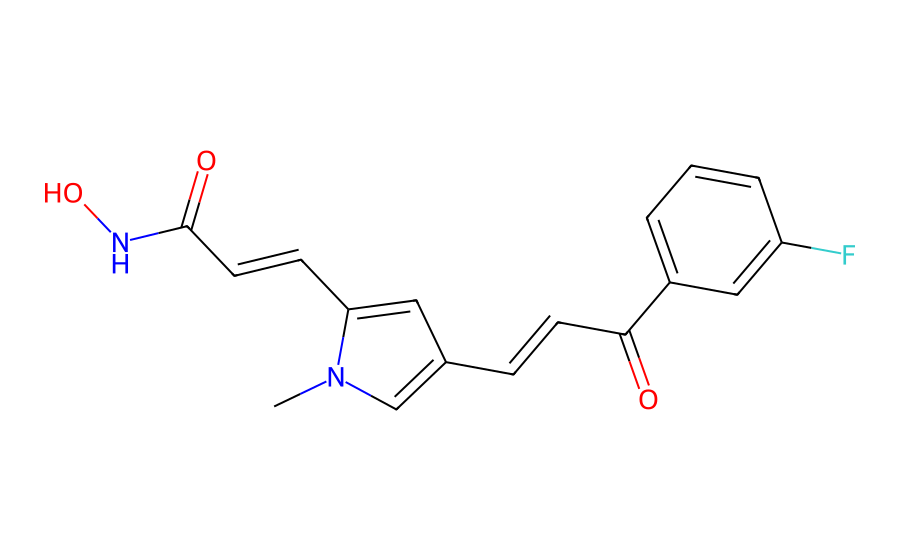
Nexturastat A chemical structureDC7548

Nexturastat A

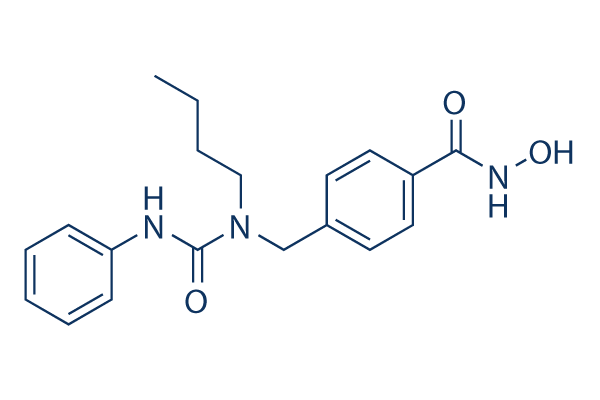
Nexturastat A is a potent and selective HDAC6 inhibitor with IC50 of 5 nM; no inhibition on other HDAC forms.Nexturastat A displayed low micromolar activity compared to the low nanomolar activity against HDAC6.…

View activity & prices
Belinostat (PXD101) chemical structureDC7082

Belinostat (PXD101)

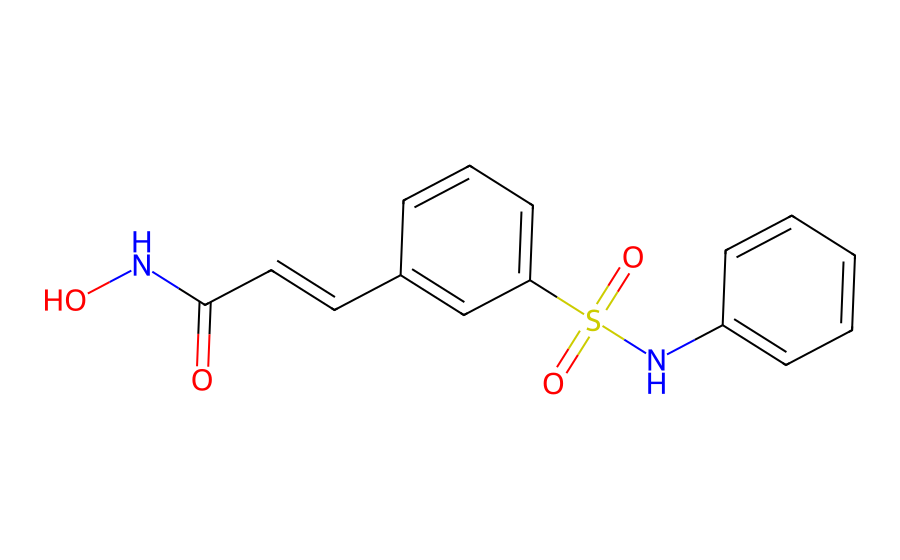
Belinostat inhibits the growth of tumor cells (A2780, HCT116, HT29, WIL, CALU-3, MCF7, PC3 and HS852) with IC50 from 0.2-0.66 μM. PD101 shows low activity in A2780/cp70 and 2780AD cells, which are cisplatin and…

View activity & prices
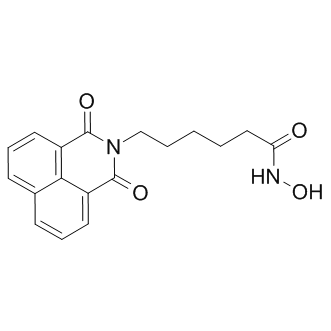
R306465(JNJ-16241199) chemical structureDC7037

R306465(JNJ-16241199)

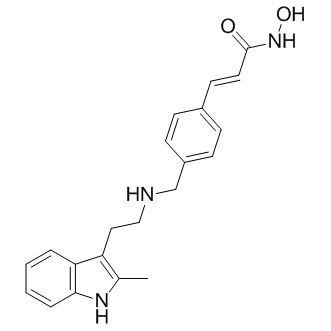
R306465, also known as JNJ-16241199, is a novel hydroxamate-based histone deacetylase (HDAC) inhibitor with broad-spectrum antitumour activity against solid and haematological malignancies in preclinical models.

View activity & prices

Cart

Request quotation