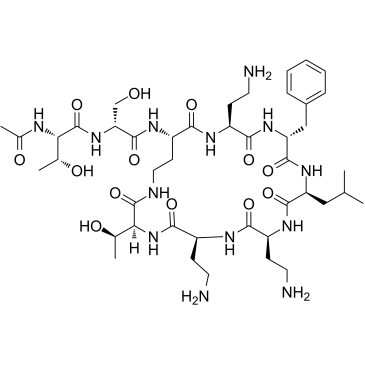
SPR741 (NAB741) chemical structure
Chemical structureResearch use only
CAT. NO. DC27000Featured

SPR741 (NAB741)

Pack Sizes & Prices

TotalUS$500
We match the best price and quality on market.
Product overview

Description & Application

SPR741 (NAB741) is a cationic peptide derived from polymyxin B and is a potentiator molecule. SPR741 increases the permeability of the outer membrane of Gram-negative bacteria and is used to treat severe Gram-negative bacteria infections. SPR741 inhibits multidrug-resistant Gram-negative bacteria. The spectrum of activity of the antibiotic can be widened when used in combination with SPR741[1][2].

ParameterValue
CAS No.1179330-52-9
SynonymsSPR741 SPR 741 SPR-741 NAB741 NAB-741 NAB 741
FormulaC₄₄H₇₃N₁₃O₁₃
M.Wt992.13
SMILESC[C@H]([C@H]1C(=O)NCC[C@@H](C(=O)N[C@H](C(=O)N[C@@H](C(=O)N[C@H](C(=O)N[C@H](C(=O)N[C@H](C(=O)N1)CCN)CCN)CC(C)C)CC2=CC=CC=C2)CCN)NC(=O)[C@@H](CO)NC(=O)[C@H]([C@@H](C)O)NC(=O)C)O
Purity>98%
Storage2 years -20°C Powder, 2 weeks 4°C in DMSO, 6 months -80°C in DMSO

Biological Activity

SPR741 (NAB741) is a cationic peptide derived from polymyxin B and is a potentiator molecule. SPR741 increases the permeability of the outer membrane of Gram-negative bacteria and is used to treat severe Gram-negative bacteria infections. SPR741 inhibits multidrug-resistant Gram-negative bacteria. The spectrum of activity of the antibiotic can be widened when used in combination with SPR741[1][2].

In Vitro

SPR741 potentiates antibiotics that are substrates of the AcrAB-TolC efflux pump in E. coli, effectively circumventing the contribution of this pump to intrinsic antibiotic resistance. The intrinsic resistance of E. coli to certain antibiotics that is mediated by both the outer membrane and the AcrAB-TolC efflux system can be overcome, or circumvented, by combining the antibiotic with SPR741 but that potentiation of intrinsic resistance due primarily to efflux may be limited[1]. SPR741 lacks significant antibacterial activity as a stand-alone agent but interacts with the outer membrane of Gram-negative bacteria to increase permeability and thereby improve the accumulation of coadministered antibiotics inside the pathogen[2].

In Vivo

SPR741 has the ability to permeabilize the outer membrane of Gram-negative bacteria, thus sensitizing them to hydrophobic antibiotics. SPR741 has a significantly safety profile of compared to that of polymyxin B, which suffers severe, dose-limiting nephrotoxicity in humans. In multiday rodent and nonhuman primate studies, polymyxin B exhibited nephrotoxicity at a far-lower exposure-normalized dose than SPR741[1].

References & source

[1]. Corbett D, et al. Potentiation of Antibiotic Activity by a Novel Cationic Peptide: Potency and Spectrum of Activity of SPR741. Antimicrob Agents Chemother. 2017 Jul 25;61(8). pii: e00200-17.

[2]. Eckburg PB, et al. Safety, Tolerability, Pharmacokinetics, and Drug Interaction Potential of SPR741, an Intravenous Potentiator, after Single and Multiple Ascending Doses and When Combined with β-Lactam Antibiotics in Healthy Subjects. Antimicrob Agents Chemother. 2019 Aug 23;63(9). pii: e00892-19.

DC Chemicals original product information

Published experimental findings depend on the model and assay conditions. They do not guarantee equivalent performance in every application. For laboratory research use only.
Product documentation

Refer to the certificate supplied with your lot for batch-specific release results.

Handling guide

2 years -20°C Powder, 2 weeks 4°C in DMSO, 6 months -80°C in DMSO

Solution calculator

Related research products

Fidaxomicin (Dificid) chemical structureDC1057

Fidaxomicin (Dificid)

Fidaxomicin(OPT-80; PAR-101) is a new class of narrow spectrum macrocyclic antibiotic drug; selective eradication of pathogenic Clostridium difficile with minimal disruption to the multiple species of bacteria that…

View activity & prices
Q203 chemical structureDC10109

Q203

Q203 (IAP6) is a midazopyridine amide compound. Q203 is active against Mycobacterium tuberculosis H37Rv with an MIC50 of 2.7 nM in culture broth medium.

View activity & prices
PBTZ169 chemical structureDC9723

PBTZ169

Macozinone is a new drug candicate that inhibits decaprenylphosphoryl-β-d-ribose 2′-oxidase (DprE1), more efficiently than BTZ043target: DprE1In vitro: PBTZ169, inhibit decaprenylphosphoryl-β-d-ribose 2′-oxidase…

View activity & prices
AN3365(Epetraborole) chemical structureDC9827

AN3365(Epetraborole)

Epetraborole hydrochloride is a novel leucyl-tRNA synthetase (LeuRS) inhibitor, which inhibits protein synthesis by binding "to the terminal adenosine ribose (A76) of leucyl-tRNA synthetase". It is intended for the…

View activity & prices
Relebactam chemical structureDC10441

Relebactam

Relebactam is a diazabicyclooctane inhibitor with activity against a wide spectrum of β-lactamases, including class A (extended-spectrum β-lactamases [ESBLs] and KPC) and class C (AmpC) enzymes.Target:…

View activity & prices
Solithromycin chemical structureDC8032

Solithromycin

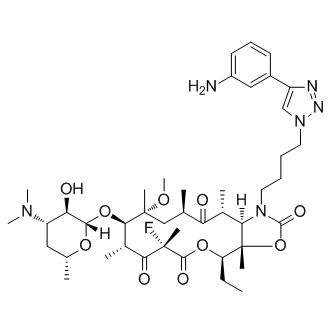
Solithromycin is a novel fluoroketolide with improved antimicrobial effectiveness.Solithromycin binds to the large 50S subunit of the ribosome and inhibits protein biosynthesis. The mean 50% inhibitory concentrations…

View activity & prices
AFN-1252(Debio 1452) chemical structureDC10513

AFN-1252(Debio 1452)

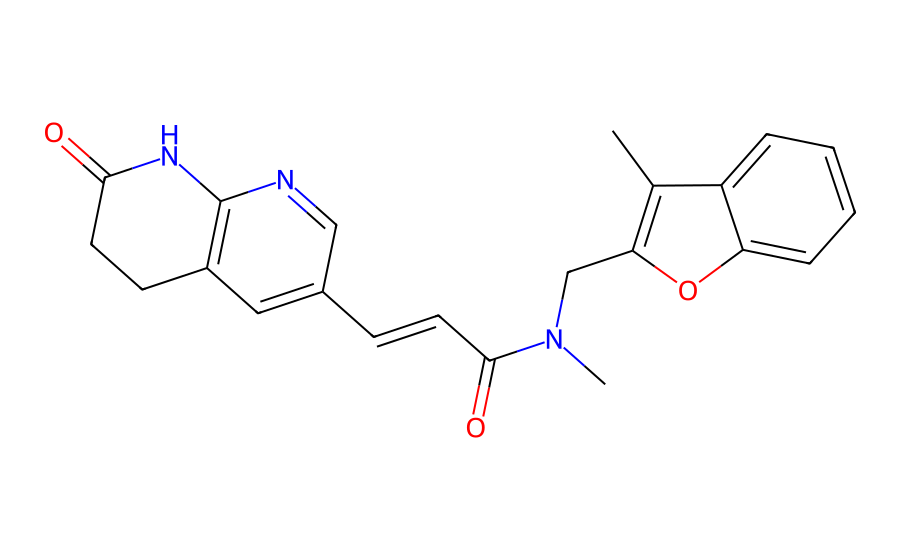
AFN-1252(Debio 1452) is a potent inhibitor of enoyl-acyl carrier protein reductase (FabI), inhibited all clinical isolates of Staphylococcus aureus and Staphylococcus epidermidis at concentrations of ≤0.12 μg/ml. IC50…

View activity & prices

Cart

Request quotation