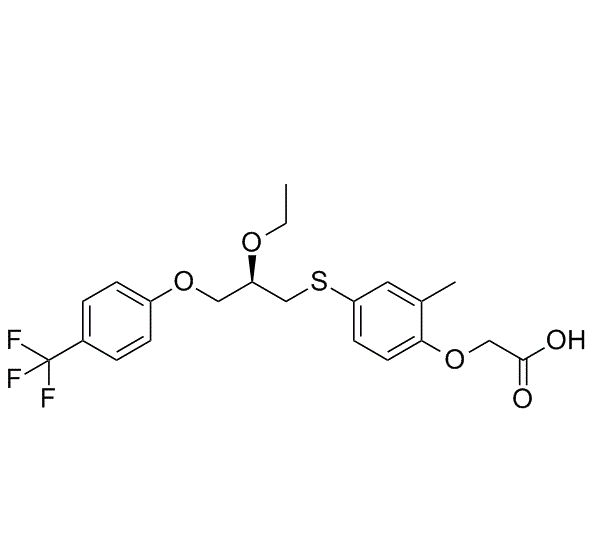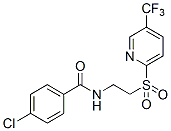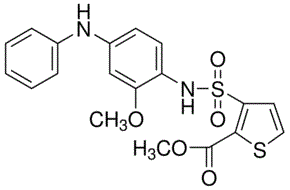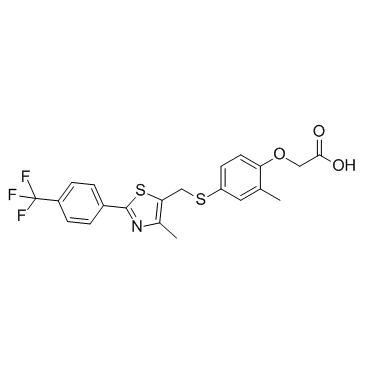
Biological Activity
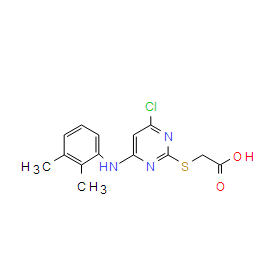
Pirinixic acid (Wy-14643) is a potent agonist of PPARα, with EC50s of 0.63 μM, 32 μM for murine PPARα and PPARγ, and 5.0 μM, 60 μM, 35 μM for human PPARα, PPARγ and PPARδ, respectively.
In Vitro
Pirinixic acid (Wy-14643) is an agonist of PPARα, with EC50s of 0.63 μM, 32 μM for murine PPARα and PPARγ, and 5.0 μM, 60 μM, 35 μM for human PPARα, PPARγ and PPARδ, respectively[1]. Pirinixic acid (Wy-14643; 0, 10, 100 μM) enhances protein expression of PPAR-α in synovial fibroblasts. Pirinixic acid (0, 10, 100 μM) shows inhibitroy effects on NO and PGE2 production in LPS-stimulated synovial fibroblasts. Pirinixic acid also effectively downregulates expression of inflammatory mediators such as VCAM-1, ICAM-1, ET-1, and TF in synovial fibroblasts, blocks LPS-induced NF-kB activation, IkB phosphorylation, and NF-kB nuclear translocation in synovial fibroblasts, but Pirinixic acid shows no effects in PPAR-α silenced cells[2].
In Vivo
Pirinixic acid (Wy-14643; 10 mg/kg, i.v.) decreases hepatic injury and lipid peroxidation (MDA) levels in obese rats. Pirinixic acid also causes increased SIRT1 activity in Sham and ischemia-reperfusion (IR) group, but shows no effects on SIRT3 protein expression. Pirinixic acid enhances NAD+, and ATP levels, and prevents endoplasmic reticulum stress (ERS) in rats[3].
References & source
Published experimental findings depend on the model and assay conditions. They do not guarantee equivalent performance in every application. For laboratory research use only.