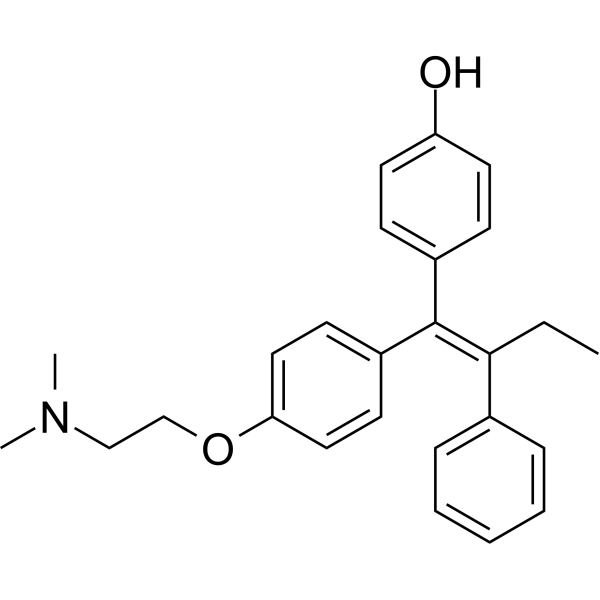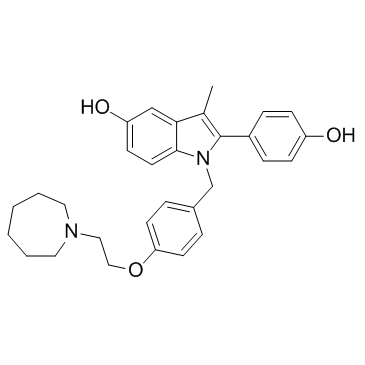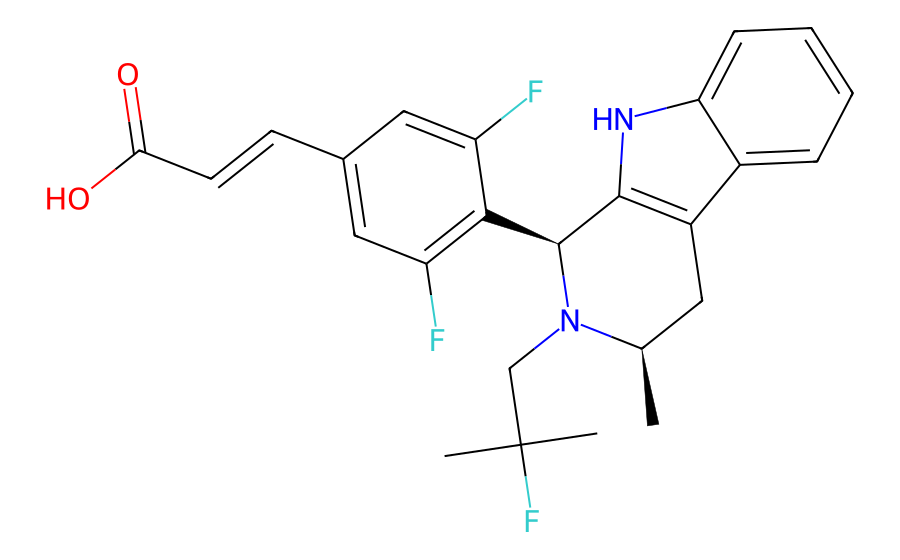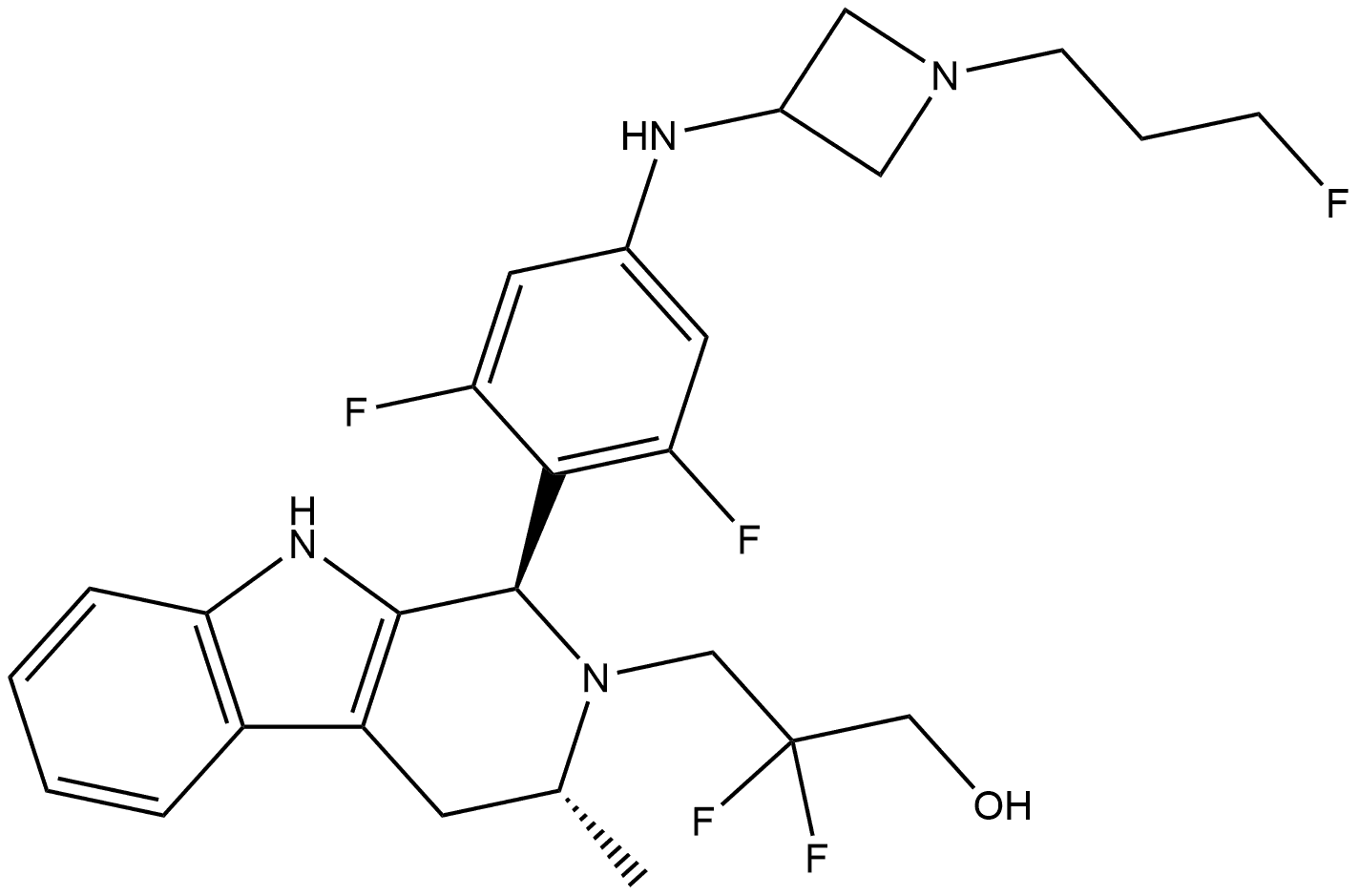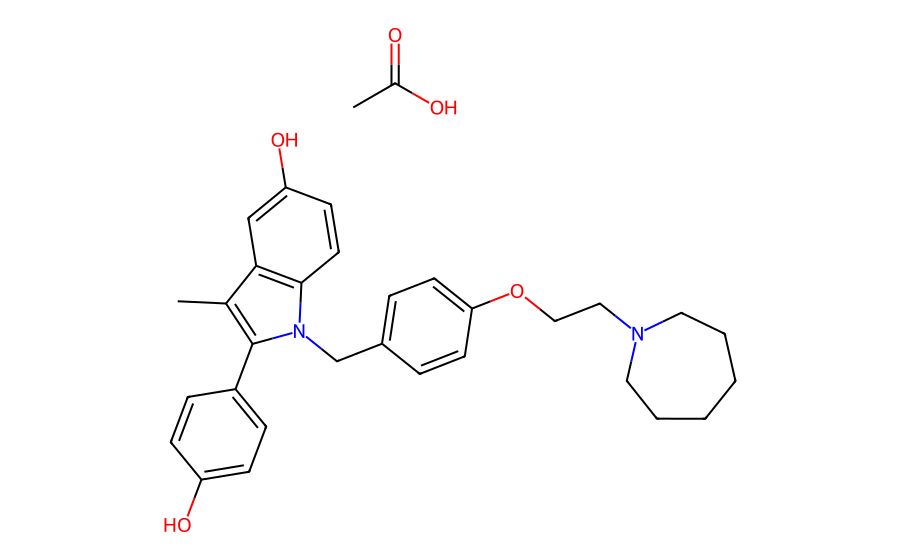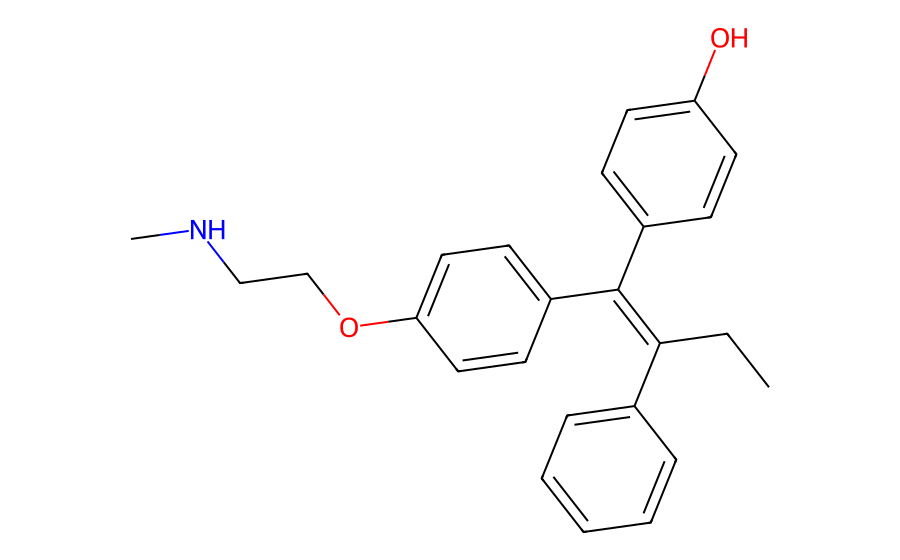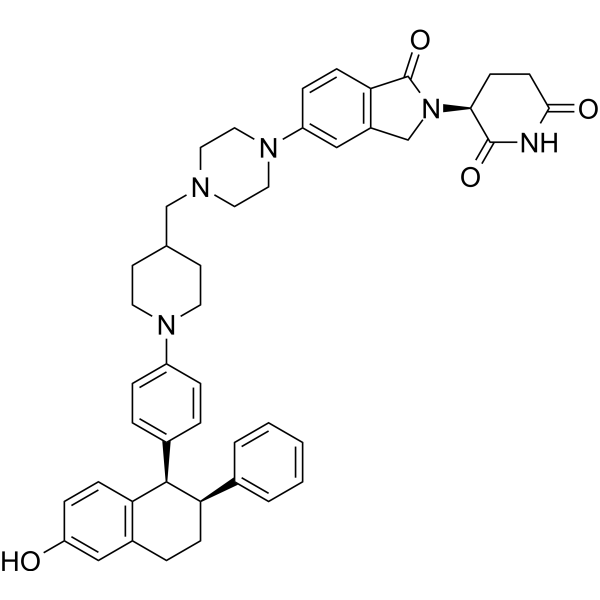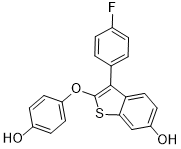
Biological Activity
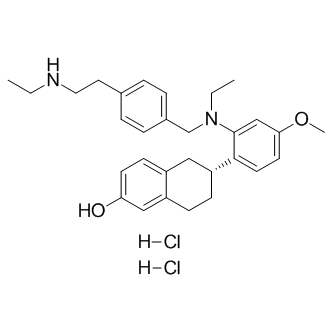
Elacestrant dihydrochloride (RAD1901 dihydrochloride) is a selective and orally available estrogen receptor (ERR) degrader with IC50 values of 48 and 870 nM for ERα and ERβ, respectively.
In Vitro
RAD1901 selectively binds to and degrades the ER and is a potent antagonist of ER-positive breast cancer cell proliferation. RAD1901 treatment exhibits dose-dependent inhibition of ERα expression, with an EC50 of 0.6 nM. Treatment of ER-positive MCF-7 cells with E2 results in a potent and dose-dependent increase in proliferation, with an EC50 of 4 pM. Treatment of cells with RAD1901 in the presence of 10 pM E2 resultsin a dose-dependent decrease in proliferation, with an IC50 value of 4.2 nM[1].
In Vivo
RAD1901 produces a robust and profound inhibition of tumor growth in MCF-7 xenograft models. RAD1901-treated animals survived longer than those treated with either control or fulvestrant. RAD1901 preserves ovariectomy-induced bone loss and preventes the uterotropic effects of E2[1].
Target
IC50: 48 nM (ERα), 870 nM (ERβ)[1]
Kinase Assay
RAD1901 is serially diluted in ES2 screening buffer to concentrations ranging from 10 to 10-6 μM. Aliquots (25 μL) of each dilution are added to a black 384-well microtiter plate, in triplicate. The ER–Fluormone complex is prepared as directed, with 2 nM Fluormone ES2 and 30 nM ER. A 25 μL aliquot of this preparation is added to each reaction well. The plates are sealed and incubated in the dark at room temperature for 4 h. Polarization values for each well are measured and plotted against the concentration of the test compound. The IC50 is determined from at least three independent experiments, with E2 serving as a positive control[1].
Cell Assay
For proliferation assays, MCF-7 cells are treated with 2% charcoal-stripped FBS–MEM containing 10 pM E2 with either RAD1901 or additional E2 at concentrations ranging from 10-9 to 1 M. The medium is removed after 48 h of incubation and the cells are lysed by adding 100 μl of CellTiter Glo. The plates are gently mixed on a plate shaker for 10 min before the luminescent signal is measured on a luminometer. The EC50 and IC50of the test compound are then defined[1].
Animal Administration
Mice: RAD1901 is stored as a dry powder, formulated for use as a homogenous suspension in 0.5% (w/v) methylcellulose in deionized water. Fourteen days after tumor cell implantation, the mice are randomized into nine groups of 15 animals each and treated with vehicle, tamoxifen (1 mg/animal every other day), fulvestrant (0.5 mg/animal daily), or RAD1901 (0.3, 1, 3, 10, 30, 60, 90, and 120 mg/kg daily). Tumor volumes are evaluated twice per week[1].
References & source
[1]. Garner F, et al. RAD1901: a novel, orally bioavailable selective estrogen receptor degrader that demonstrates antitumor activity in breast cancer xenograft models. Anticancer Drugs. 2015 Oct;26(9):948-56.
Published experimental findings depend on the model and assay conditions. They do not guarantee equivalent performance in every application. For laboratory research use only.