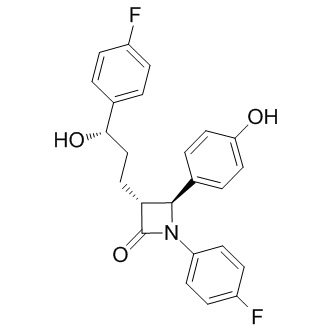
Ezetimibe (Zetia) chemical structure
Chemical structureResearch use only
CAT. NO. DCAPI1084Featured

Ezetimibe (Zetia)

Pack Sizes & Prices

TotalUS$150
We match the best price and quality on market.
Product overview

Description & Application

Ezetimibe (SCH 58235) is a Niemann-Pick C1-like1 (NPC1L1) inhibitor, and is a potent Nrf2 activator. Ezetimibe (SCH 58235) is a potent cholesterol absorption inhibitor.

ParameterValue
Chemical NameZetia , Ezetrol
CAS No.163222-33-1
SynonymsZetia , Ezetrol
FormulaC24H21F2NO3
M.Wt409.4
SMILESO=C1N(C2=CC=C(F)C=C2)[C@H](C3=CC=C(O)C=C3)[C@H]1CC[C@H](O)C4=CC=C(F)C=C4
Purity>99%
Storage2 years -20°C Powder, 2 weeks 4°C in DMSO, 6 months -80°C in DMSO

Biological Activity

Ezetimibe (SCH 58235) is a Niemann-Pick C1-like1 (NPC1L1) inhibitor, and is a potent Nrf2 activator. Ezetimibe (SCH 58235) is a potent cholesterol absorption inhibitor.

In Vitro

Ezetimibe (Eze) acts as a potent Nrf2 activator without causing cytotoxicity. Ezetimibe enhances transactivation of Nrf2, as revealed by a luciferase reporter assay. Ezetimibe also upregulates Nrf2 target genes, including GSTA1, heme oxygenase-1 (HO-1) and Nqo-1 in Hepa1c1c7 and MEF cells. Ezetimibe upregulates Nrf2 target genes in Nrf2+/+ MEF cells, whereas this induction is totally blocked in Nrf2-/- MEF cells. Taken together, Ezetimibe acts as a novel Nrf2 inducer in a ROS-independent manner[1]. Human huh7 hepatocytes are pretreated with Ezetimibe (10 μM, 1 h) and incubated with palmitic acid (PA, 0.5 mM, 24 h) to induce hepatic steatosis. Ezetimibe treatment significantly attenuates PA-increased triglycerides (TG) levels, which is consistent with our animal study. PA treatment resulted in an approximately 20% decrease in mRNA expression of ATG5, ATG6, and ATG7, which had been increased by Ezetimibe treatment. In addition, Ezetimibe treatment significantly increased the PA-induced reduction in LC3 protein abundance[2].

In Vivo

Administration of Ezetimibe (Eze) reduces the liver weights of mice fed the methionine- and choline-deficient (MCD) diet. This is consistent with the beneficial effects of Ezetimibe on hepatic steatosis. Liver histology shows pronounced multiple macrovesicular fat droplets in mice on the MCD diet, but Ezetimibe treatment markedly decreases the number and size of those droplets. Furthermore, hepatic fibrosis in mice fed the MCD diet is significantly attenuated by Ezetimibe[1]. Blood and liver lipid levels including TG, free fatty acids (FFA), and total cholesterol (TC) are significantly decreased in Ezetimibe-treated OLETF rats. Moreover, OLETF rats show higher serum levels of glucose, insulin, HOMA-IR, TG, FFA, and TC than LETF animals, which are significantly reduced by Ezetimibe. In addition, histological analysis indicated that OLETF control rats showed larger lipid droplets in hepatocytes than age-matched LETO controls, which are attenuated by administration of Ezetimibe[2].

References & source

DC Chemicals original product information

Published experimental findings depend on the model and assay conditions. They do not guarantee equivalent performance in every application. For laboratory research use only.
Product documentation

Refer to the certificate supplied with your lot for batch-specific release results.

Handling guide

2 years -20°C Powder, 2 weeks 4°C in DMSO, 6 months -80°C in DMSO

Solution calculator

Related research products

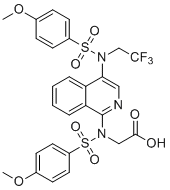
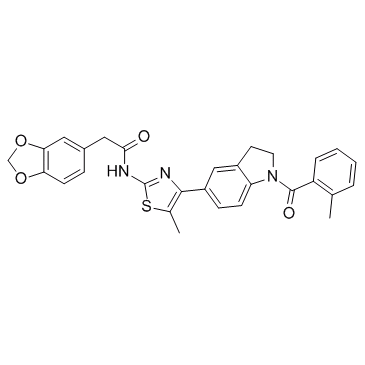
ML385 chemical structureDC10282

ML385

ML385 is a specific nuclear factor erythroid 2-related factor 2 (NRF2) inhibitor with an IC50 of 1.9 μM.

View activity & prices
MSU38225 chemical structureDC70623

MSU38225

MSU 38225 (MSU-38225) is a novel small molecule that inhibit the Nrf2 pathway, potentially inhibiting Nrf2 transcriptional activity and cancer cell growth; MSU38225 downregulates Nrf2 transcriptional activity and…

View activity & prices
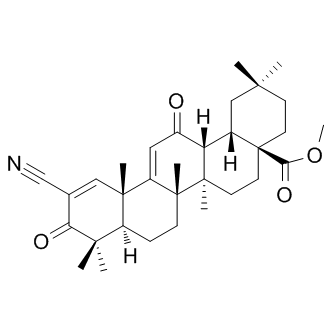
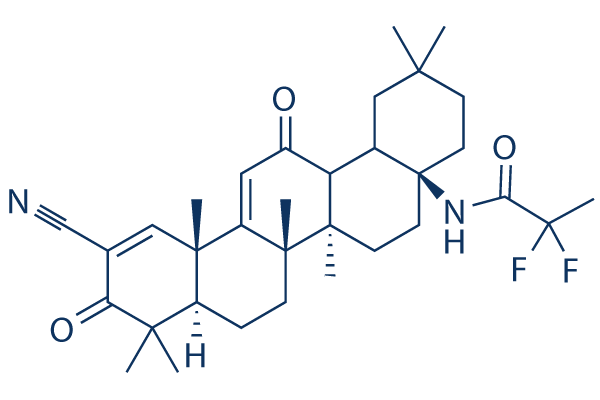
Bardoxolone methyl chemical structureDC4135

Bardoxolone methyl

Bardoxolone is a synthetic triterpenoid compound with potential antineoplastic and anti-inflammatory activities, acting as an activator of the Nrf2 pathway and an inhibitor of the NF-κB pathway.

View activity & prices
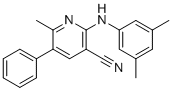
PRL-295 chemical structureDC70709

PRL-295

PRL-295 is a small molecule Keap1-Nrf2 protein–protein interaction inhibitor.PRL-295 binds to Keap1 in the cellular environment, disrupting its interaction with Nrf2, which leads to enhanced gene expression of the…

View activity & prices
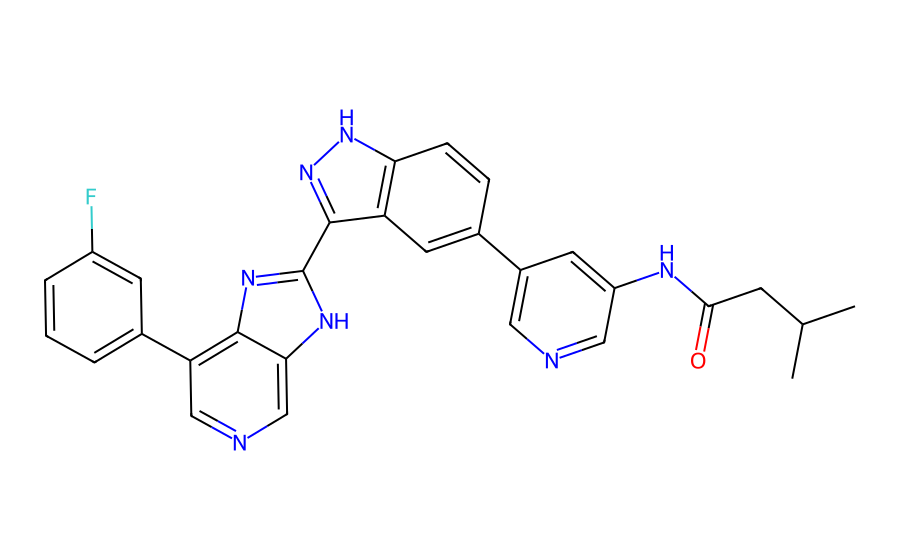
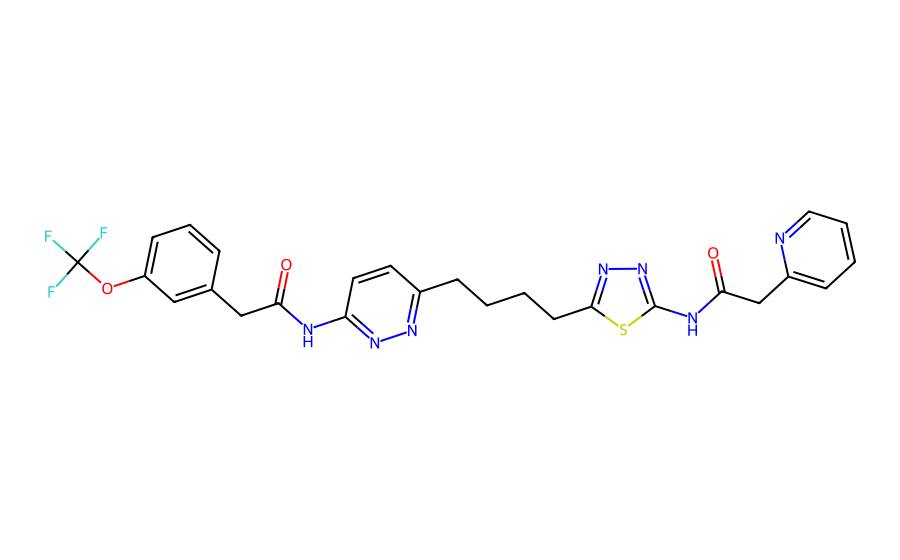
Adavivint chemical structureDC11886

Adavivint

Adavivint is a potent and selective inhibitor of canonical Wnt signaling, with an EC50 of 19.5 nM via a high-throughput TCF/LEF-reporter assay in SW480 colon cancer cells.

View activity & prices
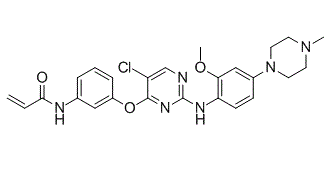
WZ4002 chemical structureDC5090

WZ4002

WZ4002 is a mutant selective EGFR inhibitor with IC50s of 2, 8, 3 and 2 nM for EGFRL858R, EGFRL858R/T790M, EGFRE746_A750 and EGFRE746_A750/T790M, respectively.

View activity & prices
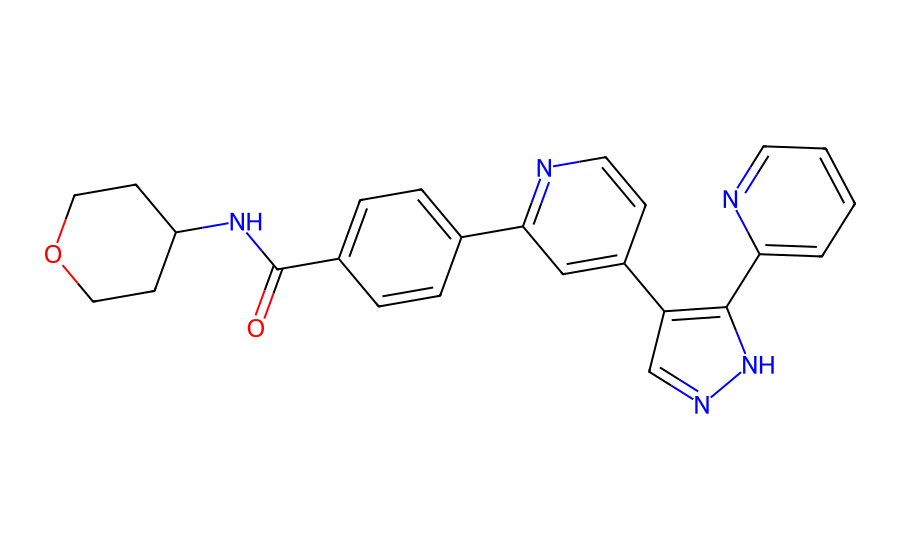
GW788388 chemical structureDC7146

GW788388

GW788388 is a potent and selective inhibitor of ALK5 with IC50 of 18 nM, and also inhibits TGF-β type II receptor and activin type II receptor activities, without inhibiting BMP type II receptor.

View activity & prices

Cart

Request quotation