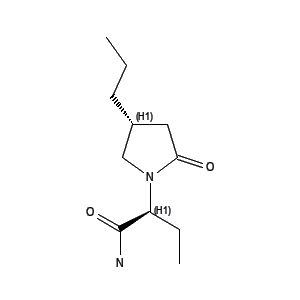
Brivaracetam chemical structure
Chemical structureResearch use only
CAT. NO. DC9535Featured

Brivaracetam

Pack Sizes & Prices

TotalUS$350
We match the best price and quality on market.
Product overview

Description & Application

Brivaracetam(UCB-34714) is a 4-substituted pyrrolidone butanamide as agent with significant antiepileptic activity; high affinity SV2A ligand and also shows an ability to inhibit Na+ channels. in vitro: Brivaracetam has been tested in a comprehensive safety pharmacology, toxicology, developmental toxicology, and genotoxicity program. It is of low acute toxicity, target organ for toxic effects is the hepatobiliary tract. Carcinogenicity studies are ongoing. Human pharmacology studies have shown that brivaracetam has a half-life of 8 h and nearly complete bioavailability. CSD episodes were regularly elicited on slices upon delivery of calibrated KCl drops and were recorded via two micropipette electrodes. After control CSDs, the drug was added to the perfusion and five subsequent CSDs were elicited during drug perfusion. Effects were assessed via CSD amplitude (Ampl) and duration at half-amplitude (D(1/2)). BRV, 10 and 32 microM reduced the Ampl and transiently the D(1/2). Levetiracetam, 32 and 100 microM had no effect on either Ampl or D(1/2). Brivaracetam bound selectively with 20 fold higher affinity than levetiracetam to SV2A. BRV produced a concentration-dependent inhibition of voltage-dependent Na(+) currents with IC(50) values of 41microM at the holding potential of -100mV, and of 6.5microM at the holding potential of -60mV. in vivo: BRV (2.1, 6.8 or 21.0mg/kg i.p.) was injected daily, 60min before each session. Results indicated that in both normal and amygdala-kindled rats BRV did not alter the latency to find the hidden platform or swimming speed during the four consecutive days of learning. brivaracetam (0.3 mg/kg, the minimal effective dose) was more potent than levetiracetam (3 mg/kg, the minimal effective dose) against post-hypoxic seizures.The anti-seizure activity of both compounds occurred 30 min following intraperitoneal (i.p.) administration and was maintained over the entire 150 min post-dose observation period. Both brivaracetam and levetiracetam significantly reduced auditory stimulated post-hypoxic myoclonus from a dose 0.3 mg/kg.

ParameterValue
Chemical NameBrivaracetam
CAS No.357336-20-0
Synonyms1-Pyrrolidineacetamide,a-ethyl-2-oxo-4-propyl-, (aS,4R)-;Brivaracetam;(2S)-2-[(4R)-2-oxo-4-propylpyrrolidin-1-yl]butanamide;Rikelta;UCB 34714;UCB-34714;(alphaS,4R)-alpha-Ethyl-2-oxo-4-propyl-1-pyrrolidineacetamide;BRIVARACETAM [ORANGE BOOK];BRIVARACETAM (MART.);SCHEMBL122081;BRIVARACETAM [MART.];Brivaracetam [USAN:INN];1-Pyrrolidineacetamide, alpha-ethyl-2-oxo-4-propyl-, (alphaS,4R)-; (alphaS,4R)-alpha-Ethyl-2-oxo-4-propyl-1-pyrrolidineacetamide; Brivaracetam; Briviact; UCB 34714;(2S)-2-((4R)-2-OXO-4-PROPYLTETRAHYDRO-1H-PYRROL-1-YL) BUTANAMIDE;AKOS027324306;Briviact;GTPL9041;DB05541;AC-29289;D08879;1-PYRROLIDINEACETAMIDE, .ALPHA.-ETHYL-2-OXO-4-PROPYL (.ALPHA.S,4R)-;NS00068020;357336-20-0;AS-35277;UNII-U863JGG2IA;AE5 - Anti-epileptic drugs 5;BDBM50422531;NCGC00390779-02;CHEMBL607400;BB161996;1-Pyrrolidineacetamide, alpha-ethyl-2-oxo-4-propyl-, (alphaS,4R)-;BRIVARACETAM [JAN];(2S)-2-((4R)-2-Oxo-4-propylpyrrolidin-1-yl)butanamide;BRIVARACETAM [MI];BRIVARACETAM [INN];brivaracetamum;2-(2-oxo-4-propylpyrrolidin-1-yl)butanamide;MSYKRHVOOPPJKU-BDAKNGLRSA-N;(2s)-2-[(4r)-2-oxo-4-propylpyrrolidin-1-yl]butanamide;CS-3418;(S)-2-((R)-2-Oxo-4-propylpyrrolidin-1-yl)butanamide;CCG-266666;BRIVARACETAM [USAN];MFCD25976668;Briviact (TN);EX-A2748;U863JGG2IA;CHEBI:133013;DTXSID00905081;N03AX23;Q408099;(2S)-2-((4R)-2-oxo-4-n-propyl-1-pyrrolidinyl)butanamide;1-PYRROLIDINEACETAMIDE, alpha-ETHYL-2-OXO-4-PROPYL (alphaS,4R)-;HY-14449;BRIVARACETAM [WHO-DD];Brivaracetam (JAN/USAN/INN);compound 83alpha;UCB34714
FormulaC11H20N2O2
M.Wt212.2887
SMILESCCC[C@@H]1CC(N([C@H](C(N)=O)CC)C1)=O
Purity>98%
Storage2 years -20°C Powder, 2 weeks 4°C in DMSO, 6 months -80°C in DMSO

Biological Activity

Brivaracetam(UCB-34714) is a 4-substituted pyrrolidone butanamide as agent with significant antiepileptic activity; high affinity SV2A ligand and also shows an ability to inhibit Na+ channels. in vitro: Brivaracetam has been tested in a comprehensive safety pharmacology, toxicology, developmental toxicology, and genotoxicity program. It is of low acute toxicity, target organ for toxic effects is the hepatobiliary tract. Carcinogenicity studies are ongoing. Human pharmacology studies have shown that brivaracetam has a half-life of 8 h and nearly complete bioavailability. CSD episodes were regularly elicited on slices upon delivery of calibrated KCl drops and were recorded via two micropipette electrodes. After control CSDs, the drug was added to the perfusion and five subsequent CSDs were elicited during drug perfusion. Effects were assessed via CSD amplitude (Ampl) and duration at half-amplitude (D(1/2)). BRV, 10 and 32 microM reduced the Ampl and transiently the D(1/2). Levetiracetam, 32 and 100 microM had no effect on either Ampl or D(1/2). Brivaracetam bound selectively with 20 fold higher affinity than levetiracetam to SV2A. BRV produced a concentration-dependent inhibition of voltage-dependent Na(+) currents with IC(50) values of 41microM at the holding potential of -100mV, and of 6.5microM at the holding potential of -60mV. in vivo: BRV (2.1, 6.8 or 21.0mg/kg i.p.) was injected daily, 60min before each session. Results indicated that in both normal and amygdala-kindled rats BRV did not alter the latency to find the hidden platform or swimming speed during the four consecutive days of learning. brivaracetam (0.3 mg/kg, the minimal effective dose) was more potent than levetiracetam (3 mg/kg, the minimal effective dose) against post-hypoxic seizures.The anti-seizure activity of both compounds occurred 30 min following intraperitoneal (i.p.) administration and was maintained over the entire 150 min post-dose observation period. Both brivaracetam and levetiracetam significantly reduced auditory stimulated post-hypoxic myoclonus from a dose 0.3 mg/kg.

In Vitro

No in vitro data are provided in the current product source. Contact us for further information.

In Vivo

No in vivo data are provided in the current product source. Contact us for further information.

References & source

DC Chemicals original product information

Published experimental findings depend on the model and assay conditions. They do not guarantee equivalent performance in every application. For laboratory research use only.

Product documentation

Refer to the certificate supplied with your lot for batch-specific release results.

Handling guide

2 years -20°C Powder, 2 weeks 4°C in DMSO, 6 months -80°C in DMSO

Solution calculator

Related research products

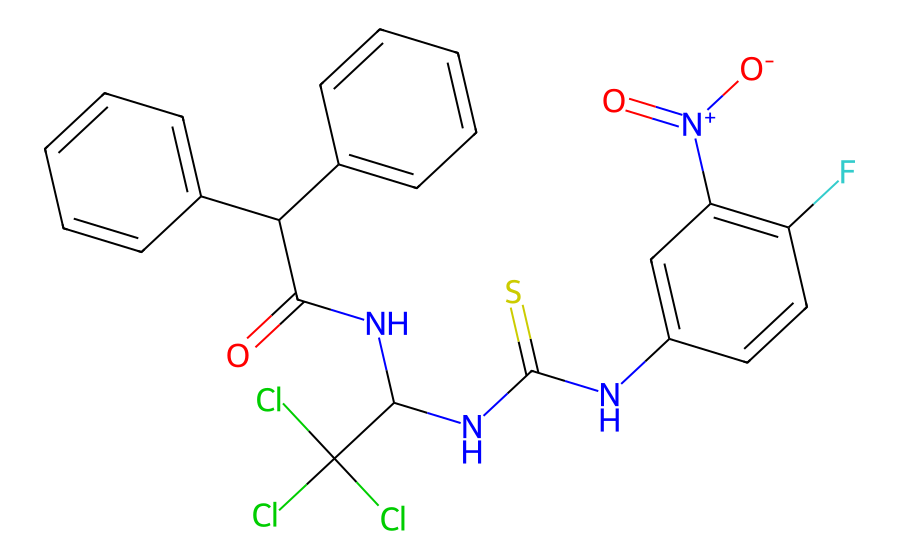
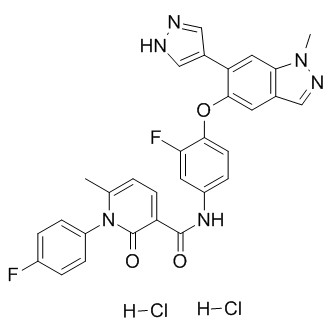
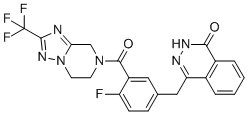
Fluzoparib chemical structureDC22228

Fluzoparib

Fluzoparib (SHR-3162) is a novel, potent and orally available inhibitor of PARP; potently inhibited PARP1 enzyme activity and induced DNA double-strand breaks, G2/M arrest and apoptosis in homologous recombination…

View activity & prices
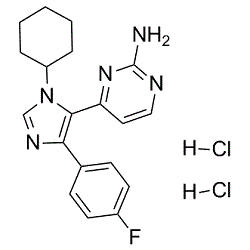
PF-670462 chemical structureDC2086

PF-670462

PF-670462 is a potent and selective inhibitor of casein kinase (CK1ε and CK1δ), with IC50s of 7.7 nM and 14 nM, respectively.

View activity & prices
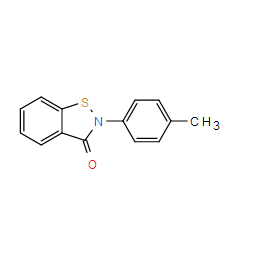
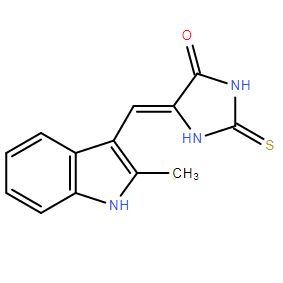
PBIT chemical structureDC7550

PBIT

PBIT is a specific inhibitor of the Jumonji AT-rich Interactive Domain 1(JARID1) enzymes. PBIT inhibits JARID1B (KDM5B or PLU1 ) histone demethylase an IC50 of about 3 μM . PBIT also inhibits JARID1A and JARID1C with…

View activity & prices
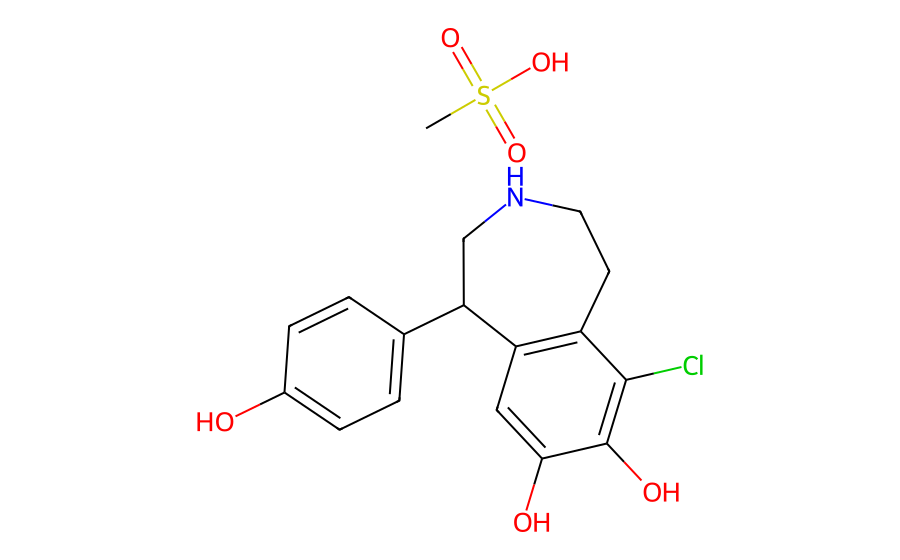
Fenoldopam (mesylate) chemical structureDC9424

Fenoldopam (mesylate)

Fenoldopam(SKF 82526) mesylate is a drug and synthetic benzazepine derivative which acts as a selective D1 receptor partial agonist.Target: D1 ReceptorFenoldopam is a selective dopamine-1 (DA1) agonist with…

View activity & prices
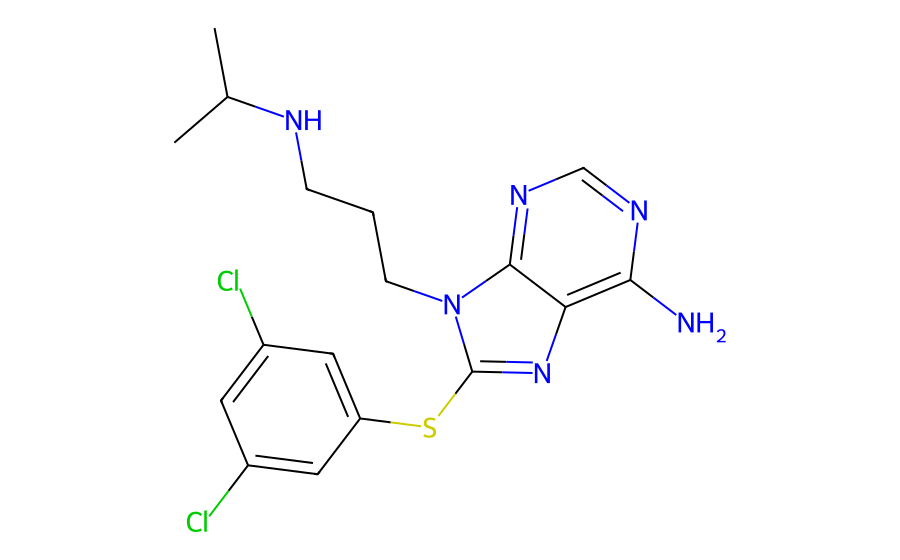
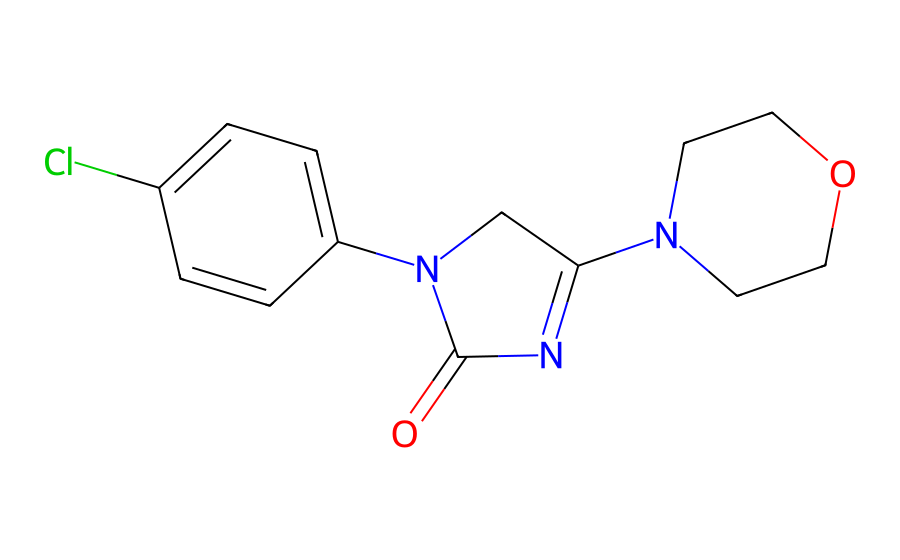
PKG drug G1 chemical structureDC10821

PKG drug G1

PKG drug G1 targets C42 of PKG Iα. PKG drug G1 can couple to vasodilation and blood pressure lowering by a C42 PKG Iα-independent mechanism.

View activity & prices

Cart

Request quotation