Biological Activity
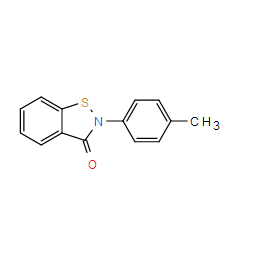
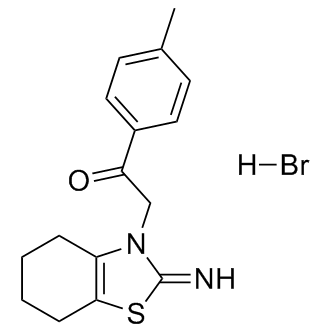
Pifithrin-α hydrobromide is a p53 inhibitor which blocks its transcriptional activity and prevents cells from apoptosis.
In Vitro
Pifithrin-α (PFT-α) hydrobromideis a water-soluble compound that could suppress p53 protein transcription. Pifithrin-α can suppress glucose oxidase (GOX)-induced p53 protein increase in whole cell lysates, but cyclosporine A (CsA) fails to show such an inhibition effect. Notably, Pifithrin-α is able to block the GOX-induced Bcl-2 protein reduction. Similarly, it is Pifithrin-α rather than CsA that able to prevent the Bax increasing in whole cell lysates[1]. Pifithrin-α inhibits p53-dependent apoptosis through an undetermined mechanism. Pifithrin-α also acts as an aryl hydrocarbon receptor (AhR) agonist and. Pifithrin-α is a potent AhR agonist as determined by its ability to bind the AhR, induce formation of its DNA binding complex, activate reporter activity, and up-regulate the classic AhR target gene CYP1A1[2].
In Vivo
When the experiment is performed with Pifthirin-α (PFT-α) hydrobromide, a pharmacological p53 inhibitor, the percentage of annexin V-positive Foxe3-/- SMCs decreases to WT levels. Pifithrin-α (2.2 mg/kg, i.p.) significantly reduces the incidence of aortic rupture and intramural hematomas in Foxe3-/- mice that underwent transverse aortic constriction (TAC) (50% to 17%, P<0.05). After Pifthirin-α treatment, the mean diameter of the ascending aorta and the percentage of TUNEL-positive cells in the aortic media are also normalized to WT levels in surviving Foxe3-/- animals (P<0.05)[3].
References & source
Published experimental findings depend on the model and assay conditions. They do not guarantee equivalent performance in every application. For laboratory research use only.