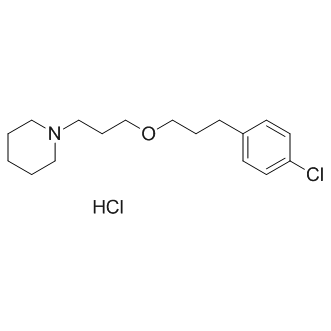
Pitolisant (hydrochloride) chemical structure
Chemical structureResearch use only
CAT. NO. DC9465Featured

Pitolisant (hydrochloride)

Pack Sizes & Prices

TotalUS$400
We match the best price and quality on market.
Product overview

Description & Application

Pitolisant hydrochloride is a potent and selective nonimidazole inverse agonist at the recombinant human histamine H3 receptor (Ki=0.16 nM).

ParameterValue
Chemical Name1-(3-(3-(4-Chlorophenyl)propoxy)propyl)piperidine hydrochloride
CAS No.903576-44-3
SynonymsBF2.649; BF2649; BF-2649; BF2649; FUB-649, FUB649, FUB 649, BF2.649; BF 2.649; HBS-101; HBS 101; HBS101; Ciproxidine; Pitolisant, Tiprolisant; Pitolisant HCl; Pitolisant hydrochloride.
FormulaC17H27Cl2NO
M.Wt332.309
SMILESClC(C=C1)=CC=C1CCCOCCCN2CCCCC2.Cl
Purity>98%
Storage2 years -20°C Powder, 2 weeks 4°C in DMSO, 6 months -80°C in DMSO

Biological Activity

Pitolisant hydrochloride is a potent and selective nonimidazole inverse agonist at the recombinant human histamine H3 receptor (Ki=0.16 nM).

In Vitro

On the stimulation of guanosine 5′-O-(3-[35S]thio)triphosphate binding to this receptor, Pitolisant (BF2.649) behaves as a competitive antagonist with a Ki value of 0.16 nM and as an inverse agonist with an EC50 value of 1.5 nM and an intrinsic activity ~50% higher than that of ciproxifan. Pitolisant displaces [125I]iodoproxyfan binding from mouse brain cortical membranes with an IC50 value of 26.4±4.5 nM. Taking into account the Kd value of the radioligand (161±9 pM), the deduced Ki value for Pitolisant is 14±1 nM. Pitolisant displaces [125I]iodoproxyfan binding from membranes of rat glioma C6 cells stably expressing the human H3 receptor with an IC50 value of 4.2±0.2 nM. Taking into account the Kd value of the radioligand (50±4 pM), the deduced Ki value for Pitolisant is 2.7±0.5 nM. Pitolisant progressively reverses this response with a Hill coefficient close to unity and an IC50 value of 330±68 nM, leading to a Ki value of 17±4 nM. Pitolisant elicits a dose-dependent decrease of the basal-specific [35S]GTPγS binding to membranes with a maximal effect corresponding to 75±1% of the basal-specific binding and an EC50 value of 1.5±0.1 nM[1].

In Vivo

The administration of Pitolisantat a single dose of 10 mg/kg 30 min before a single dose of Olanzapine (2 mg/kg b.w.) also significantly affects immobility time in the FST. Subsequent administration of the aforementioned drug sequence in mice statistically significantly increases the duration of immobility in comparison to the time determined in the control group in the FST. It decreased locomotor activity as well. In contrast, the results obtained in subchronic treatment after fifteen administrations of both drugs (Pitolisant 10 mg/kg b.w., and after 30 min Olanzapine 2 mg/kg b.w., and again after 4 h Olanzapine 2 mg/kg b.w.) show that the administration of Pitolisant followed by that of Olanzapine equalized the locomotor activity in mice; in comparison to the level of motility in the control group, to which only Pitolisant is administered. More importantly, this combination of drugs significantly reduces immobility time to the level obtained in the control group in the forced swim test in mice [one-way ANOVA; F (3,20)=4.226,P=0.0181][2]. Rats given Pitolisant (10 mg/kg) during the conditioning phase stayed 502±94 s on the paired texture, a value not statistically different from that of controls, indicating that Pitolisant did not support place preference[3].

References & source

DC Chemicals original product information

Published experimental findings depend on the model and assay conditions. They do not guarantee equivalent performance in every application. For laboratory research use only.
Product documentation

Refer to the certificate supplied with your lot for batch-specific release results.

Handling guide

2 years -20°C Powder, 2 weeks 4°C in DMSO, 6 months -80°C in DMSO

Solution calculator

Related research products

Alcaftadine chemical structureDCAPI1467

Alcaftadine

For the detailed information of Alcaftadine, the solubility of Alcaftadine in water, the solubility of Alcaftadine in DMSO, the solubility of Alcaftadine in PBS buffer, the animal experiment(test) (test) of…

View activity & prices
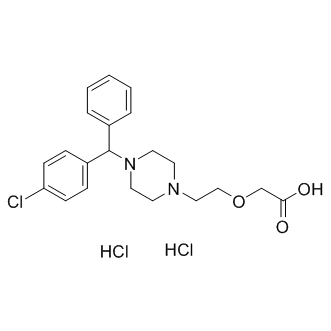
Cetirizine 2HCl chemical structureDC9154

Cetirizine 2HCl

Cetirizine 2Hcl, a second-generation antihistamine, is a major metabolite of hydroxyzine, and a racemic selective H1 receptor inverse agonist used in the treatment of allergies, hay fever, angioedema, and…

View activity & prices
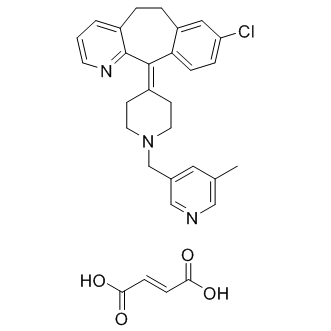
Rupatadine chemical structureDCAPI1593

Rupatadine

Rupatadine Fumarate (UR-12592 Fumarate) is a potent dual PAF/H1 antagonist with Ki of 0.55/0.1 uM(rabbit platelet membranes/guinea pig cerebellum membranes).

View activity & prices
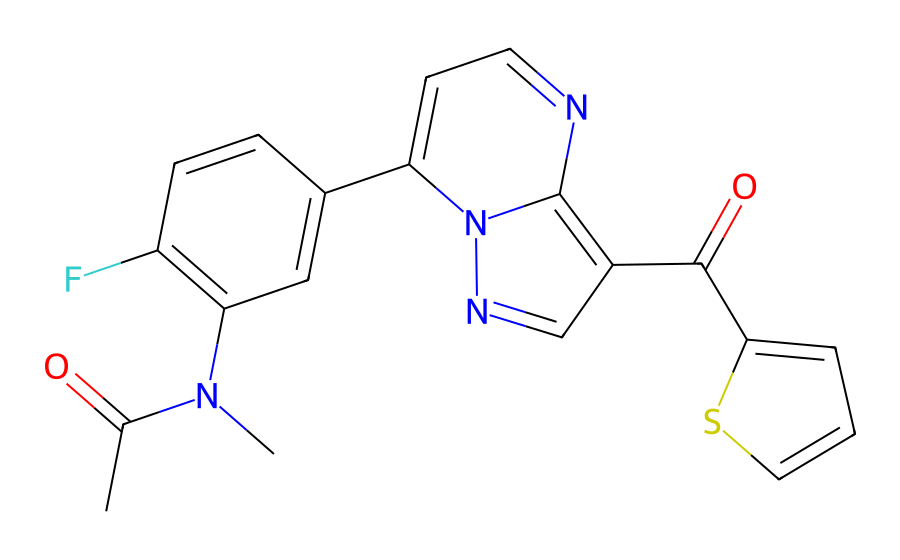
Lorediplon chemical structureDC8642

Lorediplon

Lorediplon is a novel non-benzodiazepine, hypnotic drug acting as a GABAA receptor modulator, differentially active at the alpha1-subunit, associated with promoting sleep.Target: GABALorediplon is a drug for the…

View activity & prices
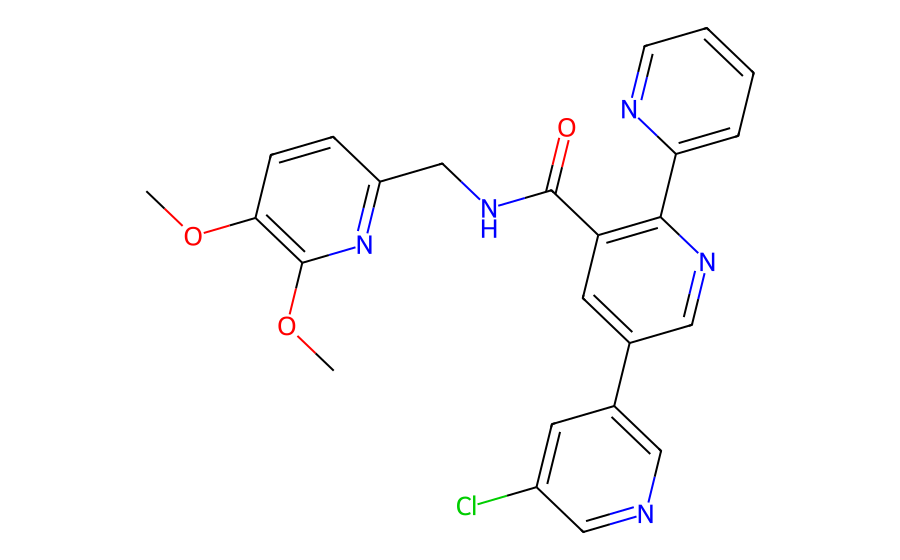
MK-1064 chemical structureDC9966

MK-1064

MK-1064 is a selective orexin 2 receptor antagonist (2-SORA) for the research of insomnia.target: 2-SORA [1]In vivo: MK-1064 promotes sleep and increases both rapid eye movement (REM) and non-REM (NREM) sleep in rats…

View activity & prices
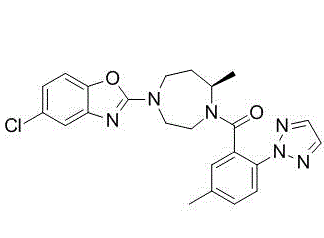
Suvorexant chemical structureDC5017

Suvorexant

Suvorexant (MK-4305) is a potent, selective, and orally bioavailable antagonist of OX1R and OX2R currently under clinical investigation as a novel therapy for insomnia.

View activity & prices
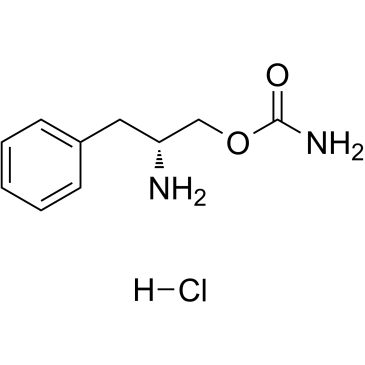
Solriamfetol hydrochloride chemical structureDC11529

Solriamfetol hydrochloride

Solriamfetol (JZP-110) is a selective dopamine and norepinephrine reuptake inhibitor with robust wake-promoting effects. Solriamfetol binds to dopamine and norepinephrine transporters, so it can inhibit reuptake of…

View activity & prices

Cart

Request quotation