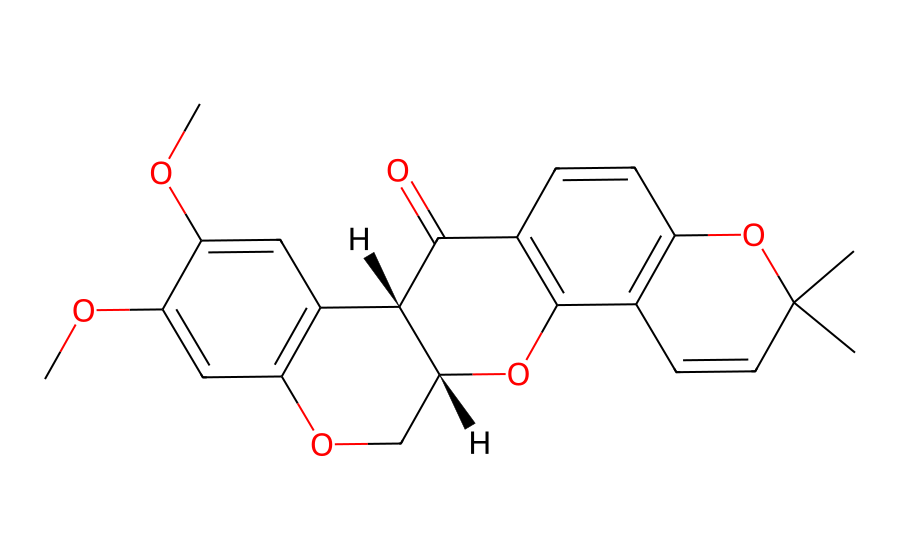
Deguelin chemical structure
Chemical structureResearch use only
CAT. NO. DC9337Featured

Deguelin

Pack Sizes & Prices

TotalUS$450
We match the best price and quality on market.
Product overview

Description & Application

Deguelin, a naturally occurring rotenoid, is known to be an Akt inhibitor and to have an anti-tumor effect on several cancers; decrease levels of phosphorylated Akt. in vitro: Deguelin in a dose and time dependent manner inhibited the growth of MDA-MB-231, MDA-MB-468, BT-549 and BT-20 cells. Deguelin administration causes a significant HNSCC cell death. Deguelin induces both cell apoptosis and autophagy by modulating multiple signaling pathways in cultured HNSCC cells. Deguelin inhibits Akt signaling, and down-regulates survivin and cyclin-dependent kinase 4 (Cdk4) expressions, by disrupting their association with heat shock protein-90 (Hsp-90). Deguelin induces ceramide production through de novo synthase pathway to promote HNSCC cell death. Importantly, increased ceramide level activates AMP-activated protein kinase (AMPK), which then directly phosphorylates Ulk1 and eventually leads to cell autophagy. Deguelin inhibited the proliferation of MPC-11 cells in a concentration- and time-dependent manner and caused the apoptotic death of MPC-11 cells. Following exposure to deguelin, the phosphorylation of Akt was decreased. The inhibition of cell growth may be associated with decreased levels of phosphorylated Akt. Deguelin-induced apoptosis was characterized by the upregulation of Bax, downregulation of Bcl-2 and activation of caspase-3. in vivo: Deguelin (2 or 4 mg/kg body weight), when injected intraperitoneally, reduced the in vivo tumor growth of MDA-MB-231 cells transplanted subcutaneously in athymic mice. Moreover it was nontoxic as evident from daily observations on mobility, food and water consumption and comparison of bodyweight and other visceral organ weights with those in control animals at the termination of the study. In the colon cancer xenograft model, the volume of the tumor treated withdeguelin was significantly lower than that of the control, and the apoptotic index for deguelin-treated mice was much higher.

ParameterValue
Chemical NameDeguelin
CAS No.522-17-8
SynonymsDeguelin;(7as-cis)-oxy-;3h-bis(1)benzopyrano(3,4-b:6’,5’-e)pyran-7(7ah)-one,13,13a-dihydro-9,10-dimeth;(-)-DEGUELIN;(7AS,13AS)-13,13A-DIHYDRO-9,10-DIMETHOXY-3,3-DIMETHYL-3H-BIS[1]BENZOPYRANO[3,4-B:6',5'-E]PYRAN-7(7AH)-ONE;(7aS,13aS)-13,13a-Dihydro-9,10-dimethoxy-3,3-dimethyl-(3H)-bis[1]benzopyrano[3.4-b.6'.5'-e]pyran-7(7aH)-one;12a-DEOXYTEPHROSIN;(7aS)-3,3-Dimethyl-9,10-dimethoxy-7,7aα,13,13aα-tetrahydro-3H-bis[1]benzopyrano[3,4-b:6',5'-e]pyran-7-one;(−)-Deguelin;3H-[1]Benzopyrano[3,4-b]pyrano[2,3-h][1]benzopyran-7(7aH)-one,13,13a-dihydro-9,10-dimethoxy-3,...;3H-[1]Benzopyrano[3,4-b]pyrano[2,3-h][1]benzopyran-7(7aH)-one,13,13a-dihydro-9,10-dimethoxy-3,3-dimethyl-, (7aS,13aS)-;(-)-cis-Deguelin;Tocris-1770;(7aS,13aS)-13,13a-Dihydro-9,10-dimethoxy-3,3-dimethyl-3H-bis[1]benzopyrano[3,4-b:6′,5′-e]pyran-7(7aH)-one;DEGUELIN(-);K5Z93K66IE;(-)-Deguelin, Mundulea sericea;ORDAZKGHSNRHTD-UXHICEINSA-N;Deguelin/;Spectrum_001044;3H-Bis(1)benzopyrano;Spectrum2_000298;Spectrum3_001122;Spectrum5_001852;Spectrum4_001965;3H-Bis(1);KBioSS_001524;SPECTRUM201138;KBioGR_002
FormulaC23H22O6
M.Wt394.4172
SMILESO1C2C3C([H])=C([H])C(C([H])([H])[H])(C([H])([H])[H])OC=3C([H])=C([H])C=2C([C@@]2([H])C3=C([H])C(=C(C([H])=C3OC([H])([H])[C@@]12[H])OC([H])([H])[H])OC([H])([H])[H])=O
Purity>98%
Storage2 years -20°C Powder, 2 weeks 4°C in DMSO, 6 months -80°C in DMSO

Biological Activity

Deguelin, a naturally occurring rotenoid, is known to be an Akt inhibitor and to have an anti-tumor effect on several cancers; decrease levels of phosphorylated Akt. in vitro: Deguelin in a dose and time dependent manner inhibited the growth of MDA-MB-231, MDA-MB-468, BT-549 and BT-20 cells. Deguelin administration causes a significant HNSCC cell death. Deguelin induces both cell apoptosis and autophagy by modulating multiple signaling pathways in cultured HNSCC cells. Deguelin inhibits Akt signaling, and down-regulates survivin and cyclin-dependent kinase 4 (Cdk4) expressions, by disrupting their association with heat shock protein-90 (Hsp-90). Deguelin induces ceramide production through de novo synthase pathway to promote HNSCC cell death. Importantly, increased ceramide level activates AMP-activated protein kinase (AMPK), which then directly phosphorylates Ulk1 and eventually leads to cell autophagy. Deguelin inhibited the proliferation of MPC-11 cells in a concentration- and time-dependent manner and caused the apoptotic death of MPC-11 cells. Following exposure to deguelin, the phosphorylation of Akt was decreased. The inhibition of cell growth may be associated with decreased levels of phosphorylated Akt. Deguelin-induced apoptosis was characterized by the upregulation of Bax, downregulation of Bcl-2 and activation of caspase-3. in vivo: Deguelin (2 or 4 mg/kg body weight), when injected intraperitoneally, reduced the in vivo tumor growth of MDA-MB-231 cells transplanted subcutaneously in athymic mice. Moreover it was nontoxic as evident from daily observations on mobility, food and water consumption and comparison of bodyweight and other visceral organ weights with those in control animals at the termination of the study. In the colon cancer xenograft model, the volume of the tumor treated withdeguelin was significantly lower than that of the control, and the apoptotic index for deguelin-treated mice was much higher.

In Vitro

No in vitro data are provided in the current product source. Contact us for further information.

In Vivo

No in vivo data are provided in the current product source. Contact us for further information.

References & source

DC Chemicals original product information

Published experimental findings depend on the model and assay conditions. They do not guarantee equivalent performance in every application. For laboratory research use only.

Product documentation

Refer to the certificate supplied with your lot for batch-specific release results.

Handling guide

2 years -20°C Powder, 2 weeks 4°C in DMSO, 6 months -80°C in DMSO

Solution calculator

Related research products

Fluzoparib chemical structureDC22228

Fluzoparib

Fluzoparib (SHR-3162) is a novel, potent and orally available inhibitor of PARP; potently inhibited PARP1 enzyme activity and induced DNA double-strand breaks, G2/M arrest and apoptosis in homologous recombination…

View activity & prices
PF-670462 chemical structureDC2086

PF-670462

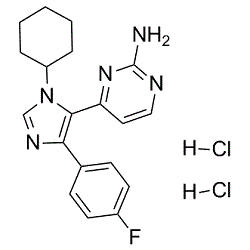
PF-670462 is a potent and selective inhibitor of casein kinase (CK1ε and CK1δ), with IC50s of 7.7 nM and 14 nM, respectively.

View activity & prices
PBIT chemical structureDC7550

PBIT

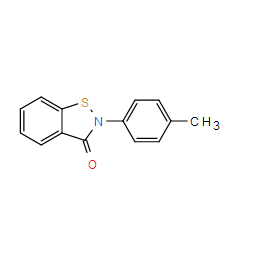
PBIT is a specific inhibitor of the Jumonji AT-rich Interactive Domain 1(JARID1) enzymes. PBIT inhibits JARID1B (KDM5B or PLU1 ) histone demethylase an IC50 of about 3 μM . PBIT also inhibits JARID1A and JARID1C with…

View activity & prices
Fenoldopam (mesylate) chemical structureDC9424

Fenoldopam (mesylate)

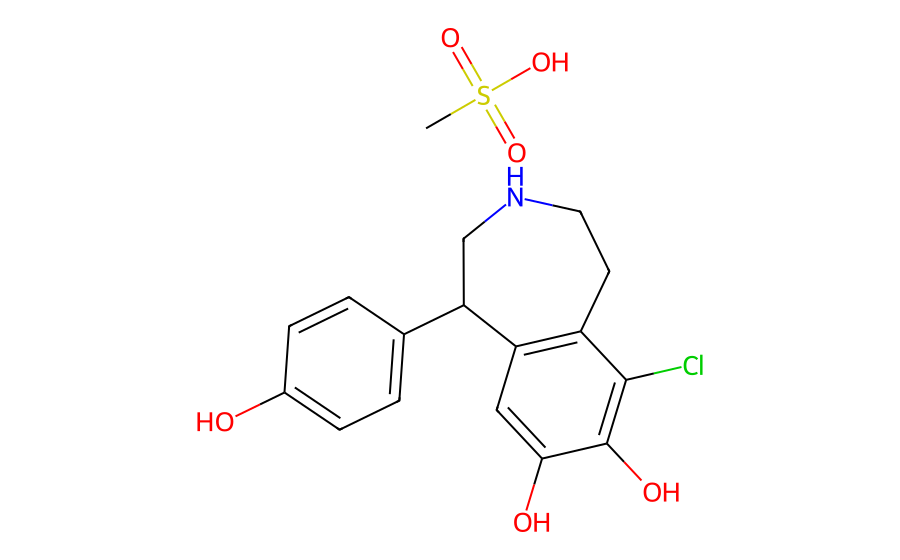
Fenoldopam(SKF 82526) mesylate is a drug and synthetic benzazepine derivative which acts as a selective D1 receptor partial agonist.Target: D1 ReceptorFenoldopam is a selective dopamine-1 (DA1) agonist with…

View activity & prices
PKG drug G1 chemical structureDC10821

PKG drug G1

PKG drug G1 targets C42 of PKG Iα. PKG drug G1 can couple to vasodilation and blood pressure lowering by a C42 PKG Iα-independent mechanism.

View activity & prices

Cart

Request quotation