Biological Activity
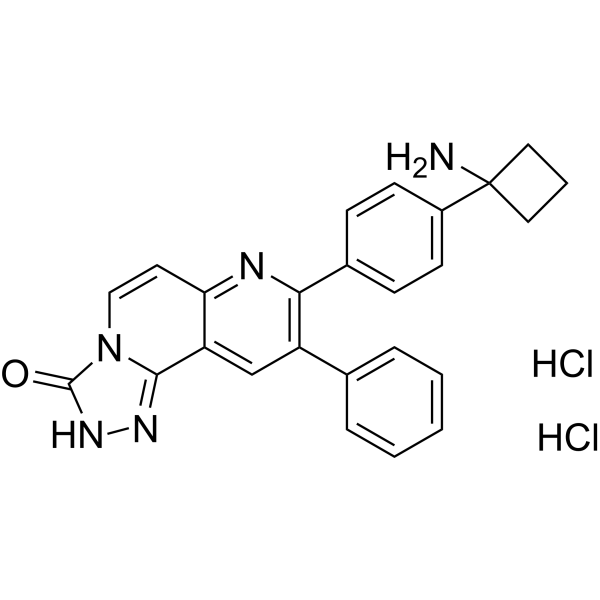
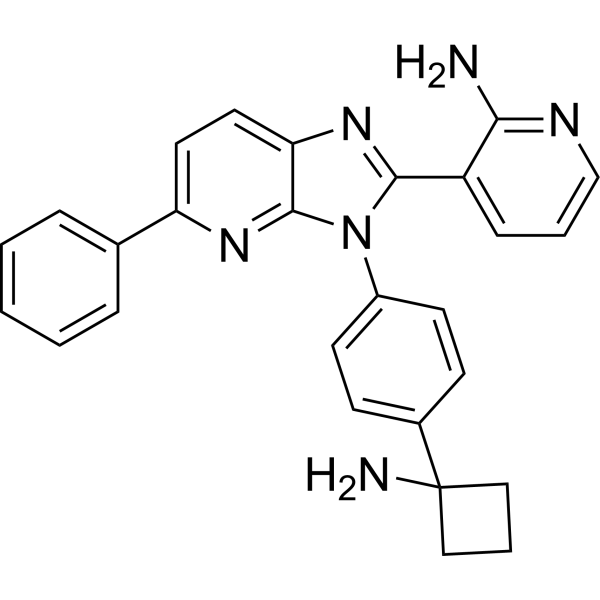
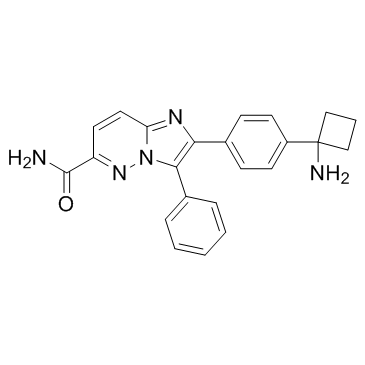
SC66 is a novel Akt inhibitor, reduces cell viability in a dose- and time-dependent manner, inhibits colony formation and induces apoptosis in hepatocellular carcinoma (HCC) cells.
In Vitro
SC66 inhibits cell viability and colony forming capacity of HCC cells with IC50s of 0.77,0.47,0.92,0.75 and 2.85 μg/mL at 72 hours for HepG2, Hep3B, PLC/PRF/5,HA22T/VGH and Huh7 cells. HepG2, HA22T/VGH and PLC/PRF/5 cells have similar IC50s of approximately 0.85 and 0.75 μg/mL at 48 and 72 hours, respectively. To determine whether the decrease in cell viability is related to apoptosis induction, TUNEL assays are performed in Hep3B and Huh7 cells treated with 1, 2 and 4 μg/mL of SC66 for 24 hours. In Hep3B cells the number of TUNEL-positive cells increased with increasing concentrations of SC66, whereas in Huh7 cells very few light brown-colored cells are observed only after treatment with 4 μg/mL SC66[1].
In Vivo
To demonstrate the effectiveness in vivo of SC66 on HCC, a mouse xenograft tumor model of Hep3B cells is used. When tumors became palpable, at a size of about 150 mm3, mice are randomized into three groups of 6 animals each. The treated group receive SC66 at 15 and 25 mg/kg twice a week via i.p. injection, while the untreated group receive the vehicle alone. Treatment with 25 mg/Kg SC66 significantly reduces tumor volume to 37% on day 17 when compared with tumors of the untreated group[1].
References & source
Published experimental findings depend on the model and assay conditions. They do not guarantee equivalent performance in every application. For laboratory research use only.