Biological Activity
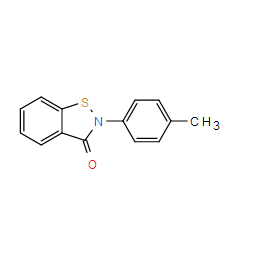
Tideglusib is an irreversible GSK-3 inhibitor with IC50s of 5 nM and 60 nM for GSK-3βWT (1 h preincubation) and GSK-3βC199A (1 h preincubation), respectively.
In Vitro
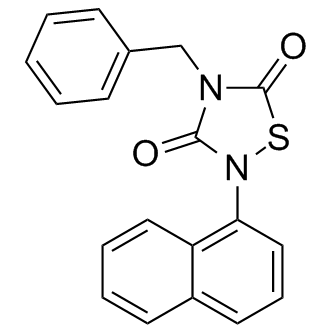
Tideglusib (NP12) is a small heterocyclic thiadiazolidinone (TDZD) derivative, which is an ATP-non competitive inhibitor of GSK-3β with an IC50 value in the micromolar range[2]. Incubation of both astrocyte and microglial cultures with Tideglusib (NP031112) completely abrogates the induction of TNF-α and COX-2 expression after glutamate treatment. These effects of NP031112 are not caused by a loss of cell viability, because the 24 h exposure of astrocyte and microglial cells to this TDZD does not modify cell viability[3].
In Vivo
Tideglusib (NP12) treatment correlates with an increase of 46% as an average in the inhibitory phosphorylation of GSK-3β at Ser-9 in the brains of APPsw-tauvlw mice, and the levels of the inactive from of the enzyme in NP12 treated mice are comparable to those found in wild-type littermate controls (p=0.893) (n=6-8 for each treatment). NP12 treatment results in significantly decreased phosphorylation at the putative GSK-3β-directed sites Ser-202 (CP13) and Ser-396/404 (PHF-1) in 15-month-old mice by more than 60% (p=0.023 and p=0.024, respectively)[2]. Injection of Tideglusib (NP031112) (50 mg/kg) into the rat hippocampus dramatically reduces kainic acid-induced inflammation, as measured by edema formation using T2-weighted magnetic resonance imaging and glial activation and has a neuroprotective effect in the damaged areas of the hippocampus[3].
References & source
Published experimental findings depend on the model and assay conditions. They do not guarantee equivalent performance in every application. For laboratory research use only.