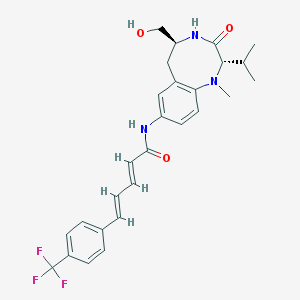
α-Amyloid Precursor Protein Modulator(TPPB) chemical structure
Chemical structureResearch use only
CAT. NO. DC8534Featured

α-Amyloid Precursor Protein Modulator(TPPB)

Pack Sizes & Prices

TotalUS$850
We match the best price and quality on market.
Product overview

Description & Application

α-Amyloid Precursor Protein Modulator(TPPB) is a cell-permeable benzolactam-derived protein kinase C (PKC) activator with a Ki of 11.9 nM.

ParameterValue
Chemical Name(2S,5S)-(E,E)-8-(5-(4-(Trifluoromethyl)phenyl)-2,4-pentadienoylamino)benzolactam
CAS No.497259-23-1
Synonyms(2S,5S)-(E,E)-8-(5-(4-(Trifluoromethyl)phenyl)-2,4-pentadienoylamino)benzolactam; PKC Activator V
FormulaC27H30F3N3O3
M.Wt501.55
SMILESCC(C)[C@H]1C(=O)N[C@@H](CC2=C(N1C)C=CC(=C2)NC(=O)/C=C/C=C/C3=CC=C(C=C3)C(F)(F)F)CO
Purity>98%
Storage2 years -20°C Powder, 2 weeks 4°C in DMSO, 6 months -80°C in DMSO

Biological Activity

α-Amyloid Precursor Protein Modulator(TPPB) is a cell-permeable benzolactam-derived protein kinase C (PKC) activator with a Ki of 11.9 nM.

In Vitro

By use of a cell line derived from an Alzheimer’s disease patient, significant enhancement of sAPPα secretion is achieved at 1 μM concentration for TPPB (Compound 5e)[1]. TPPB has a role against Aβ25-35-induced neurotoxicity in PC12 cells. TPPB at concentration of 1 μM could antagonize Aβ25-35 induced cell damage. TPPB could increase the phosphorylation of Akt, PKC, MARCKS and MAPK, which are inhibited by Aβ25-35 treatment. TPPB inhibits the activation of caspase-3 induced by Aβ25-35[2].

In Vivo

TPPB is evaluated for induction of hyperplasia after topical application to the shaved backs of outbred Sencar mice and shows a modest response at 300 μg[1].

Target

PKC:11.9 nM (Ki)

Cell Assay

24 h after plating 2×10⁴ pheochromocytoma PC12 cells in each well of a 96 well plate, cells are incubated with TPPB at a series of concentration (0.1, 0.5, 1, 5, 10, 20 μM). Twelve to 24 h later, the original media is replaced with media containing MTT at a final concentration of 0.5 g/L for 4 h. Cell viability is evaluated with MTT assays[2].

Animal Administration

Mice: Mice are 7 weeks old at the beginning of the treatments and are in the resting phase of the hair cycle. TPPB is applied once or else are applied twice weekly for a total of four applications. Two animals are treated at each dose of compound, and 72 h after the last application, the animals are euthanized. Two portions of treated skin are removed from each animal, fixed in neutral buffered formalin, and stained with hematoxylin and eosin for histological analysis[1].

References & source

[1]. Kozikowski AP, et al. New amide-bearing benzolactam-based protein kinase C modulators induce enhanced secretion of the amyloid precursor protein metabolite sAPPalpha. J Med Chem. 2003 Jan 30;46(3):364-73.

[2]. Yang HQ, et al. Neuroprotective effects of new protein kinase C activator TPPB against Aβ????? induced neurotoxicity in PC12 cells. Neurochem Res. 2012 Oct;37(10):2213-21.

DC Chemicals original product information

Published experimental findings depend on the model and assay conditions. They do not guarantee equivalent performance in every application. For laboratory research use only.

Product documentation

Refer to the certificate supplied with your lot for batch-specific release results.

Handling guide

2 years -20°C Powder, 2 weeks 4°C in DMSO, 6 months -80°C in DMSO

Solution calculator

Related research products

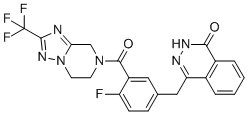
Fluzoparib chemical structureDC22228

Fluzoparib

Fluzoparib (SHR-3162) is a novel, potent and orally available inhibitor of PARP; potently inhibited PARP1 enzyme activity and induced DNA double-strand breaks, G2/M arrest and apoptosis in homologous recombination…

View activity & prices
PF-670462 chemical structureDC2086

PF-670462

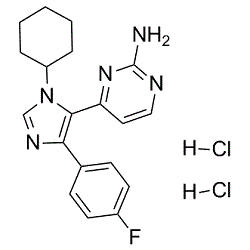
PF-670462 is a potent and selective inhibitor of casein kinase (CK1ε and CK1δ), with IC50s of 7.7 nM and 14 nM, respectively.

View activity & prices
PBIT chemical structureDC7550

PBIT

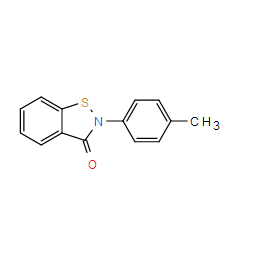
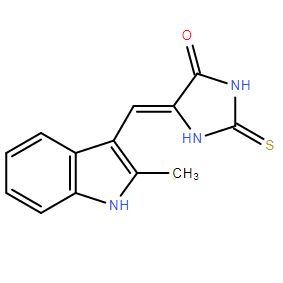
PBIT is a specific inhibitor of the Jumonji AT-rich Interactive Domain 1(JARID1) enzymes. PBIT inhibits JARID1B (KDM5B or PLU1 ) histone demethylase an IC50 of about 3 μM . PBIT also inhibits JARID1A and JARID1C with…

View activity & prices
Fenoldopam (mesylate) chemical structureDC9424

Fenoldopam (mesylate)

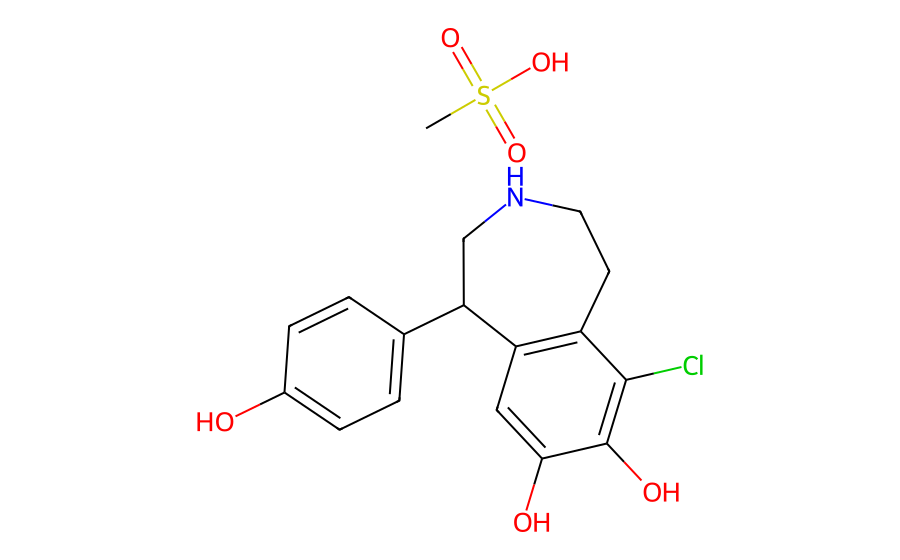
Fenoldopam(SKF 82526) mesylate is a drug and synthetic benzazepine derivative which acts as a selective D1 receptor partial agonist.Target: D1 ReceptorFenoldopam is a selective dopamine-1 (DA1) agonist with…

View activity & prices
PKG drug G1 chemical structureDC10821

PKG drug G1

PKG drug G1 targets C42 of PKG Iα. PKG drug G1 can couple to vasodilation and blood pressure lowering by a C42 PKG Iα-independent mechanism.

View activity & prices

Cart

Request quotation