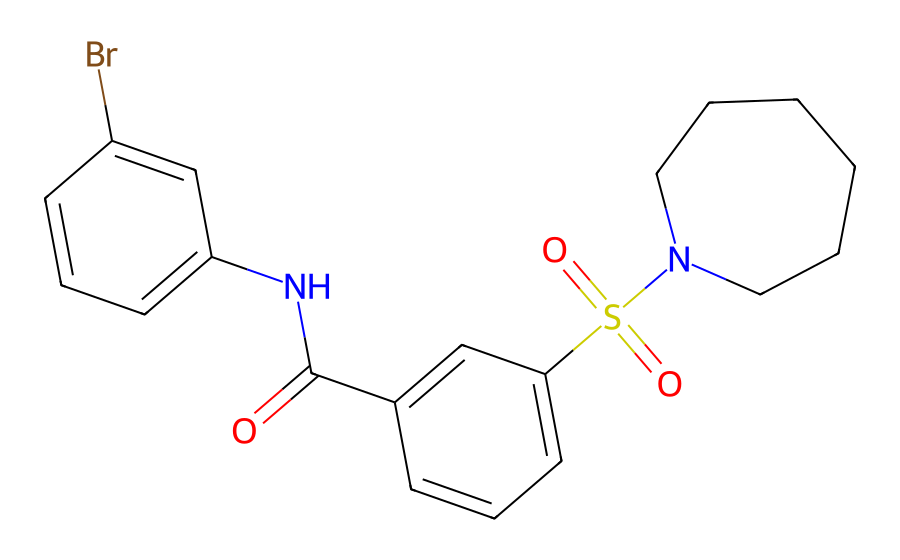
Biological Activity
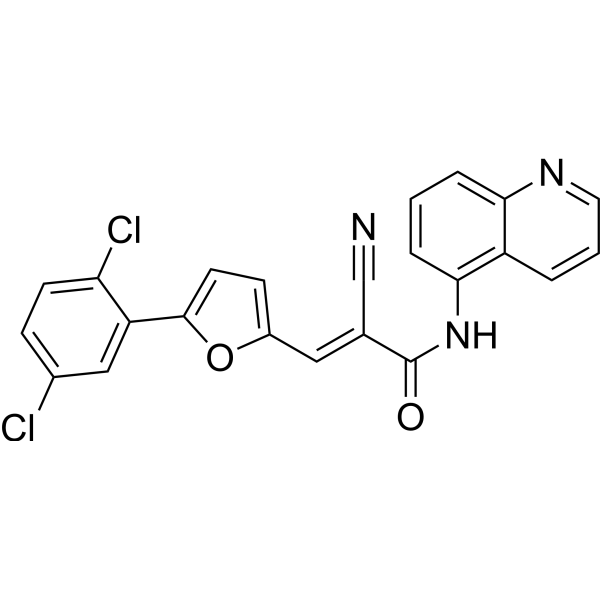
AGK2 is a selective SIRT2 inhibitor with IC50 of 3.5 μM. AGK2 can also inhibit SIRT1 and SIRT3 with IC50 of 30 and 91 μM, respectively.
In Vitro
AGK2 significantly inhibits cell proliferation in a dose-dependent manner. AGK2 also significantly inhibits cell growth in a dose-dependent manner without inducing cytotoxicity at low doses. Twelve days after AGK2 (5 μM) treatment, cells show a significantly reducing colony forming ability in soft agar to 46% of the control cells. Western blot analysis shows that the levels of CDK4 or CDK6 and cyclin D1 are decreased after AGK2 treatment in a dose-dependent manner. In addition, AGK2 inhibits the expression of p53 protein[2]. Treatment of microglial BV2 cells with 10 μM AGK2 leads to a significant increase in PAR signals. Treatment of microglial BV2 cells with 10 μM AGK2 also leads to a significant decrease in the intracellular ATP and significant increases in both late-stage apoptosis and necrosis of the cells[3].
In Vivo
AGK2 significantly reduces mortality and decreases levels of cytokines in blood (TNF-α: 298.3±24.6 vs 26.8±2.8 pg/mL, p=0.0034; IL-6: 633.4±82.8 vs 232.6±133.0 pg/mL, p=0.0344) and peritoneal fluid (IL-6: 704.8±67.7 vs 391.4±98.5 pg/mL, p=0.033) compare to vehicle control. AGK2 also suppresses the TNF-α and IL-6 production in the culturing splenocytes (TNF-α: 68.1±6.4 vs 23.9±2.8 pg/mL, p=0.0009; IL-6: 73.1±4.2 vs 49.6±3.0 pg/mL; p=0.0051)[4].
References & source
Published experimental findings depend on the model and assay conditions. They do not guarantee equivalent performance in every application. For laboratory research use only.