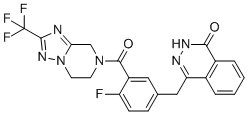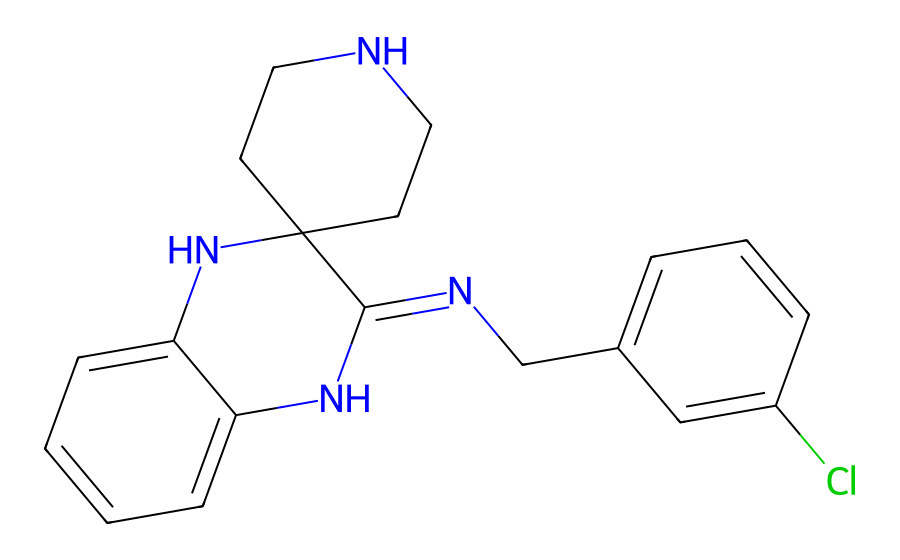
Biological Activity
Liproxstatin-1 is a potent ferroptosis inhibitor, with IC50 of approximately 38 nM.
In Vitro
Liproxstatin-1 prevents BODIPY 581/591 C11 oxidation in Gpx4−/− cells. Moreover, Liproxstatin-1 does not interfere with other classical types of cell death, such as TNFα-induced apoptosis and H2O2-induced necrosis, and in the bona fide L929 model of TNFα/zvad-induced necroptosis[1]. Liproxstatin-1 has great antiferroptotic activity with EC50 of appr 38 nM. Fer-1 and Liproxstatin-1 are inherently good, but not great, radical-trapping antioxidants, but they are excellent in phospholipid bilayers. Fer-1 (10 μM) and Liproxstatin-1 (10 μM) do not exhibit significant inhibitory activity in the 15-LOX-1 overexpressing cells, and the concentration is almost 1000-fold higher than their EC50s for subverting RSL3-induced ferroptosis in these cells (15 and 27 nM, respectively)[2].
In Vivo
Liproxstatin-1 (10 mg/kg, i.p.) suppresses ferroptosis in human cells, Gpx4−/− kidney and in an ischaemia/reperfusion-induced tissue injury model[1].
References & source
Published experimental findings depend on the model and assay conditions. They do not guarantee equivalent performance in every application. For laboratory research use only.