Biological Activity
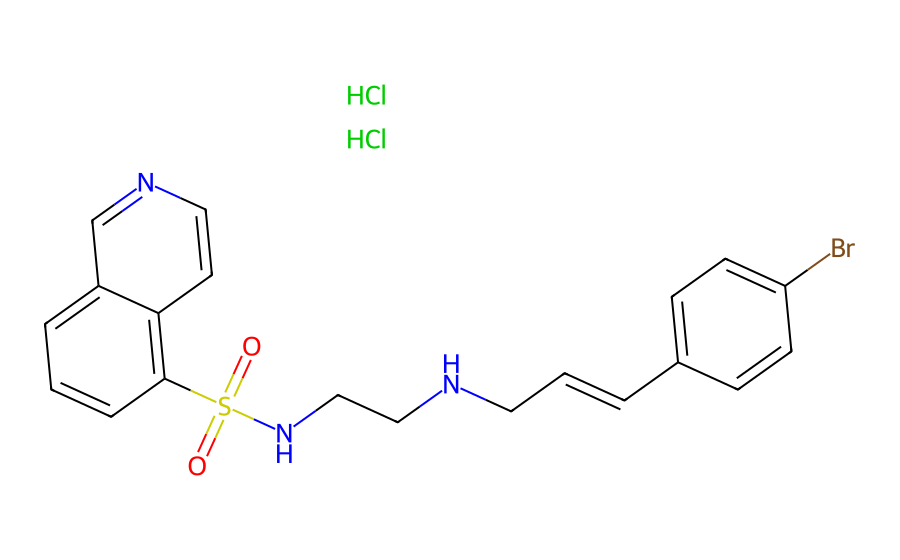
H-89 dihydrochloride is a potent inhibitor of protein kinase A (PKA) with an IC50 of 48 nM and has weak inhibition on PKG, PKC, Casein Kinase.
In Vitro
H-89 inhibits protein kinase A, in competitive fashion against ATP. H-89 causes a dose-dependent inhibition of the forskolin-induced protein phosphorylation, with no decrease in intracellular cyclic AMP levels in PC12D cells. H-89 significantly inhibits the forskolin-induced neurite outgrowth from PC12D cells. H-89 (30 μM) inhibits significantly cAMP-dependent histone IIb phosphorylation activity in PC12D cell lysates[1]. H-89 (1-2 μM) significantly slows the repriming rate in rat skinned fibres, most likely due to it deleteriously affecting the T-system potential. H-89 (10-100 μM) inhibits net Ca2+ uptake by the SR and affectes the Ca2+-sensitivity of the contractile apparatus in rat skinned fibres[2].
In Vivo
H-89 (0.2 mg/100g, i.p.) significantly increases seizure latency and threshold in PTZ-treated animals. H-89 (0.05, 0.2 mg/100 g, i.p.) prevents the epileptogenic activity of bucladesine (300 nM) with significant increase of seizure latency and seizure threshold[3].
References & source
Published experimental findings depend on the model and assay conditions. They do not guarantee equivalent performance in every application. For laboratory research use only.