Biological Activity
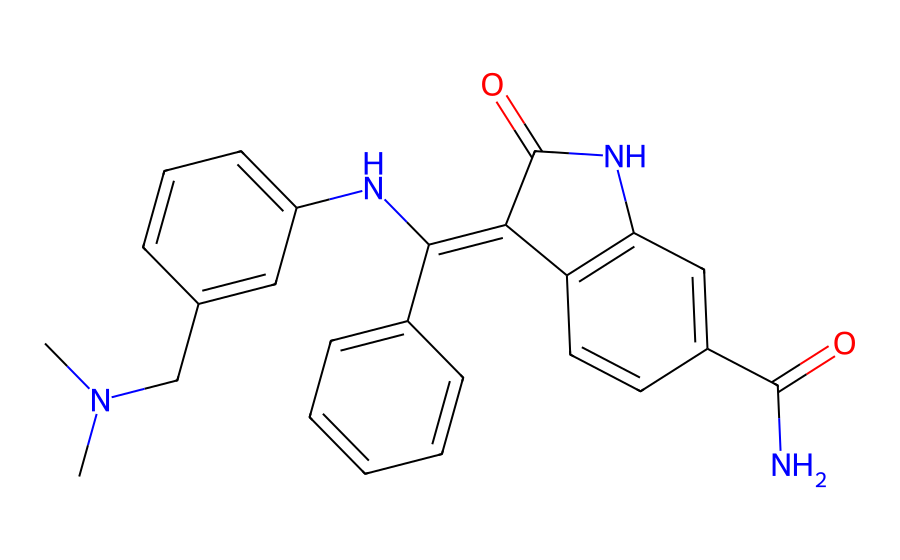
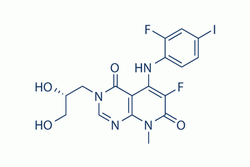
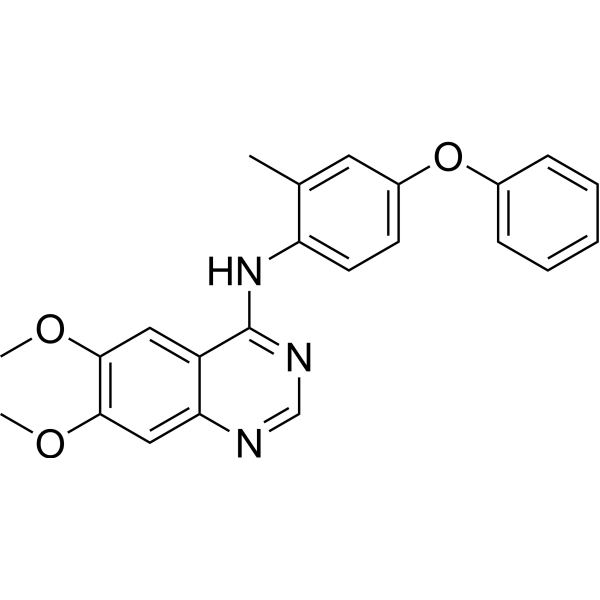
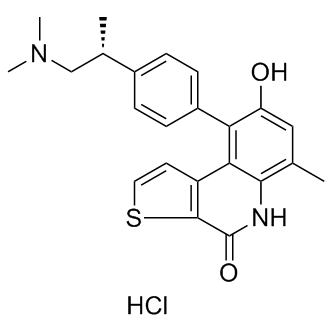
OTS-964 is a potent TOPK inhibitor (IC50=28 nM), which inhibits TOPK kinase activity with high affinity and selectivity.
In Vitro
OTS-964 (OTS964) inhibits the growth of TOPK-positive cells with low IC50 values [A549 (31 nM), LU-99 (7.6 nM), DU4475 (53 nM), MDA-MB-231 (73 nM), T47D (72 nM), Daudi (25 nM), UM-UC-3 (32 nM), HCT-116 (33 nM), MKN1 (38 nM), MKN45 (39 nM), HepG2 (19 nM), MIAPaca-2 (30 nM), and 22Rv1 (50 nM)], whereas its growth inhibitory effect against TOPK-negative HT29 cancer cells is significantly (P=1.45×10⁻⁴) weaker, with IC50 of 290 nM. Although OTS-964 reveals some suppressive effect on Src family kinases, the response to OTS-964 in these cancer cells is not correlated with the expression of Src family kinases c-Src, Fyn, and Lyn. Treatment with OTS-964 decreases autophosphorylation of TOPK (Thr9), as well as phosphorylation of histone H3 (Ser10), in both T47D and LU-99 cells. Moreover, time lapse imaging in T47D cells shows that treatment with OTS-964 induces cytokinesis defects followed by apoptosis, which is not observed in control DMSO-treated T47D cells[1].
In Vivo
Three LU-99 xenograft mice are intravenously treated with liposomal OTS-964 (40 mg/kg) or vehicle at days 1, 4, 8, and 11, and tumors are collected on day 12. The cellular morphological changes and apoptosis are examined t in the LU-99 cells. Treatment with OTS-964 induced irregular cell morphology with cytokinesis defects. Treatment with OTS-964 significantly increases the number of LU-99 cells with the “intercellular bridge” (P<0.0001), which is one of the markers indicating impaired cell division. The oral administration of free OTS-964 at 50 or 100 mg/kg once every day for 2 weeks results in TGIs of 79 and 113% on day 15, respectively, without any body weight loss. Similar to the intravenous administration of liposomal OTS-964, cell morphological changes, inhibition of TOPK activity, and increased cancer cell death are observed after oral administration of OTS-964 for 1 week. In the 100 mg/kg dosing group, continuous tumor shrinkage is observed after the final administration of the drug, and all six of the mice achieve complete tumor regression (one on day 22, three on day 25, and two on day 29)[1].
References & source
Published experimental findings depend on the model and assay conditions. They do not guarantee equivalent performance in every application. For laboratory research use only.