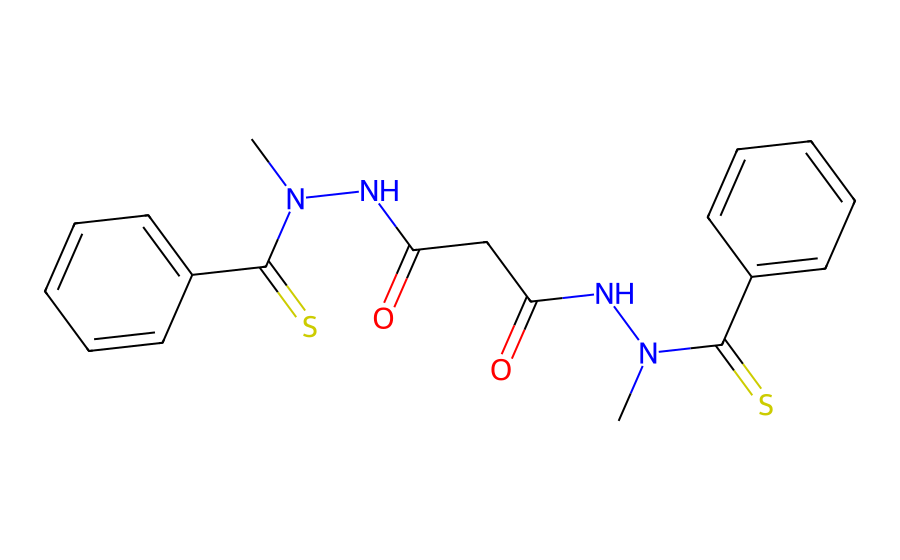
Elesclomol (STA-4783) chemical structure
Chemical structureResearch use only
CAT. NO. DC3156Featured

Elesclomol (STA-4783)

Pack Sizes & Prices

TotalUS$450
We match the best price and quality on market.
Product overview

Description & Application

Elesclomol is an oxidative stress inducer that induces cancer cell apoptosis.

ParameterValue
Chemical NameElesclomol
CAS No.488832-69-5
SynonymsElesclomol;1,3-Bis[2-methyl-2-(phenylthioxomethyl)hydrazide]propanedioic acid;Elesclomol (STA-4783);1-N',3-N'-bis(benzenecarbonothioyl)-1-N',3-N'-dimethylpropanedihydrazide;N-malonyl-bis(N'-thiobenzoyl-N'-methyl hydrazide);STA4783;STA-4783
FormulaC19H20N4O2S2
M.Wt400.5177
SMILESS=C(C1=CC=CC=C1)N(NC(CC(NN(C(C2=CC=CC=C2)=S)C)=O)=O)C
Purity>98%
Storage2 years -20°C Powder, 2 weeks 4°C in DMSO, 6 months -80°C in DMSO

Biological Activity

Elesclomol is an oxidative stress inducer that induces cancer cell apoptosis.

In Vitro

Elesclomol significantly induces the expression of heat shock stress response genes and metallothionein genes, a signature transcription profile indicative of oxidative stress in Hs294T cells. Elesclomol (100 nM) rapidly induces Hsp70 RNA levels with a 4.8-fold increase at 1 hour and a 160-fold increase at 6 hours in Ramos Burkitt's lymphoma B cells in consistent with the intracellular ROS content which increases by 20% as early as 0.5 hour and 385% at 6 hours, and the induction of Hsp70 can be blocked by antioxidants N-acetylcysteine (NAC) and Tiron pretreatment. Elesclomol increases the number of early and late apoptotic cells with 3.7- and 11-fold through the induction of oxidative stress, which can be completely blocked by NAC, while having little effect on normal cells[1]. Elesclomol significantly inhibits the cell viability of SK-MEL-5, MCF-7, and HL-60 with IC50 of 110 nM, 24 nM and 9 nM, respectively[2]. Elesclomol induces copper-dependent ROS generation and cytoxicity in yeast. Instead of working through a specific cellular protein target, elesclomol interacts with the electron transport chain (ETC), a biologically coherent set of processes occurring in the mitochondrion, to generate high levels of ROS within the organelle and consequently cell death[3].

In Vivo

Although elesclomol (25-100 mg/kg) shows no antitumor activity in nude mouse xenograft models of human breast cancers (MDA435, MCF7 and ZR-75-1), lung cancer (RER) or lymphoma (U937). Elesclomol substantially enhances the efficacy of chemotherapeutic agents such as paclitaxel in these models, both in terms of tumor regression and extended survival of mice[4].

References & source

DC Chemicals original product information

Published experimental findings depend on the model and assay conditions. They do not guarantee equivalent performance in every application. For laboratory research use only.
Product documentation

Refer to the certificate supplied with your lot for batch-specific release results.

Handling guide

2 years -20°C Powder, 2 weeks 4°C in DMSO, 6 months -80°C in DMSO

Solution calculator

Related research products

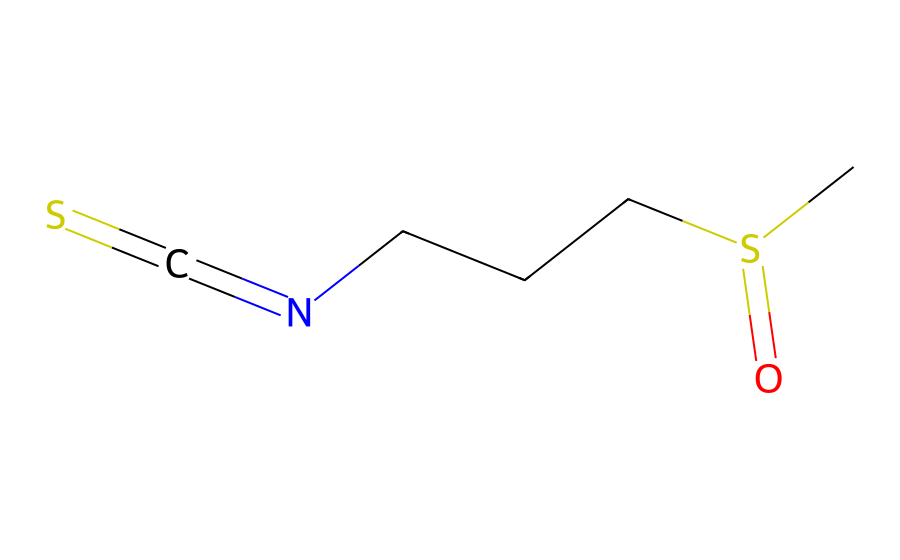
Iberin chemical structureDC10361

Iberin

Iberin, a sulfoxide analogue of sulforaphane, is a naturally occurring member of isothiocyanate family. It inhibits cell survival with an IC50 of 2.3 μM in HL60 cell.

View activity & prices
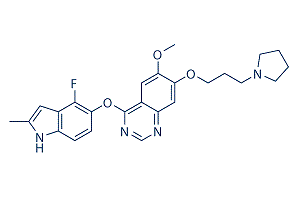
Cediranib chemical structureDC3170

Cediranib

Cediranib maleate (AZD-2171 maleate) is a highly potent, orally available VEGFR tyrosine kinase inhibitor with IC50s of <1, <3, 5, 5, 36, 2 nM for Flt1, KDR, Flt4, PDGFRα, PDGFRβ, c-Kit, respectively.

View activity & prices
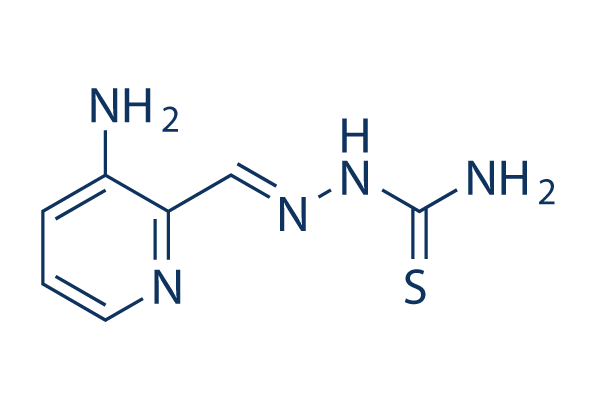
Triapine chemical structureDC7522

Triapine

Triapine is a novel inhibitor of the M2 subunit of ribonucleotide reductase (RR), and is a potent radiosensitizer.

View activity & prices
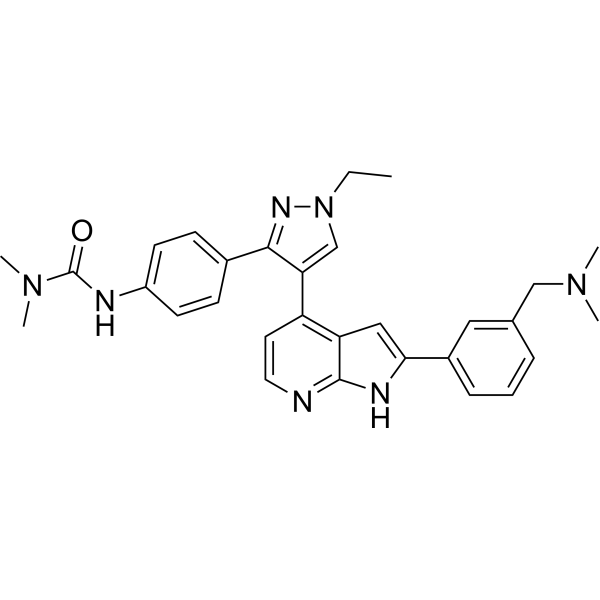
GSK1070916 chemical structureDC7140

GSK1070916

GSK-1070916 is a potent and selective ATP-competitive inhibitor of aurora B and aurora C with Kis of 0.38 and 1.5 nM, respectively, and is >250- fold selective over Aurora A.

View activity & prices
PRIMA-1MET(APR-246) chemical structureDC10070

PRIMA-1MET(APR-246)

PRIMA-1MET restores wild-type conformation and function to mutant p53, and triggers apoptosis in tumor cells. PRIMA-1MET also targets the selenoprotein thioredoxin reductase 1 (TrxR1), a key regulator of cellular redox…

View activity & prices

Cart

Request quotation