Biological Activity
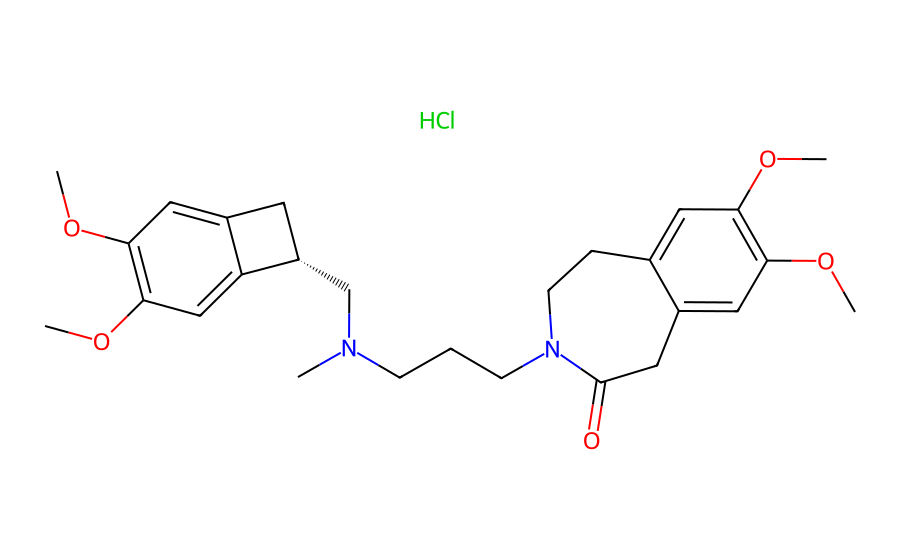
Ivabradine (hydrochloride) is a new If inhibitor with IC50 of 2.9 μM, and used as a pure heart rate lowering agent.
In Vitro
No in vitro data are provided in the current product source. Contact us for further information.
In Vivo
Ivabradine treatment (10 mg/kg/d) induces long-term HRR, and that improves diastolic LV function probably involving attenuated hypoxia, reduced remodeling, and/or preserved nitric oxide bioavailability, resulting from processes triggered early after HRR initiation: angiogenesis and/or preservation of endothelial nitric oxide synthase expression[1]. Ivabradine leads to a sustained 15-20% heart rate reduction, but has no effect on blood pressure. While ivabradine has no effect on endothelial function and vascular reactive oxygen species production in angiotensin II-treated rats, it improves both parameters in ApoE knockout mice. Ivabradine treatment leads to an attenuation of angiotensin II signaling and increased the expression of telomere-stabilizing proteins in ApoE knockout mice, which may explain its beneficial effects on the vasculature. The absence of these protective ivabradine effects in angiotensin II-infused rats may relate to the treatment duration or the presence of arterial hypertension[2].
References & source
Published experimental findings depend on the model and assay conditions. They do not guarantee equivalent performance in every application. For laboratory research use only.