Biological Activity
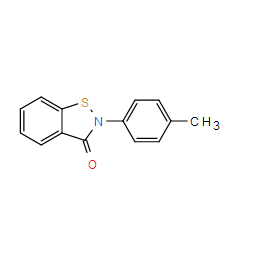
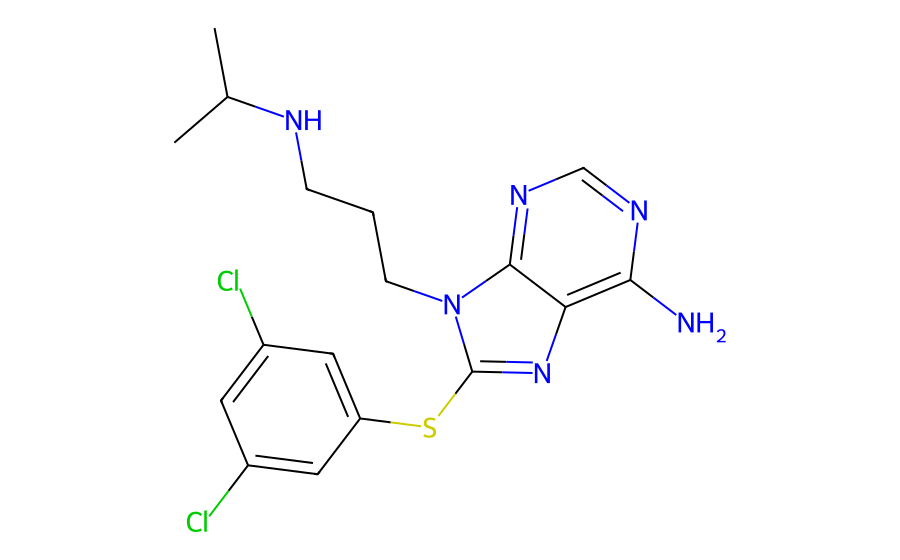
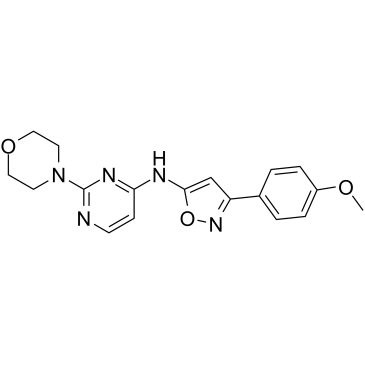
BO-264 is a highly potent and orally active transforming acidic coiled-coil 3 (TACC3) inhibitor with an IC50 of 188 nM and a Kd of 1.5 nM. BO-264 specifically blocks the function of FGFR3-TACC3 fusion protein. BO-264 induces spindle assembly checkpoint (SAC)-dependent mitotic arrest, DNA damage and apoptosis. BO-264 has broad-spectrum antitumor activity[1].
In Vitro
BO-264 (500 nM; 48 hours; JIMT-1 cells) treatment induces a prominent increase (from 4.1% to 45.6%) in the fraction of apoptotic cells as assessed by Annexin V/PI staining[1]. BO-264 (500 nM; 24 hours; RT112 cells) treatment decreases ERK1/2 phosphorylation, which is a marker for activated FGFR signaling along with a strong mitotic arrest[1]. BO-264 inhibits cell viability with IC50 values of 190 nM, 160 nM, 120 nM, 130 nM and 360 nM for JIMT-1, HCC1954, MDA-MB-231, MDA-MB-436 and CAL51, respectively. BO-264 specifically targets breast cancer cells while sparing normal cells. BO-264 treatment significantly reduces the average colony number of JIMT-1 cells[1]. BO-264 inhibits the viability of cancer cells with FGFR3-TACC3 fusion with IC50 values of 0.3 μM and 3.66 μM for RT112 and RT4, respectively[1]. BO-264 exhibits a remarkable anti-cancer activity against more than 90% of the NCI267 60 human cancer cell lines representing nine different subpanels with GI50 values less than 1 μM[1]. BO-264 induces mitotic arrest (prominent induces p-Histone H3 (Ser10)), apoptosis (cleaved PARP) and DNA damage, causes aberrant spindle formation and reduces centrosomal localization of TACC3 in JIMT-1 cells[1]. Apoptosis Analysis[1] Cell Line: JIMT-1 cells Concentration: 500 nM Incubation Time: 48 hours Result: Induced a prominent increase (from 4.1% to 45.6%) in the fraction of apoptotic cells as assessed by Annexin V/PI staining. Western Blot Analysis[1] Cell Line: RT112 cells Concentration: 500 nM Incubation Time: 24 hours Result: Decreased ERK1/2 phosphorylation.
In Vivo
BO-264 (25 mg/kg; oral administration; daily; for 3-4 weeks; female nude mice) treatment shows a significant suppression of tumor growth. BO-264 is well tolerated since treatment does not causes a significant body weight loss and organ toxicity[1]. Animal Model: Female nude mice injected with JIMT-1 cells[1] Dosage: 25 mg/kg Administration: Oral administration; daily; for 3-4 weeks Result: Showed a significant suppression of tumor growth.
Target
IC50: 188 nM (Transforming acidic coiled-coil 3 (TACC3))[1] Kd: 1.5 nM (TACC3)[1]
References & source
[1]. Akbulut O, et al. A Highly Potent TACC3 Inhibitor as a Novel Anti-cancer Drug Candidate. Mol Cancer Ther. 2020 Mar 26. pii: molcanther.0957.2019.
Published experimental findings depend on the model and assay conditions. They do not guarantee equivalent performance in every application. For laboratory research use only.