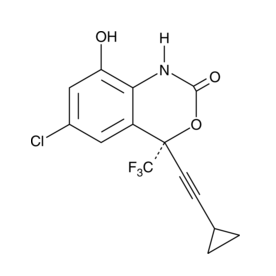
8-Hydroxy-efavirenz chemical structure
Chemical structureResearch use only
CAT. NO. DC26033Featured

8-Hydroxy-efavirenz

Pack Sizes & Prices

TotalUS$700
We match the best price and quality on market.
Product overview

Description & Application

8-hydroxy Efavirenz is a major oxidative metabolite of the non-nucleoside reverse transcriptase inhibitor efavirenz.8-hydroxy Efavirenz is formed when efavirenz is metabolized by the cytochrome P450 (CYP) isoform CYP2B6. It induces apoptosis in rat primary hippocampal neurons and loss of dendritic spines in rat primary hippocampal neuronal cultures when used at a concentration of 0.01 μM.In active antiretroviral therapy antiretroviral drugs are employed for the restoration of a functional immune system in patients suffering from the acquired immunodeficiency syndrome. However, potential adverse effects of such compounds to brain cells are discussed in connection with the development of neurocognitive impairments in patients. To investigate potential effects of antiretroviral drugs on cell viability and the glycolytic flux of brain cells, astrocyte-rich primary cultures were exposed to various antiretroviral compounds, including the non-nucleoside reverse transcriptase inhibitor efavirenz. In a concentration of 10 μM, neither efavirenz nor any of the other investigated antiretroviral compounds acutely compromised the cell viability nor altered glucose consumption or lactate production. In contrast, the primary metabolite of efavirenz, 8-hydroxy-efavirenz, stimulated the glycolytic flux in viable astrocytes in a time- and concentration-dependent manner with half-maximal and maximal effects at concentrations of 5 and 10 μM, respectively. The stimulation of glycolytic flux by 8-hydroxy-efavirenz was not additive to that obtained for astrocytes that were treated with the respiratory chain inhibitor rotenone and was abolished by removal of extracellular 8-hydroxy-efavirenz. In a concentration of 10 μM, 8-hydroxy-efavirenz and efavirenz did not affect mitochondrial respiration, while both compounds lowered in a concentration of 60 μM significantly the oxygen consumption by mitochondria that had been isolated form cultured astrocytes, suggesting that the stimulation of glycolytic flux by 8-hydroxy-efavrienz is not caused by direct inhibition of respiration. The observed alteration of astrocytic glucose metabolism by 8-hydroxy-efavirenz could contribute to the adverse neurological side effects reported for patients that are chronically treated with efavirenz-containing medications.

ParameterValue
Chemical Name(4S)-6-Chloro-4-(2-cyclopropylethynyl)-1,4-dihydro-8-hydroxy-4-(trifluoromethyl)-2H-3,1-benzoxazin-2-one; 8-Hydroxyefavirenz
CAS No.205754-33-2
FormulaC14H9ClF3NO3
M.Wt331.67
SMILESClC1=CC(O)=C2C([C@@](C#CC3CC3)(C(F)(F)F)OC(N2)=O)=C1
Purity>97%
Storage2 years -20°C Powder, 2 weeks 4°C in DMSO, 6 months -80°C in DMSO

Biological Activity

8-hydroxy Efavirenz is a major oxidative metabolite of the non-nucleoside reverse transcriptase inhibitor efavirenz.8-hydroxy Efavirenz is formed when efavirenz is metabolized by the cytochrome P450 (CYP) isoform CYP2B6. It induces apoptosis in rat primary hippocampal neurons and loss of dendritic spines in rat primary hippocampal neuronal cultures when used at a concentration of 0.01 μM.In active antiretroviral therapy antiretroviral drugs are employed for the restoration of a functional immune system in patients suffering from the acquired immunodeficiency syndrome. However, potential adverse effects of such compounds to brain cells are discussed in connection with the development of neurocognitive impairments in patients. To investigate potential effects of antiretroviral drugs on cell viability and the glycolytic flux of brain cells, astrocyte-rich primary cultures were exposed to various antiretroviral compounds, including the non-nucleoside reverse transcriptase inhibitor efavirenz. In a concentration of 10 μM, neither efavirenz nor any of the other investigated antiretroviral compounds acutely compromised the cell viability nor altered glucose consumption or lactate production. In contrast, the primary metabolite of efavirenz, 8-hydroxy-efavirenz, stimulated the glycolytic flux in viable astrocytes in a time- and concentration-dependent manner with half-maximal and maximal effects at concentrations of 5 and 10 μM, respectively. The stimulation of glycolytic flux by 8-hydroxy-efavirenz was not additive to that obtained for astrocytes that were treated with the respiratory chain inhibitor rotenone and was abolished by removal of extracellular 8-hydroxy-efavirenz. In a concentration of 10 μM, 8-hydroxy-efavirenz and efavirenz did not affect mitochondrial respiration, while both compounds lowered in a concentration of 60 μM significantly the oxygen consumption by mitochondria that had been isolated form cultured astrocytes, suggesting that the stimulation of glycolytic flux by 8-hydroxy-efavrienz is not caused by direct inhibition of respiration. The observed alteration of astrocytic glucose metabolism by 8-hydroxy-efavirenz could contribute to the adverse neurological side effects reported for patients that are chronically treated with efavirenz-containing medications.

In Vitro

No in vitro data are provided in the current product source. Contact us for further information.

In Vivo

No in vivo data are provided in the current product source. Contact us for further information.

References & source

DC Chemicals original product information

Published experimental findings depend on the model and assay conditions. They do not guarantee equivalent performance in every application. For laboratory research use only.

Product documentation

Refer to the certificate supplied with your lot for batch-specific release results.

Handling guide

2 years -20°C Powder, 2 weeks 4°C in DMSO, 6 months -80°C in DMSO

Solution calculator

Related research products

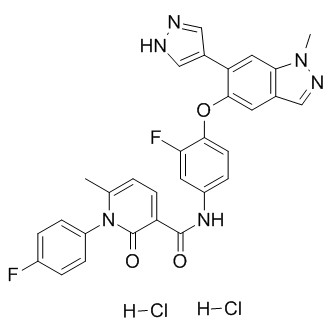
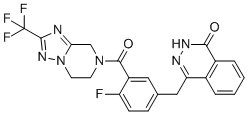
Fluzoparib chemical structureDC22228

Fluzoparib

Fluzoparib (SHR-3162) is a novel, potent and orally available inhibitor of PARP; potently inhibited PARP1 enzyme activity and induced DNA double-strand breaks, G2/M arrest and apoptosis in homologous recombination…

View activity & prices
PF-670462 chemical structureDC2086

PF-670462

PF-670462 is a potent and selective inhibitor of casein kinase (CK1ε and CK1δ), with IC50s of 7.7 nM and 14 nM, respectively.

View activity & prices
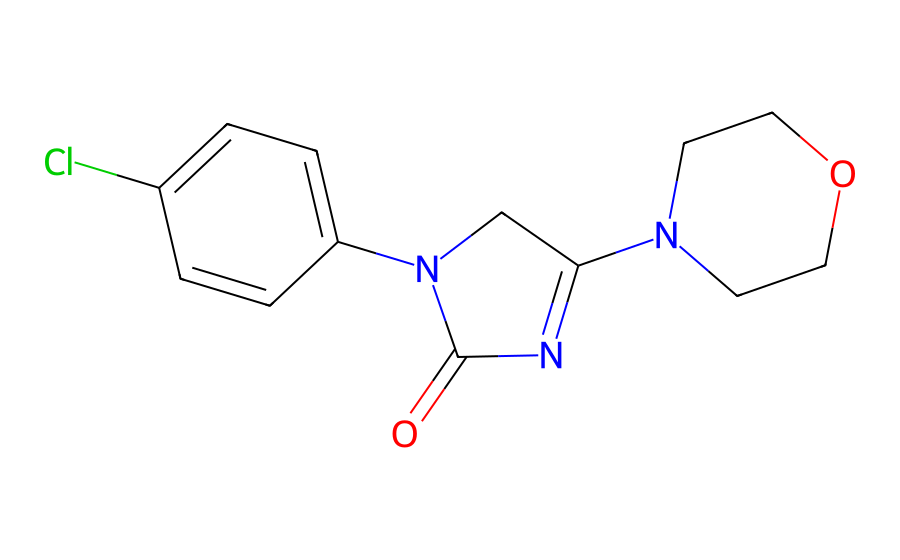
PBIT chemical structureDC7550

PBIT

PBIT is a specific inhibitor of the Jumonji AT-rich Interactive Domain 1(JARID1) enzymes. PBIT inhibits JARID1B (KDM5B or PLU1 ) histone demethylase an IC50 of about 3 μM . PBIT also inhibits JARID1A and JARID1C with…

View activity & prices
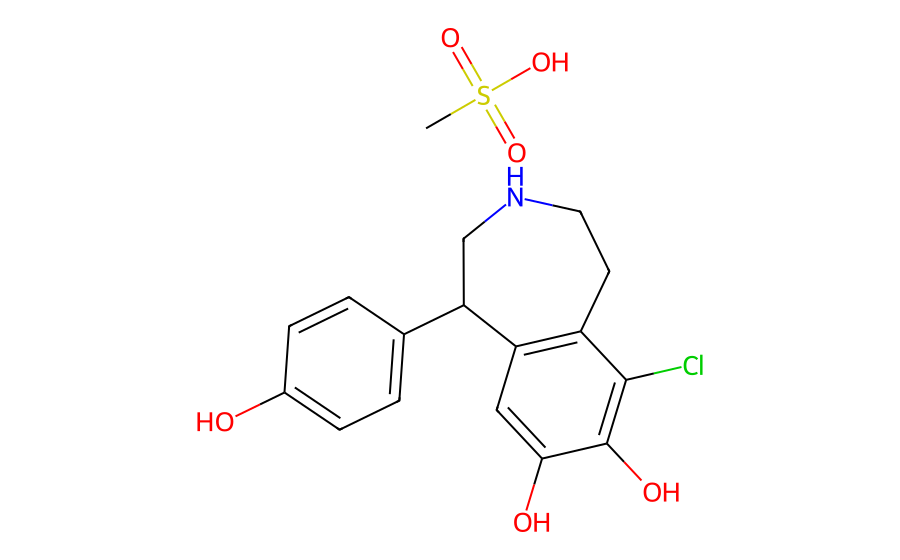
Fenoldopam (mesylate) chemical structureDC9424

Fenoldopam (mesylate)

Fenoldopam(SKF 82526) mesylate is a drug and synthetic benzazepine derivative which acts as a selective D1 receptor partial agonist.Target: D1 ReceptorFenoldopam is a selective dopamine-1 (DA1) agonist with…

View activity & prices
PKG drug G1 chemical structureDC10821

PKG drug G1

PKG drug G1 targets C42 of PKG Iα. PKG drug G1 can couple to vasodilation and blood pressure lowering by a C42 PKG Iα-independent mechanism.

View activity & prices

Cart

Request quotation