Biological Activity
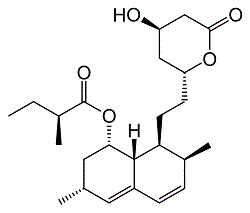
Lovastatin is a cell-permeable HMG-CoA reductase inhibitor used to lower cholesterol.
In Vitro
Lovastatin is an inactive lactone prodrug that must be chemically or enzymatically converted to its dihydroxy open-acid form in order to elicit inhibitory activity. Lovastatin in its hydroxy acid form is an exceptionally potent competitive inhibitor of liver HMG CoA reductase[1]. Lovastatin, other than its anticholesterol property, has diverse applications in the field of osteoporosis, neuro-degeneration, rheumatoid arthritis, antifungals and also is reported to reduce proliferation of lung cancer cells, breast cancer (MCF-7), liver cancer (HepG2). Lovastatin treatments show significant dose dependent cytotoxic effect on HeLa cells with IC50 value of 160 μg/mL. Lovastatin is effective to accelerate hydroxyl radical scavenging activity (54.06%) at an IC50 of 3601 μg/mL[2].
In Vivo
Lovastatin is an inactive lactone that is hydrolyzed in the liver to an active f3-hydroxyacid form. This principal metabolite is the inhibitor of the enzyme HMG-CoA reductase. The Ki is 1 nM. Lovastatin and its β-hydroxyacid metabolite are highly bound to human plasma proteins. Lovastatin crosses the blood-brain and placental barriers[3]. Lovastatin produces a profound reduction of apolipoprotein-B-containing lipoproteins, especially LDL cholesterol and, to a lesser extent, plasma triglycerides, and a small increase in HDL cholesterol[4].
References & source
Published experimental findings depend on the model and assay conditions. They do not guarantee equivalent performance in every application. For laboratory research use only.