Biological Activity
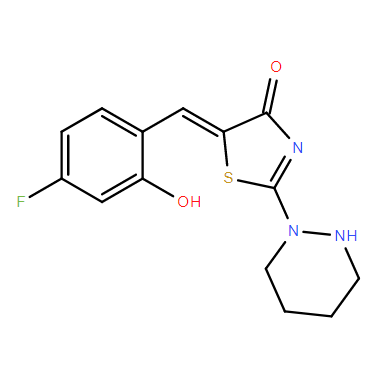
CLP257 is a neuronal chloride-signaling research compound originally reported as a KCC2 enhancer. Subsequent work challenged direct KCC2 activation and reported GABAA receptor potentiation. CLP257 was originally reported to enhance chloride extrusion and associated neuronal functional responses.
In Vitro
| Endpoint | Model / conditions / source | Reported result |
|---|---|---|
| Original chloride phenotype | Neuronal chloride-extrusion study. [2] | CLP257 was originally reported to enhance chloride extrusion and associated neuronal functional responses. |
| Independent reassessment | KCC2 transport and GABAA receptor experiments. [1] | Subsequent work did not find direct enhancement of KCC2 activity and instead reported potentiation of GABAA receptor activity. |
In Vivo
No compound-specific animal efficacy result is established by the sources summarized here.
Compound and Evidence Context
| Endpoint | Model / conditions / source | Reported result |
|---|---|---|
| Mechanism boundary | Comparison of the two primary studies. [1,2] | An effect on neuronal inhibition does not by itself establish KCC2 activation. CLP257 should be described as a chloride/GABAA-signaling research compound with disputed direct-target attribution. |
| Related compounds | CLP257 and derivatives discussed in the literature. [2] | Animal pharmacokinetic or efficacy values from a related prodrug should not be transferred to CLP257. |
Interpretation
CLP257 should not be presented as an unambiguously selective direct KCC2 activator.