Biological Activity
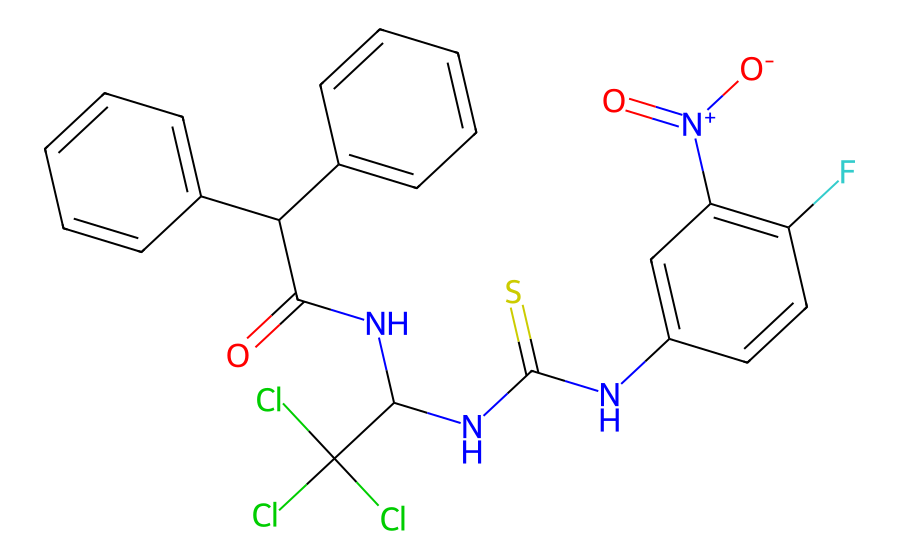
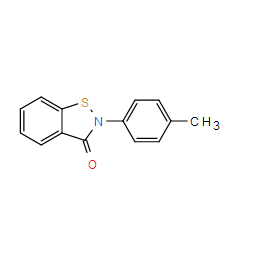
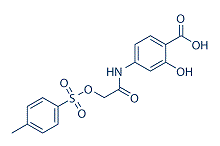
NSC 74859 is a selective Stat3 inhibitor with an IC50 of 86±33 μM.
In Vitro
NSC 74859 (S3I-201) preferentially inhibits Stat3 DNA-binding activity over that of Stat1 (IC50 values, Stat3•Stat3, 86±33 μM; Stat1•Stat3, 160±43 μM; and Stat1•Stat1, >300 μM) and inhibits that of Stat5 with IC50 of 166±17 μM). NSC 74859 significantly reduces viable cell numbers and inhibits growth of transformed mouse fibroblasts NIH 3T3/v-Src and breast carcinoma cell lines (MDA-MB-231, MDA-MB-435, and MDA-MB-468). At 30-100 μM, NSC 74859 induces significant apoptosis in the representative human breast carcinoma cell line MDA-MB-435 and NIH 3T3/v-Src, both of which harbor constitutively active Stat3. The breast carcinoma MDA-MB-435 cell line is more sensitive to 30 μM NSC 74859. By contrast, the human breast cancer MDA-MB-453 cells and the normal mouse fibroblasts (NIH 3T3), which do not contain abnormal Stat3 activity, are less sensitive to NSC 74859 at 100 μM or less. At 300 μM or higher, NSC 74859 induced general, nonspecific cytotoxicity independent of Stat3 activation status[1]. Huh-7 cells do not express β2SP or TBGFR2 and are sensitive to STAT3 inhibition, with an IC50 of 100 μM for NSC 74859, regardless of CD133+ status. The IC50 of NSC 74859 is 150 μM for Huh-7 and SNU-398 cells, 15 μM for SNU-475 cells and 200 μM for SNU-182 cells. NSC 74859 inhibits breast carcinoma MDA-MB-435, MDA-MB-453 and MDA-MB-231 cell lines with an IC50 close to 100 μM[2].
In Vivo
Human breast (MDA-MB-231) tumor-bearing mice are given an i.v. injection of NSC 74859 (S3I-201) or vehicle every 2 or every 3 days for 2 weeks, and tumor measurements are taken every 2-3 days. Compared with control (vehicle-treated) tumors, which continued to grow, human breast tumors in mice that received S3I-201 display strong growth inhibition. Continued evaluation of treated mice on termination of treatment shows no resumption of tumor growth, suggesting potentially a long-lasting effect of S3I-201 on tumor growth[1]. Compared with vehicle-treated control tumors (n=15), which continued to grow, S3I-201 treatment of somatotroph tumor xenografts (n=15) significantly attenuated tumor growth for the duration of the experiment. Tumors derived from NSC 74859-treated rats are significantly smaller than those from the untreated group (220±16 mm3 vs. 287±16 mm3, P<0.01) as early as 5 days after NSC 74859 injection. Fifteen days after treatments, the average tumor volume of NSC 74859-treated rats is 64% of that of controls (449±40 mm3 vs. 708±83 mm3, P<0.01). Rats are sacrificed and tumors are harvested 15 days after treatment initiation. The average tumor weight of NSC 74859-treated rats is 78±8 mg, while tumors derived from control rats weighed 114±13 mg (32% reduction; P<0.05)[3].
References & source
Published experimental findings depend on the model and assay conditions. They do not guarantee equivalent performance in every application. For laboratory research use only.