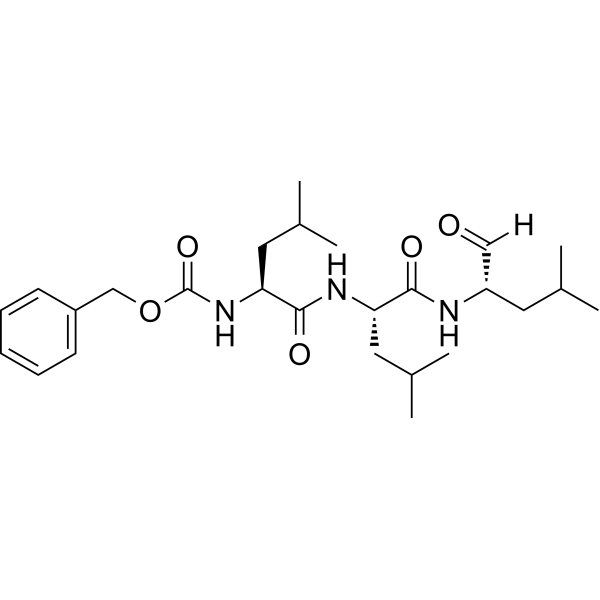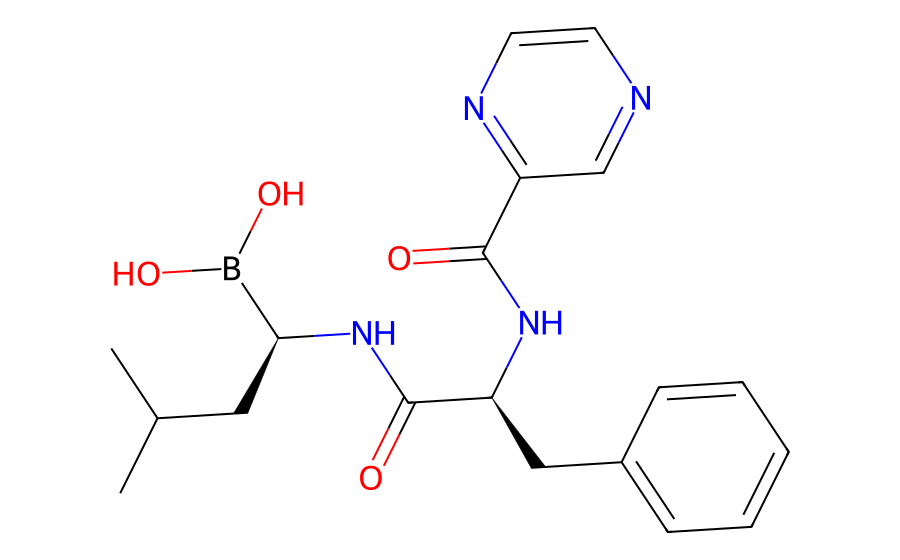
Biological Activity
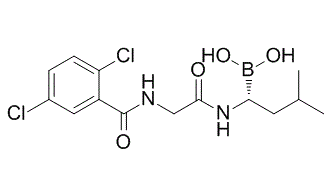
Bortezomib (PS-341) is a potent 20S proteasome inhibitor with a Ki of 0.6 nM.
In Vitro
Bortezomib (PS-341) effects proteins that control cell cycle progression. Treatment of PC-3 cells with Bortezomib (100 nM) for 8 h results in the accumulation of cells in G2-M, with a corresponding decrease in the number of cells in G1. The Bortezomib doses at which 50% of PC-3 cells are killed at 24 and 48 h are determined to be 100 and 20 nM, respectively[1]. Bortezomib is a highly selective, reversible inhibitor of the 26S proteasome. Inhibition of the proteasome by Bortezomib results in activation of JNK, stabilization of p53, Bid, Bax, p21, p27, caveolin-1, and IκBα, resulting in inhibition of NF-κB[2]. The IC50 of Bortezomib is found to be 2.46 nM for 26S proteasome in the B16F10 cells[3].
In Vivo
Mice bearing PC-3 tumors are treated with Bortezomib (i.v., 0.3 or 1.0 mg/kg). Bortezomib (1.0 mg/kg) results in a significant decrease in tumor growth ~60%. Bortezomib (0.3 mg/kg) produces a 16% decrease in tumor volume but did not reach significance[1]. Bortezomib (0.2 mg/kg) significantly decreases the withdrawal threshold on days 11 and 15 and increases the number of withdrawal responses on days 11 and 15 compared with the vehicle group in the von Frey and acetone tests[4].
References & source
Published experimental findings depend on the model and assay conditions. They do not guarantee equivalent performance in every application. For laboratory research use only.