Biological Activity
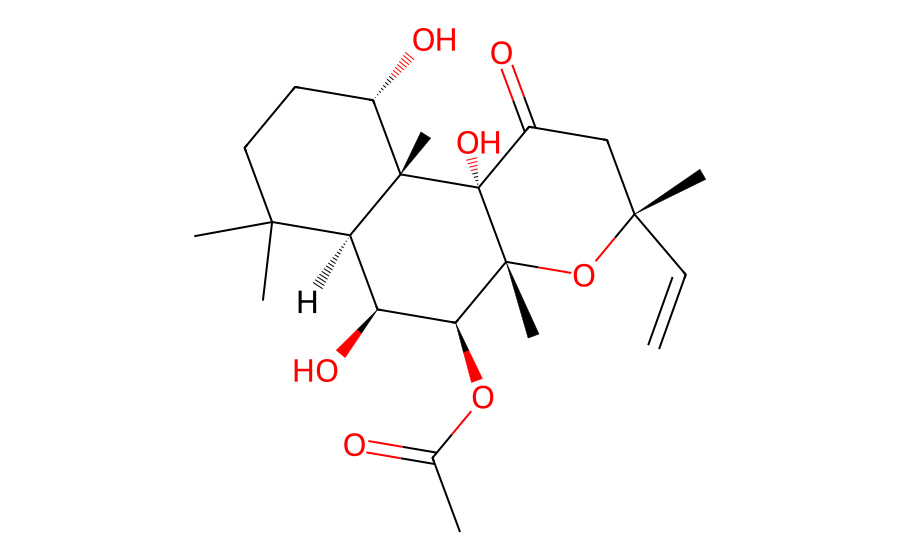
Forskolin is a potent adenylate cyclase activator, with IC50 and EC50 of 41 nM and 0.5 μM for type I adenylyl cyclase, respectively.
In Vitro
Forskolin (Fsk) is a naturally occurring diterpene isolated from Coleus forskholii, directly activates adenylyl cyclase (AC) through its catalytic subunit to increase intracellular levels of cyclic adenosine monophosphate (cAMP)[1]. Forskolin (Fsk) affects the proliferation of the human T-cell lines such as Kit 225 and MT-2. Forskolin treatment inhibits the proliferation of both Kit 225 and MT-2 cells in a dose-dependent manner with an IC50 equal to ~5 μM Fsk. Forskolin treatment (10-100 μM) increases cAMPi levels ~5- to 20-fold above basal levels, which reache maximum levels between 50-100 μM Forskolin[2].
In Vivo
The Forskolin (Fsk)-treated Mrp4-/- mice shows an increased number of Ki67-positive and cleaved caspase 3-positive ECs, a significant decrease in the amount of pericyte coverage, and a reduced number of empty sleeves. In pups exposed to hyperoxia (75% oxygen) from P7 to P12, the Mrp4-/- mice shows a significant increase in the unvascularized retinal area[3]. The average blood glucose in the healthy rat group is 102.12±1.94 mg/dL, 101.25±3.56 for control group and 103±2.08 in forskolin group. The data shows that glucose levels at the end of the study are lower in forskolin group, with a significant difference according to the statistical tests applied (p=0.03)[4].
References & source
Published experimental findings depend on the model and assay conditions. They do not guarantee equivalent performance in every application. For laboratory research use only.