Biological Activity
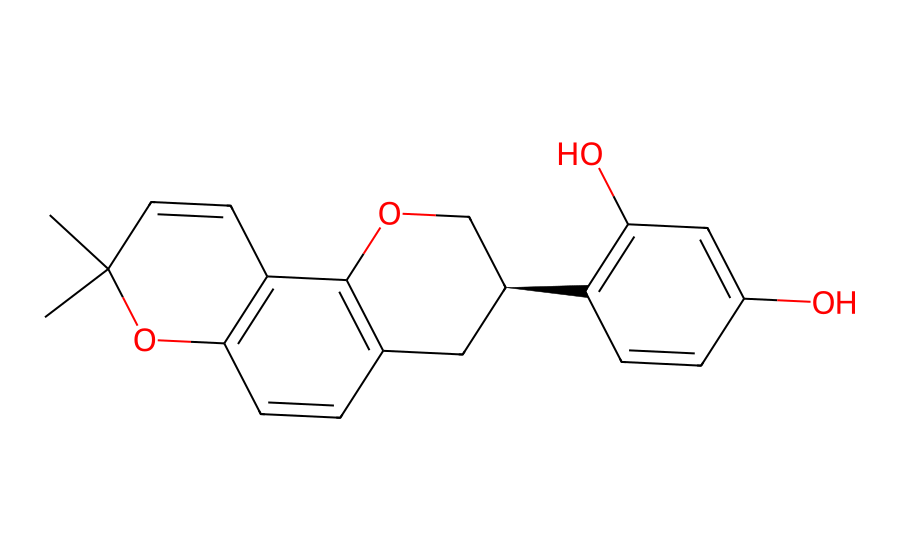
Glabridin is a natural isoflavan from Glycyrrhiza glabra, binds to and activates PPARγ, with an EC50 of 6115 nM. Glabridin exhibits antioxidant, anti-bacterial, anti-nephritic, anti-diabetic, anti-fungal, antitumor, anti-inflammatory, antiosteoporotic, cardiovascular protective, neuroprotective and radical scavenging activities[1][2].
In Vitro
Glabridin binds to and activates PPARγ, with an EC50 of 6115 nM[1]. Glabridin (40, 80 μM) inhibits the proliferation of SCC-9 and SAS cell lines in a dose- and time-dependent manner after treatment for 24 and 48 h[2]. Glabridin (0-80 μM) also induces apoptosis, causes Sub-G1 cell cycle arrest in SCC-9 and SAS cell lines[2]. Glabridin (0, 20, 40, and 80 μM) dose-dependently activates caspase-3, −8, and −9 and increases PARP cleavage, significantly phosphorylates ERK1/2, JNK1/2, and p-38 MAPK in SCC-9 cells[2].
In Vivo
Glabridin (50 mg/kg, p.o. once daily) shows potent anti-inflammatory activity, ameliorates the inflammatory alterations induced by Dextran sodium sulphate (DSS) in rats[3].
References & source
Published experimental findings depend on the model and assay conditions. They do not guarantee equivalent performance in every application. For laboratory research use only.