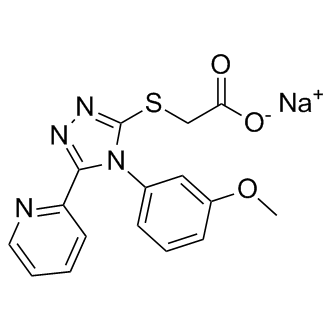
GJ103 (sodium salt) chemical structure
Chemical structureResearch use only
CAT. NO. DC10080Featured

GJ103 (sodium salt)

Pack Sizes & Prices

TotalUS$500
We match the best price and quality on market.
Product overview

Description & Application

GJ103 sodium salt is an active analog of the read-through compound GJ072.

ParameterValue
Chemical NameGJ-103 sodium
CAS No.1459687-96-7
SynonymsGJ103 (sodium salt);GJ 103 sodium salt;GJ-103 sodium salt;GJ103 sodium salt
FormulaC16H13N4NaO3S
M.Wt364.355
SMILESO=C(O[Na])CSC1=NN=C(C2=NC=CC=C2)N1C3=CC=CC(OC)=C3
Purity>98%
Storage2 years -20°C Powder, 2 weeks 4°C in DMSO, 6 months -80°C in DMSO

Biological Activity

GJ103 sodium salt is an active analog of the read-through compound GJ072.

In Vitro

Chemical-induced read through of premature stop codons might be exploited as a potential treatment strategy for genetic disorders caused by nonsense mutations. GJ072 is a novel read-through compound (RTC). GJ072 shows activity comparable to stop codons (TGA, TAG, and TAA) PTC124 and RTC13. GJ072 induces ATM kinase on both TGA and TAG stop codons and restored ATMpSer1981 autophosphorylation and SMC1pSer966 transphosphorylation as measured by FACS. GJ072 is active in A-T cells with a homozygous TAA mutation. GJ072 is able to induce detectable full-length ATM protein in treated A-T cells. Early structure-activity relationship studies generates eight active analogs of GJ072. Some GJ072 analogs (e.g., GJ103, GJ106, GJ109, and GJ111) consistently demonstrates their activities in all three PTCs by both FCATMpSer1981 and IRIF assays. GJ071 and GJ072 and some of their analogs (such as GJ103) have similar read-through activity as RTC13 or RTC14, but are more tolerable than RTC13 and RTC14 to A-T cells. GJ103 does not show obvious cytotoxicity in A-T cells at concentration as high as 300 μM[1].

In Vivo

GJ103 sodium salt is water soluble, making it much easier to work with in in vivo experiments[1].

References & source

DC Chemicals original product information

Published experimental findings depend on the model and assay conditions. They do not guarantee equivalent performance in every application. For laboratory research use only.
Product documentation

Refer to the certificate supplied with your lot for batch-specific release results.

Handling guide

2 years -20°C Powder, 2 weeks 4°C in DMSO, 6 months -80°C in DMSO

Solution calculator

Related research products

CP466722 chemical structureDC4112

CP466722

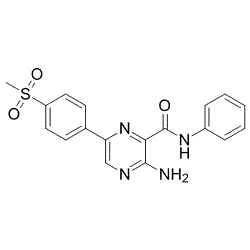
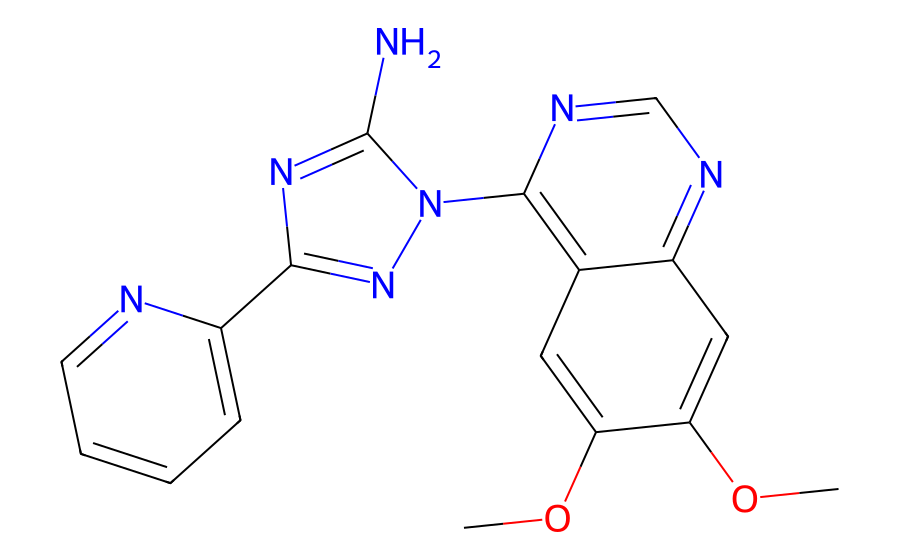
CP-466722 is a rapidly reversible inhibitor of ATM, with an IC50 of 4.1 μM, and has no effects on PI3K or closely related PI3K-like protein kinase (PIKK) family members.

View activity & prices
KU-55933 chemical structureDC1067

KU-55933

KU-55933 is a potent ATM inhibitor with an IC50 and Ki of 12.9 and 2.2 nM, respectively, and is highly selective for ATM as compared to DNA-PK, PI3K/PI4K, ATR and mTOR.

View activity & prices
Gartisertib chemical structureDC39113

Gartisertib

Gartisertib (VX-803) is an ATP-competitive, orally active, and selective ATR inhibitor, with a Ki of <150 pM. Gartisertib potently inhibits ATR-driven phosphorylated checkpoint kinase-1 (Chk1) phosphorylation with an…

View activity & prices
Adavivint chemical structureDC11886

Adavivint

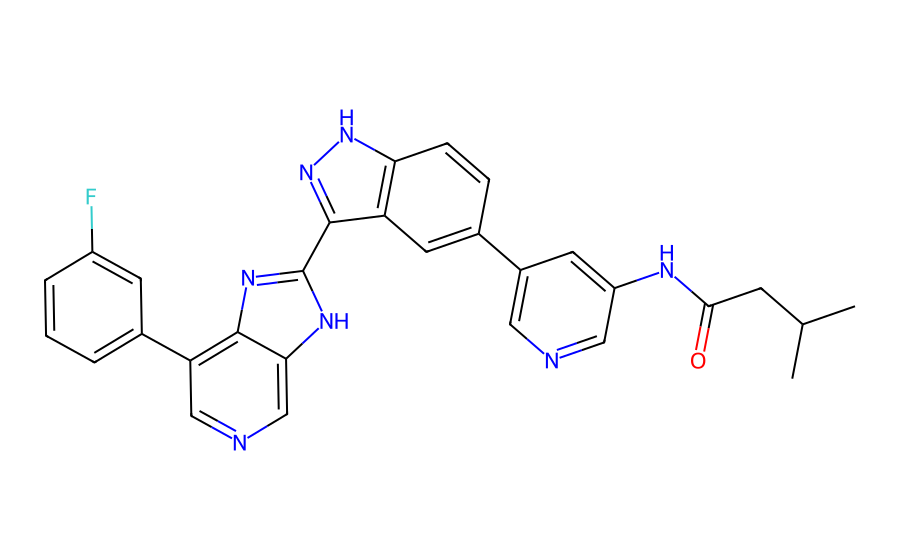
Adavivint is a potent and selective inhibitor of canonical Wnt signaling, with an EC50 of 19.5 nM via a high-throughput TCF/LEF-reporter assay in SW480 colon cancer cells.

View activity & prices
WZ4002 chemical structureDC5090

WZ4002

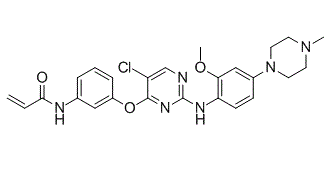
WZ4002 is a mutant selective EGFR inhibitor with IC50s of 2, 8, 3 and 2 nM for EGFRL858R, EGFRL858R/T790M, EGFRE746_A750 and EGFRE746_A750/T790M, respectively.

View activity & prices
GW788388 chemical structureDC7146

GW788388

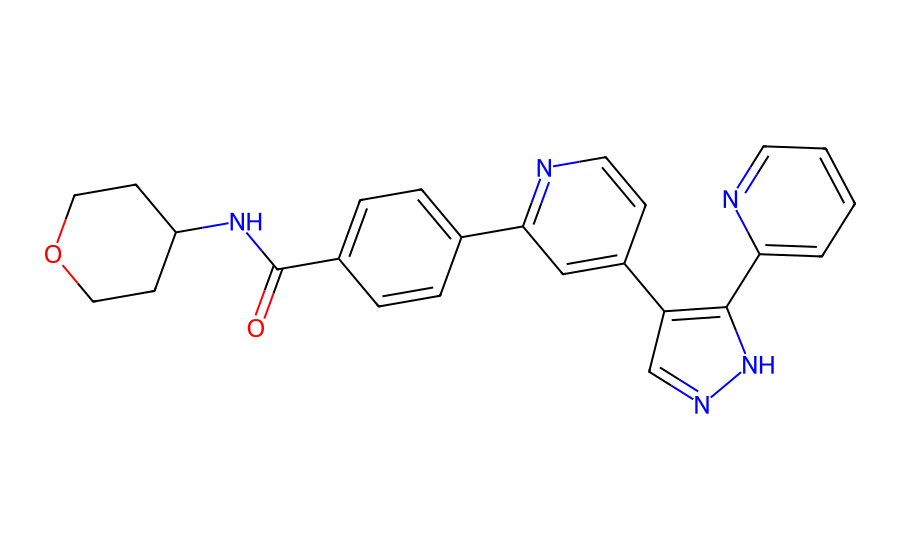
GW788388 is a potent and selective inhibitor of ALK5 with IC50 of 18 nM, and also inhibits TGF-β type II receptor and activin type II receptor activities, without inhibiting BMP type II receptor.

View activity & prices

Cart

Request quotation