Biological Activity
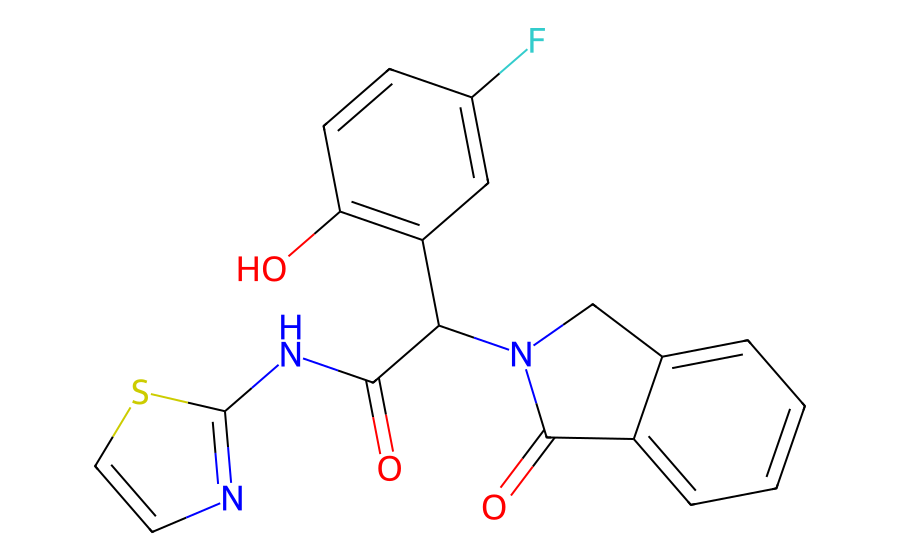
EAI045 is an allosteric inhibitor of mutant EGFR with IC50s of 1.9, 0.019, 0.19 and 0.002 μM for EGFR, EGFRL858R, EGFRT790M and EGFRL858R/T790M at 10 μM ATP, respectively.
In Vitro
EAI045 potently inhibits EGFR Y1173 phosphorylation in H1975 cells (EC50=2 nM), but not in HaCaT cells. EAI045 is an inhibitor of the L858R/T790M mutant with 1000-fold selectivity versus wild type EGFR at 1 mM ATP. Profiling of EAI045 against a panel of 250 protein kinases reveals exquisite selectivity; no other kinases are inhibited by more than 20% at 1 μM EAI045[1]. EAI045 has high potency and selectivity for L858R/T790M mutation. In L858R/T790M-mutant NSCLC cell line H1975 cells, EAI045 decreases but does not completely abolish the EGFR autophosphorylation. In stably transfected NIH-3T3 cells harboring the L858R/T790M EGFR mutant, EAI045 shows the same activity. In L858R-mutant H3255 cells, EAI045 exhibits moderate activity. In the HaCaT cells, a keratinocyte cell line with wild-type EGFR, EAI045 does not show any activity of inhibiting EGFR phosphorylation. It confirms the selectivity of EAI045 for mutant EGFR[2].
In Vivo
In a genetically engineered mouse model of L858R/T790Mmutant-driven lung cancer , remarkable tumor regression is observed in L858R/T790M-mutant mice treated with the combination of EAI045 and cetuximab. No response is seen in those mice treated with EAI045 alone. The same effect is seen in both L858R/T790M/C797S- engineered Ba/F3 cells and in mice carrying the L858R/T790M/C797S tumor xenografts. These assays clearly show that EAI045 can overcome resistance from acquired T790M and C797S mutations[2].
References & source
Published experimental findings depend on the model and assay conditions. They do not guarantee equivalent performance in every application. For laboratory research use only.