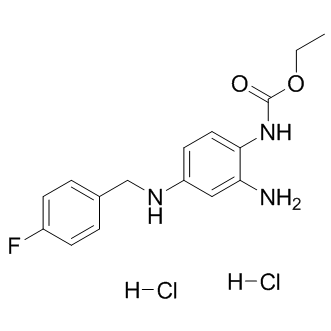
Retigabine dihydrochloride chemical structure
Chemical structureResearch use only
CAT. NO. DC8807Featured

Retigabine dihydrochloride

Pack Sizes & Prices

TotalUS$250
We match the best price and quality on market.
Product overview

Description & Application

Retigabine (D-23129) is a novel antiepileptic compound with broad spectrum and potent anticonvulsant properties, both in vitro and in vivo. The compound was shown to activate a K+ current in neuronal cells. The pharmacology of the induced current displays concordance with the published pharmacology of the M-channel, which recently was correlated to the KCNQ2/3 K+ channel heteromultimere. Retigabine is a novel anticonvulsant with an unknown mechanism of action. Application of 10 μM retigabine to oocytes expressing the KCNQ2/3 heteromeric channel shifted both the activation threshold and voltage for half-activation by approximately 20 mV in the hyperpolarizing direction, leading to an increase in current amplitude at test potentials between ?80 mV and +20 mV. Retigabine also had a marked effect on KCNQ current kinetics, increasing the rate of channel activation but slowing deactivation at a given test potential. Retigabine shifted the voltage dependence of channel activation with an EC50value of 1.6 ± 0.3 μM (slope factor was 1.2 ± 0.1,n = 4 to 5 cells per concentration). Retigabine (0.1 to 10 μM) also slowed the rate of channel deactivation, predominantly by increasing the contribution of a slowly deactivating tail current component. Administration of centrally acting M-channel opener retigabine (2.5 and 7.5 mg/kg) can dose-dependently raise the head withdrawal threshold of mechanical allodynia, and this analgesic effect can be reversed by the specific KCNQ channel blocker XE991 (3 mg/kg). Food intake was increased significantly by the administration of retigabine (2.5 and 7.5 mg/kg), and this effect was reversed by XE991 (3 mg/kg). Furthermore, intracerebralventricular injection of retigabine further confirmed the analgesic effect of central retigabine on inflammatory TMJ. Retigabine exerted both antiepileptogenic and antiictogenic effects under conditions of rapid kindling model.

ParameterValue
CAS No.150812-13-8
SynonymsD 20443 dihydrochloride; D-20443 dihydrochloride; D20443 dihydrochloride
FormulaC16H20Cl2FN3O2
M.Wt376.25
SMILESC(OCC)(=O)NC1=CC=C(NCC2=CC=C(F)C=C2)C=C1N.[H]Cl.[H]Cl
Purity>98%
Storage2 years -20°C Powder, 2 weeks 4°C in DMSO, 6 months -80°C in DMSO

Biological Activity

Retigabine (D-23129) is a novel antiepileptic compound with broad spectrum and potent anticonvulsant properties, both in vitro and in vivo. The compound was shown to activate a K+ current in neuronal cells. The pharmacology of the induced current displays concordance with the published pharmacology of the M-channel, which recently was correlated to the KCNQ2/3 K+ channel heteromultimere. Retigabine is a novel anticonvulsant with an unknown mechanism of action. Application of 10 μM retigabine to oocytes expressing the KCNQ2/3 heteromeric channel shifted both the activation threshold and voltage for half-activation by approximately 20 mV in the hyperpolarizing direction, leading to an increase in current amplitude at test potentials between ?80 mV and +20 mV. Retigabine also had a marked effect on KCNQ current kinetics, increasing the rate of channel activation but slowing deactivation at a given test potential. Retigabine shifted the voltage dependence of channel activation with an EC50value of 1.6 ± 0.3 μM (slope factor was 1.2 ± 0.1,n = 4 to 5 cells per concentration). Retigabine (0.1 to 10 μM) also slowed the rate of channel deactivation, predominantly by increasing the contribution of a slowly deactivating tail current component. Administration of centrally acting M-channel opener retigabine (2.5 and 7.5 mg/kg) can dose-dependently raise the head withdrawal threshold of mechanical allodynia, and this analgesic effect can be reversed by the specific KCNQ channel blocker XE991 (3 mg/kg). Food intake was increased significantly by the administration of retigabine (2.5 and 7.5 mg/kg), and this effect was reversed by XE991 (3 mg/kg). Furthermore, intracerebralventricular injection of retigabine further confirmed the analgesic effect of central retigabine on inflammatory TMJ. Retigabine exerted both antiepileptogenic and antiictogenic effects under conditions of rapid kindling model.

In Vitro

No in vitro data are provided in the current product source. Contact us for further information.

In Vivo

No in vivo data are provided in the current product source. Contact us for further information.

References & source

DC Chemicals original product information

Published experimental findings depend on the model and assay conditions. They do not guarantee equivalent performance in every application. For laboratory research use only.
Product documentation

Refer to the certificate supplied with your lot for batch-specific release results.

Handling guide

2 years -20°C Powder, 2 weeks 4°C in DMSO, 6 months -80°C in DMSO

Solution calculator

Related research products

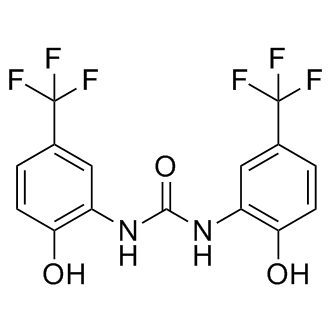
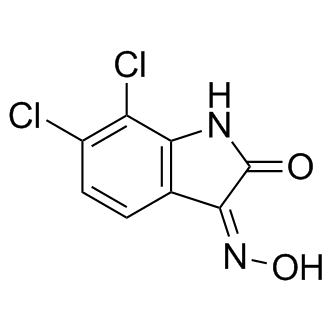
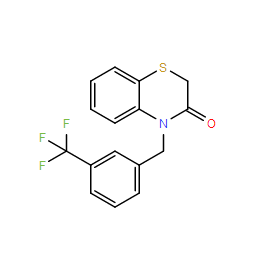
NS6180 chemical structureDC8269

NS6180

NS6180 is a novel potent and selective KCa3.1 channel inhibitor(IC50= 9 nM) prevents T-cell activation and inflammation.

View activity & prices
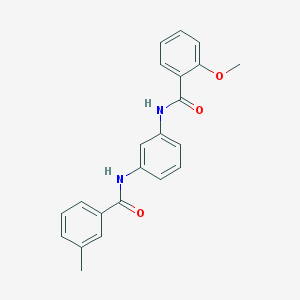
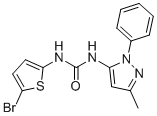
GAT1508 chemical structureDC70426

GAT1508

GAT1508 (GAT-1508) is a potent, specific activator for brain-expressed GIRK1/2 channels (EC50=75 nM), specifically activates the brain GIRK1/2 over the cardiac GIRK1/4; GAT1508 is an allosteric modulator of…

View activity & prices
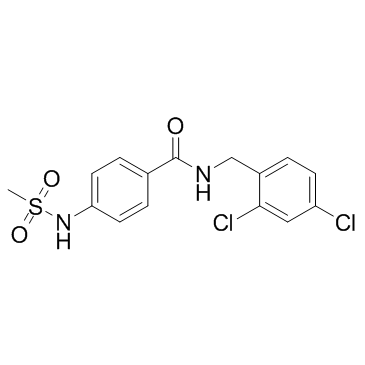
ML-277 chemical structureDC7798

ML-277

ML277(CID53347902) is a novel, potent and selective K(v)7.1 (KCNQ1) potassium channel activator with EC50 of 270 nM.ML277 was shown to be highly selective against other KCNQ channels (>100-fold selectivity versus KCNQ2…

View activity & prices
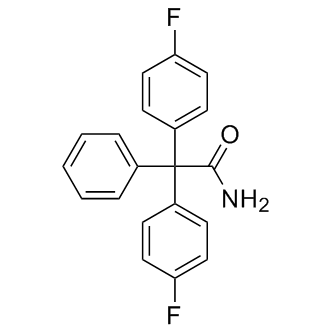
Senicapoc chemical structureDC9600

Senicapoc

Senicapoc (ICA-17043) is a potent and selective Gardos channel blocker with IC50 value of 11 nM. It blocks Ca2+-induced rubidium flux from human RBCs with an IC50 value of 11 nM and inhibits RBC dehydration with IC50…

View activity & prices
NS309 chemical structureDC7833

NS309

NS309 is a positive modulator of small- and intermediate- conductance Ca2+-activated K+ channels (KCa2 and KCa3.1 channels); increases Ca2+ sensitivity. Displays no activity at BK channels.IC50 value: Ca2+-activated K+…

View activity & prices
ML365 chemical structureDC7797

ML365

ML365 is a novel selective small molecule inhibitor of TASK1(KCNK3) with IC50 of 4 nM(thallium influx fluorescent assay) and 16 nM(automated electrophysiology assay).ML365 possesses more than 60-fold selectivity for…

View activity & prices
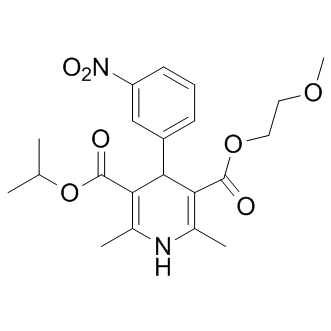
Nimodipine chemical structureDC9131

Nimodipine

Nimodipine(Nimotop) is a dihydropyridine derivative and an analogue of the calcium channel blocker nifedipine, with antihypertensive activity.Nimodipine decreases intracellular free Ca2+,Beclin-1 and…

View activity & prices

Cart

Request quotation