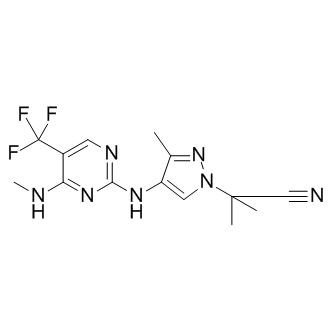
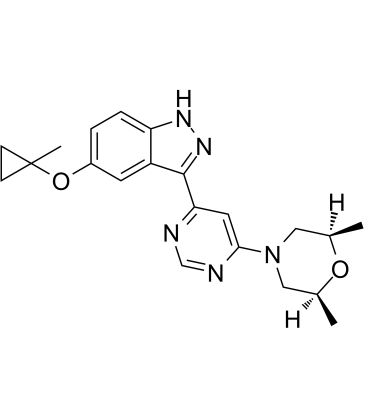
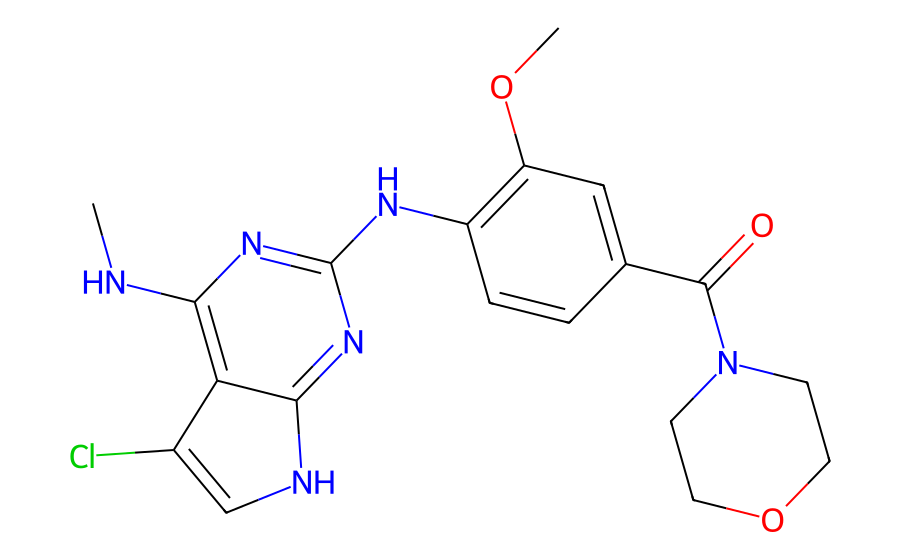
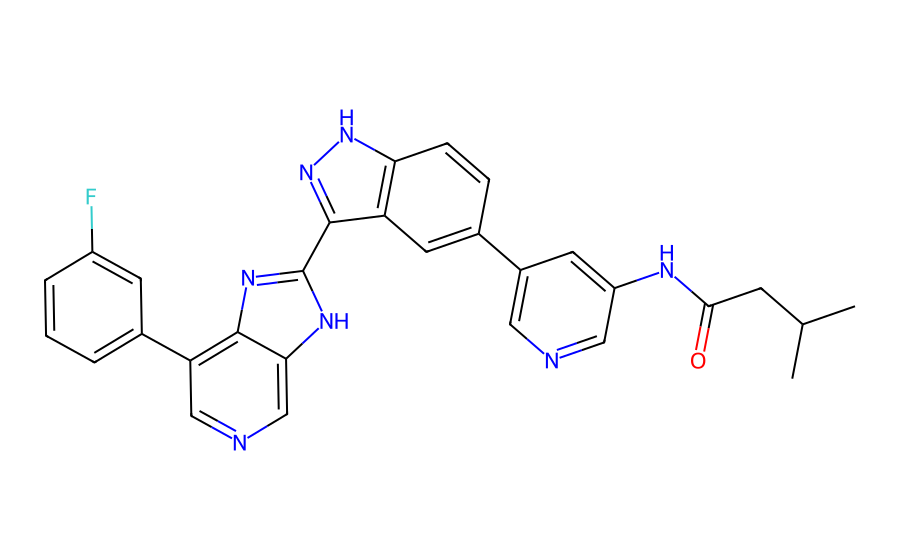
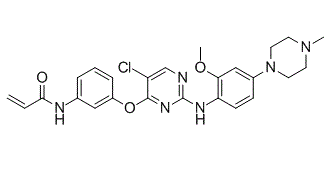
Biological Activity
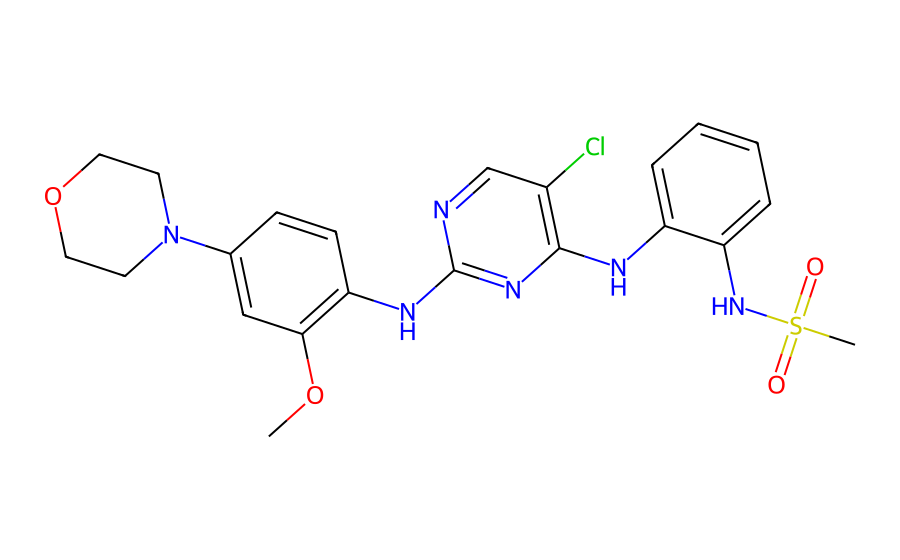
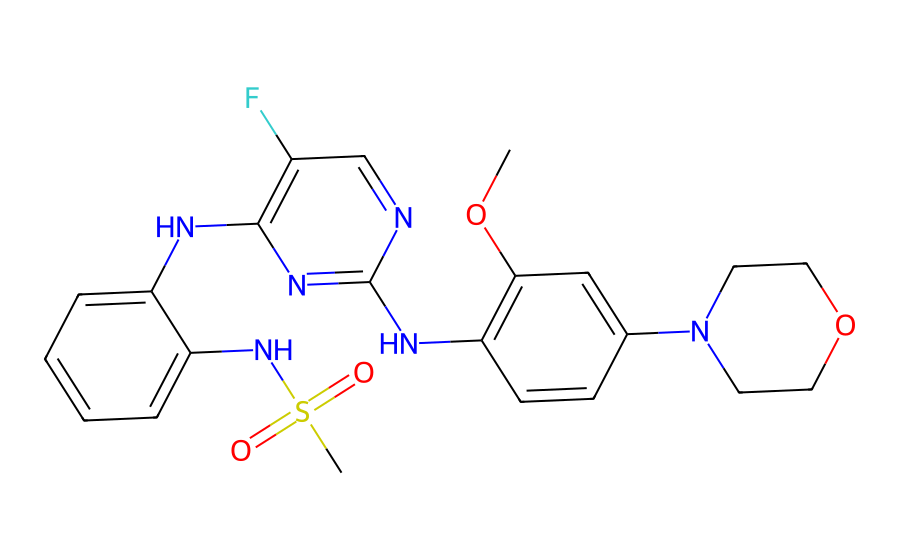
LRRK2-IN-1 is a potent and selective LRRK2 inhibitor with IC50 of 6 nM and 13 nM for LRRK2 (G2019S) and LRRK2 (WT), respectively.
In Vitro
Wild-type and G2019S transduction results in 2.5 fold higher TR-FRET signal which can be inhibited by LRRK2-IN-1 in a dose-dependent manner with IC50 values of 0.08 µM and 0.03 µM, respectively[1]. LRRK2-IN-1 possessed an IC50 of 45 nM for inhibition of DCLK2 and exhibits an IC50 of greater than 1 µM when evaluated in biochemical assays for AURKB, CHEK2, MKNK2, MYLK, NUAK1, and PLK1. LRRK2-IN-1 is confirmed to inhibit MAPK7 with an EC50 of 160 nM. LRRK2-IN-1 induces a dose dependent inhibition of Ser910 and Ser935 phosphorylation accompanied by loss of 14-3-3 binding to both wild type LRRK2 and LRRK2[G2019S] stably transfected into HEK293 cells[2]. LRRK2-IN-1 is moderately cytotoxic with IC50 of 49.3 µM in HepG2 cells. LRRK2-IN-1 exhibits genotoxicity in the presence and absence of S9 at 15.6 and 3.9 µM, respectively[3]. LRRK2-IN-1 inhibits proliferation, migration, and induces cell death with hallmarks of apoptosis of HCT116 and AsPC-1 cells[4].
In Vivo
LRRK2-IN-1 (100 mg/kg, i.p.) induces dephosphorylation of LRRK2 in the kidney of the mice[2]. Peritumoral injection of LRRK2-IN-1 (100 mg/kg) results in a significant decrease in tumor volume and weight of AsPC-1 tumor xenografts[4].
References & source
Published experimental findings depend on the model and assay conditions. They do not guarantee equivalent performance in every application. For laboratory research use only.