Biological Activity
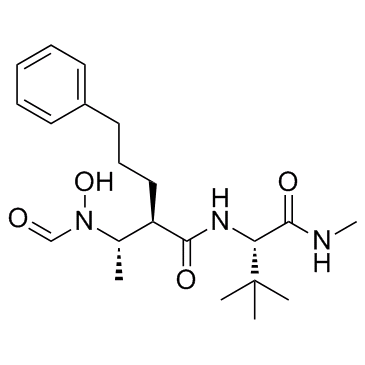
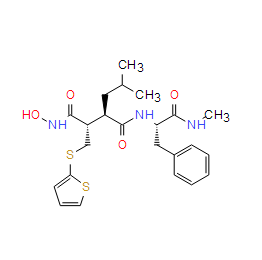
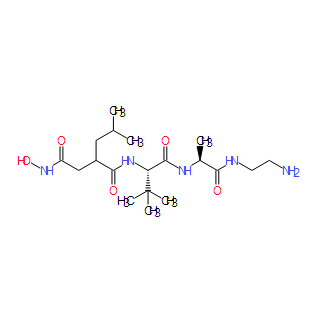
TAPI-2 is a broad-spectrum inhibitor of matrix metalloprotease (MMP), tumour necrosis factorα-converting enzyme (TACE) and a disintegrin and metalloproteinase (ADAM), with an IC50 of 20±10 μM for MMP.
In Vitro
The hydroxamate-based metalloprotease inhibitor TAPI-2 bounds to hmeprin with inhibition constants IC50 20±10 μM for hmeprin β subunit and 1.5±0.27 nM for hmeprin α subunit. Generally, hmeprin α is inhibited more strongly than the β subunit[1]. Without affecting ADAM17 expression, TAPI-2 dramatically decreases the protein levels of NICD and its downstream target HES-1 in both HCP-1 and HT29 cells. Moreover, treating cells with TAPI-2 significantly decreases the CSC phenotype by -50% in both CRC cell lines. The dose-dependent effects of TAPI-2 on the sphere formation and protein levels of NICD and HES-1 confirm that the concentration used (20 μM) is within the effective dose range of TAPI-2 (5–40 μM)[2].
In Vivo
No in vivo data are provided in the current product source. Contact us for further information.
Target
IC50: 20±10 μM (MMP)[1]Ki: 1.5±0.27 nM (MMPs)[1]
Kinase Assay
Meprin activities are determined using N-benzoyl-L-tyrosyl p-aminobenzoic acid as substrate. The substrate concentration is 40 mM, and the enzyme concentration is always at least 10 times below Ki. Inhibitors are employed in a concentration range from 5 pM to 5 mM, depending on their inhibitory effect. Each inhibitor is tested over a concentration range covering at least ten different concentrations from Ki/5 to 5×Ki. All reactions are carried out at 37°C in 50 mM Tris/HCl, pH 7.5, and 0.5 mM MgCl2[1].
Cell Assay
TAPI-2 is dissolved in DMSO and diluted with appropriate medium before use. All experiments are performed using 20 μM TAPI-2. Cells are cultured with or without TAPI-2 for 48 hours and then seeded at 3,000 cells per well in 96-well plates. After pretreatment, increasing doses of 5-fluorouracil (5-FU) that are relevant to the recommended clinical dose (up to 2 μg/mL) are added, with or without TAPI-2, for 72 hours. Cell viability is assessed by adding MTT substrate (0.25% in phosphate-buffered saline [PBS]) in growth medium (1:5 dilution) to cells for 1 hour at 37°C. The cells are ished with PBS, and 100 μL of dimethyl sulfoxideis added. Optical density is measured at 570 nM, and relative MTT is presented as a percentage of control[2].
References & source
[1]. Kruse MN, et al. Human meprin alpha and beta homo-oligomers: cleavage of basement membrane proteins and sensitivity to metalloprotease inhibitors. Biochem J. 2004 Mar 1;378(Pt 2):383-9.
[2]. Wang R, et al. A Disintegrin and Metalloproteinase Domain 17 Regulates Colorectal Cancer Stem Cells and Chemosensitivity Via Notch1 Signaling. Stem Cells Transl Med. 2016 Mar;5(3):331-8.
Published experimental findings depend on the model and assay conditions. They do not guarantee equivalent performance in every application. For laboratory research use only.