Biological Activity
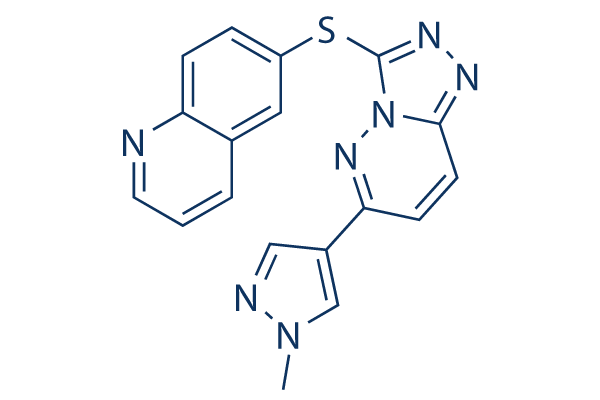
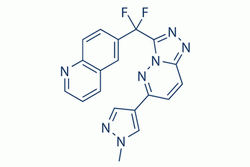
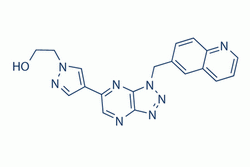
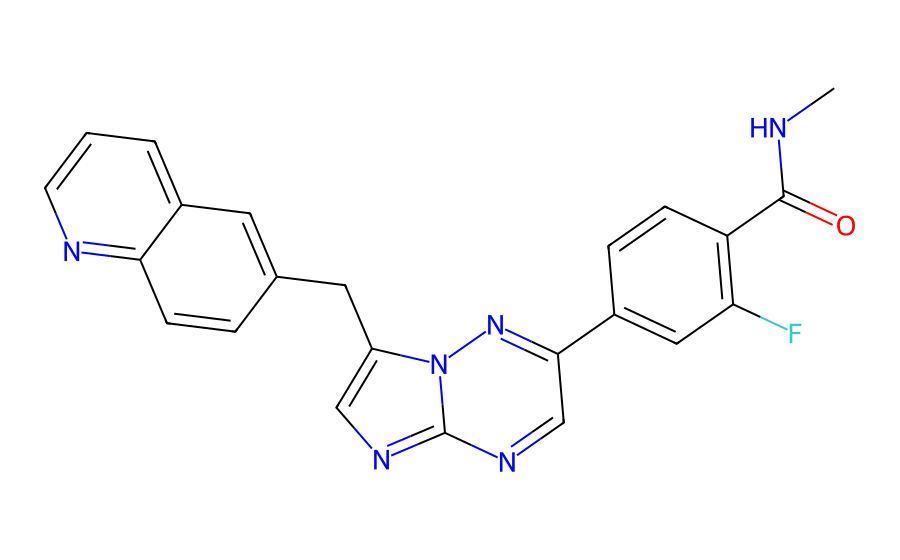
Capmatinib (INCB28060) is a potent and selective c-MET kinase inhibitor. Capmatinib (INCB28060) inhibits c-MET kinase activity with an average IC50 of 0.13 nM.
In Vitro
Capmatinib (INCB28060) inhibits c-MET phosphorylation with an IC50 value of approximately 1 nM and a concentration of approximately 4 nM inhibits c-MET more than 90%. Capmatinib (INCB28060) inhibits SNU-5 viability or proliferation with an average IC50 value of 1.2 nM and a calculated IC90 value of 4.6 nM Capmatinib (INCB28060) prevents HGF-stimulated H441 cell migration, with IC50 of approximately 2 nM. Again, there is little cell migration at a concentration of 16 nM Capmatinib (INCB28060). Capmatinib (INCB28060) potently and specifically inhibits c-MET enzyme activity, c-MET-mediated signal transduction, and the c-MET-dependent neoplastic phenotype of tumor cells. Capmatinib (INCB28060) exhibits strong antitumor activity in c-MET-dependent tumor models at well-tolerated doses. Capmatinib (INCB28060) exhibits picomolar enzymatic potency and is highly specific for c-MET with more than 10,000-fold selectivity over a large panel of human kinases. Capmatinib (INCB28060) potently inhibits c-MET-dependent tumor cell proliferation and migration and effectively induces apoptosis[1].
In Vivo
Oral dosing of Capmatinib (INCB28060) results in time- and dose-dependent inhibition of c-MET phosphorylation and tumor growth in c-MET-driven mouse tumor models, and the inhibitor is well tolerated at doses that achieve complete tumor inhibition. Furthermore, once daily dosing of 10 mg/kg Capmatinib (INCB28060) results in partial regressions in 6 of 10 U-87MG tumor-bearing mice. It is noted that in both S114 and U-87MG models, tumor growth inhibition increases with increased exposure of the compound and that tumor regressions could only be achieved when the compound exposure consistently exceeded 90% of c-MET inhibition. In these studies, Capmatinib (INCB28060) is well tolerated at all doses during the treatment periods, with no evidence of overt toxicity or weight loss[1].
References & source
Published experimental findings depend on the model and assay conditions. They do not guarantee equivalent performance in every application. For laboratory research use only.