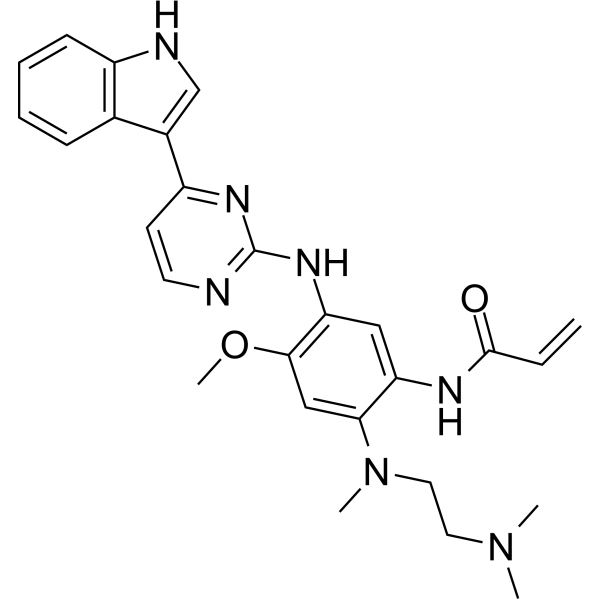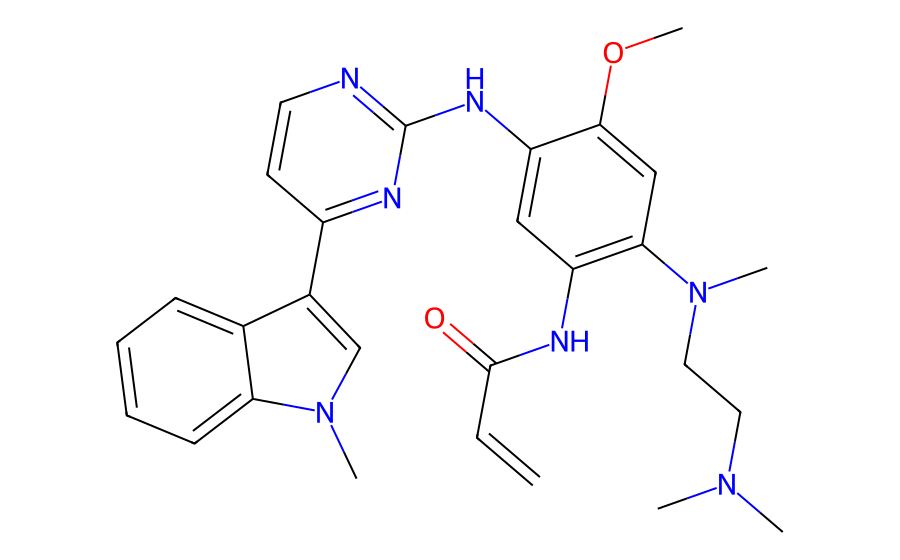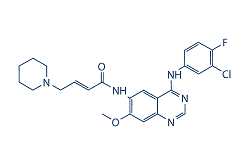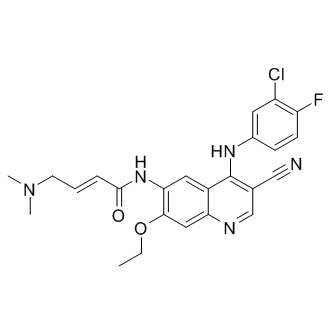
Biological Activity
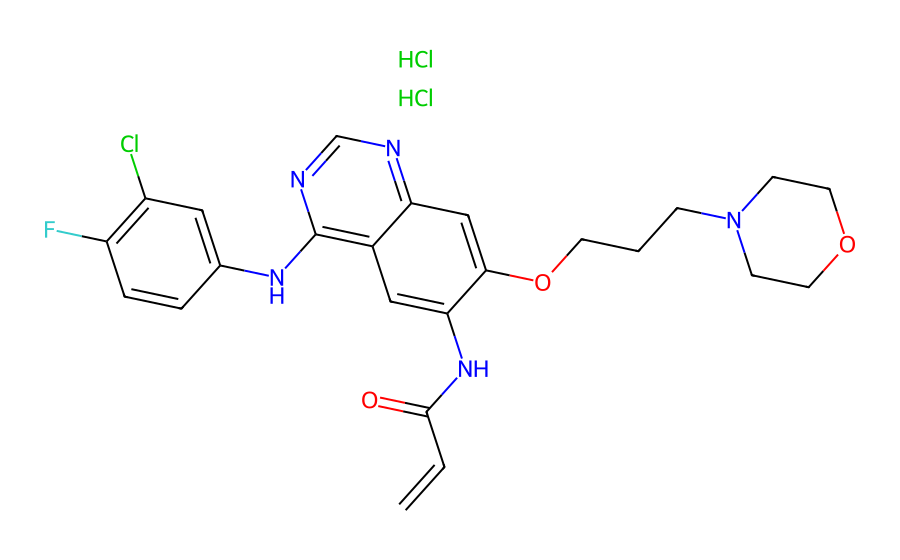
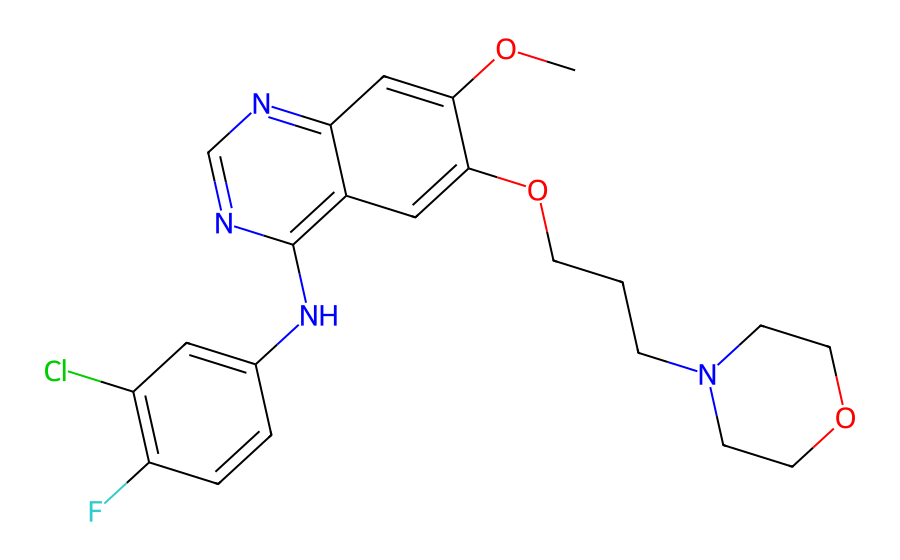
Gefitinib (ZD1839) is a EGFR tyrosine kinase inhibitor, with IC50 of 2-37 nM in NR6wtEGFR cells.
In Vitro
Gefitinib (0.01-0.1 mM) results in increased phosphotyrosine load of the receptor, increased signalling to ERK and stimulation of proliferation and anchorage-independent growth, presumably by inducing EGFRvIII dimerisation in long-term exposure of EGFRvIII-expressing cells. On the other hand, gefitinib (1-2 mM) significantly decreases EGFRvIII phosphotyrosine load, EGFRvIII-mediated proliferation and anchorage-independent growth[1]. Gefitinib (ZD1839) inhibits the monolayer growth of these EGF-driven untransformed cells with IC50 of 20 nM[2]. Gefitinib leads to an inhibition of CALU-3 and GLC82 cell proliferation, with an IC50 of 2 μM[3].
In Vivo
Gefitinib (150 mg/kg, p.o.) in conbination with Metformin induces a significant reduction in tumor growth in nude mice bearing H1299 or CALU-3 GEF-R cells that are grown subcutaneously as tumor xenografts[3]. In irradiated rats, Gefitinib treatment augmentes lung inflammation, including inflammatory cell infiltration and pro-inflammatory cytokine expression, while Gefitinib treatment attenuates fibrotic lung remodeling due to the inhibition of lung fibroblast proliferation[4].
References & source
Published experimental findings depend on the model and assay conditions. They do not guarantee equivalent performance in every application. For laboratory research use only.