Biological Activity
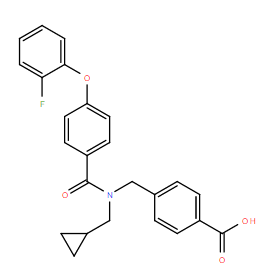
TAK-615 is an LPA1 negative allosteric modulator for receptor signaling and fibrosis-related pathway research. TAK-615 apparent affinity increased in the presence of LPA, supporting allosteric rather than simple competitive behavior.
In Vitro
| Endpoint | Model / conditions / source | Reported result |
|---|---|---|
| Binding behavior | LPA1 receptor back-scattering interferometry with and without LPA. [1] | TAK-615 apparent affinity increased in the presence of LPA, supporting allosteric rather than simple competitive behavior. |
| Functional profile | Calcium mobilization, β-arrestin, cAMP, GTPγS and RhoA assays. [1] | TAK-615 produced a pathway-dependent inhibitory profile; unlike BMS-986202, it did not fully suppress every LPA response. |
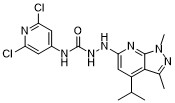
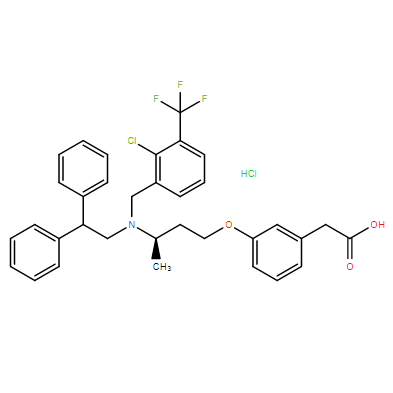
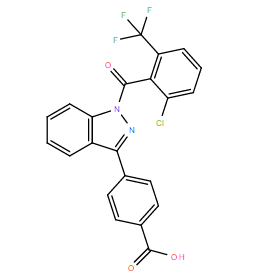
| Comparator binding | TAK-615 compared with SAR-100842 and BMS-986202. [1] | TAK-615 did not compete with either comparator, supporting a distinct binding site. |
In Vivo
No compound-specific animal efficacy result is established by the sources summarized here.
Compound and Evidence Context
| Endpoint | Model / conditions / source | Reported result |
|---|---|---|
| Probe interpretation | Negative allosteric modulation of LPA1. [1] | A single pathway IC50 should not be treated as complete receptor blockade. The verified abstract does not provide the full numerical assay panel. |
Interpretation
This paper supports pathway-dependent allosteric modulation; it does not establish animal antifibrotic efficacy for TAK-615.