For research use only. We do not sell to patients.
Ionizable lipids / Lipid 43
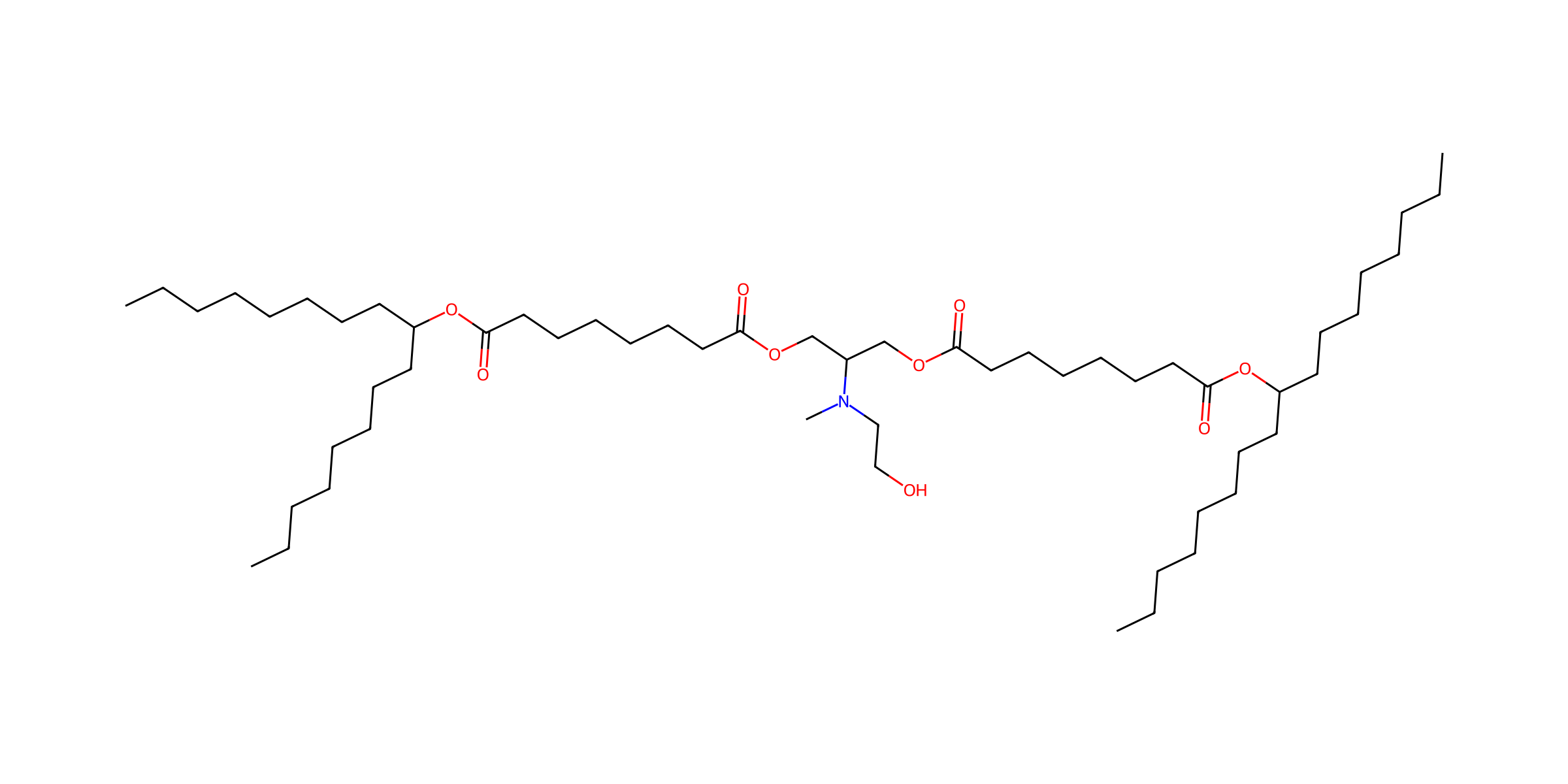
Lipid 43 chemical structure
Product imageResearch use only
CAT. NO. DCL0003

Lipid 43

cationic/ionizable lipids · in vivo car research products

Patent-reported ionizable lipid for spleen-targeted mRNA-LNP research.

Research highlights
TMF30 formulation: Lipid 43/DOPE/cholesterol/PEG2000-DMG = 46.3/9.4/42.7/1.6 mol%.Reported particle size: 210.60 ± 1.83 nm; PDI: 0.136 ± 0.018.Reported spleen signal: 1.31 × 10⁹ p/s; liver signal: 3.56 × 10⁷ p/s.Reported spleen-to-liver signal ratio: 38.8.
Literature- or patent-reported values; not product specifications or performance guarantees.

Pack size & price

USD
Total$850
We match the best price and quality on market.
Ships from ShanghaiIce-pack transportPure lipid recommended
Product overview

Description & Application

Lipid 43 is an ionizable lipid disclosed as Compound 43 in WO 2024/109794. In the patent's TMF30 formulation, mRNA-LNPs showed predominantly splenic reporter expression after administration in mice. Its structure, molecular formula, molecular weight and SMILES were assigned from the compound-specific synthesis scheme and checked against the reported proton count.

CAS No.Not available
Chemical NameLipid 43
SMILESCCCCCCCCC(CCCCCCCC)OC(=O)CCCCCCC(=O)OCC(COC(=O)CCCCCCC(=O)OC(CCCCCCCC)CCCCCCCC)N(C)CCO
FormulaC56H107NO9
M.Wt938.47
Purity>98%
StorageContact us for batch-specific storage and handling guidance.
Shipping conditionShips from Shanghai. Contact us to confirm the appropriate transport condition for the current batch.
Product classificationCationic/Ionizable Lipids; In vivo CAR research products

Patent-reported formulation composition

ComponentReported mol%Role
Lipid 4346.3Ionizable lipid
DOPE9.4Helper phospholipid
Cholesterol42.7Sterol
PEG2000-DMG1.6PEG lipid
Total100.0Original patent ratio retained
TMF30
210.60 ± 1.83 nm
0.136 ± 0.018
Luciferase mRNA
Mouse in vivo organ-distribution experiment
Patent-reported1.31 × 10⁹ p/s
Patent-reported3.56 × 10⁷ p/s
Patent-reported38.8
Patent Data DisclaimerAll formulation and performance values shown here are transcribed from the cited patent for TMF30 under its specific experimental conditions. They were not independently verified by DC Chemicals and are not product release specifications or a performance guarantee.
Cited patentWO 2024/109794; PCT/CN2023/133178. Novel Lipids Used for Nucleic Acid Delivery and Lipid Nanoparticle Composition. Compound 43 synthesis: paragraph [0297] onward; TMF30 formulation and organ-distribution tables: patent pages 131–135.
Laboratory planning

Solution Calculators

The product molecular weight is prefilled when available and remains editable. Confirm solvent compatibility and solubility before preparation.

Mass = concentration × volume × molecular weight
Enter any three values to calculate the fourth.
C₁V₁ = C₂V₂
Enter any three values to calculate the fourth.
Preparing stock solutions

Quick preparation table

Solvent volumes update from the molecular weight above.

Mass1 mM5 mM10 mM
10 mg11.6504 mL2.3301 mL1.1650 mL
25 mg29.1260 mL5.8252 mL2.9126 mL
50 mg58.2520 mL11.6504 mL5.8252 mL
100 mg116.5039 mL23.3008 mL11.6504 mL
250 mg291.2599 mL58.2520 mL29.1260 mL

Need a different pack size or technical document?

Contact our team with the catalog number and requested quantity.

Contact us
Handling guidance

Shipping, storage and sampling

How is the lipid shipped, and how should I store it?
We generally ship the neat (undissolved) lipid compound rather than an ethanol solution. The neat lipid is stable during transport with ice packs, and shipments originate from Shanghai. Pure form: store at −20 °C for up to 1 year. In solvent: store at −80 °C for up to 6 months or at −20 °C for up to 1 month. Keep sealed and protected from light. Avoid repeated thaw cycles for best results.
Pure lipid or solution — which should I choose?
Pure lipid is generally more stable during shipping and storage, so we usually recommend the pure form. A solution in ethanol or chloroform can be supplied when required by your workflow. Tell us the intended application, solvent and target concentration so the most suitable format can be confirmed.
How should I measure a small amount of oily or viscous lipid?
Ionizable lipids are often oily liquids or viscous semisolids, so material can be lost during repeated weighing or transfer. For a small pack, dissolve the entire quantity and aliquot it volumetrically. For example, add 1 mL ethanol to 25 mg lipid to prepare a 25 mg/mL stock, then use a pipette to withdraw the required amount. For quantities above 100 mg, direct weighing with an analytical balance may be more practical. Always confirm solvent compatibility and solubility first.
Can you support formulation optimization and scale-up?
Yes. Share the RNA cargo, target tissue, administration route, formulation method and assay plan. Our team can discuss starting molar ratios, N/P ratio and scale-up requirements for research workflows.