For research use only. We do not sell to patients.
← All classifications
Other source categories

General research products

A source-catalog collection of products that currently lack a more specific lipid classification. These records remain searchable while category assignment and supporting evidence are reviewed.

24 products currently listedResearch-use products only
Evidence noteCategory membership indicates research relevance. Organ targeting, cell specificity and performance must be verified from the formulation and study conditions cited for each product.
Scientific illustration for General research products
Browse this category

General research products products

24 products · 20 per page
Cat. No.Product NameField of ApplicationChemical Structure

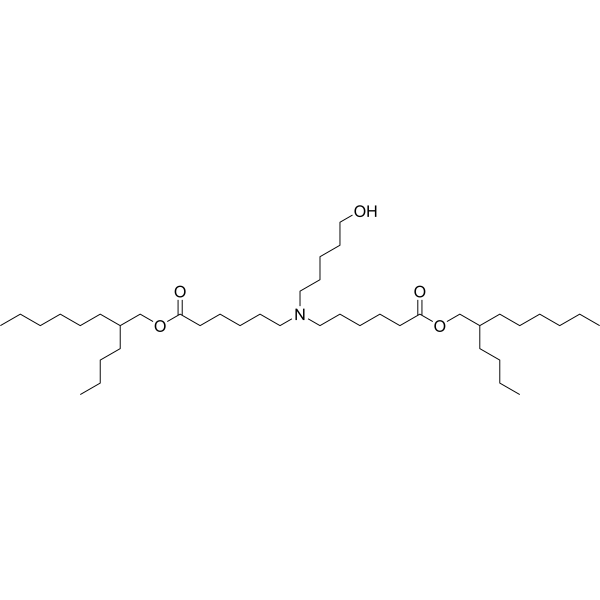
E12LA6B603(ILB3132,ILB-3132) is a novel ionizable amino lipid disclosed in patent WO2024198497A1, developed by MagicRNA, representing a highly efficient component for lipid nanoparticle (LNP) delivery systems.When formulated into LNPs, E12LA6B603 LNP achieves a remarkable 98.26% encapsulation efficiency for mRNA. It mediates superior in vitro transfection in dendritic cells (1.8E+05 intensity) and demonstrates best-in-class in vivo protein expression after intramuscular injection (2.2E+09 intensity). Most notably, in a B16-OVA melanoma model, therapeutic OVA-mRNA vaccines delivered by E12LA6B603 LNPs induced 100% complete tumor regression, highlighting its superior efficacy over benchmarks like DLin-MC3 and SM-102. Its biodegradable ester linkages and balanced structure make it a promising, potent candidate for next-generation mRNA vaccines and therapeutics.

Structure image
coming soon
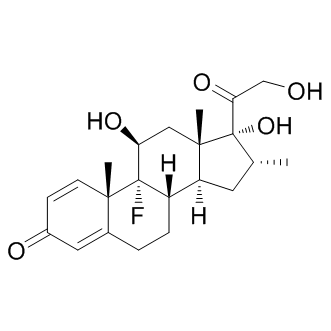
DexamethasoneFeaturedFeatured

Dexamethasone is a potent synthetic member of the glucocorticoid class of steroid drugs used as an anti-inflammatory and immunosuppressant.

Dexamethasone chemical structure
BAY11-7082FeaturedFeatured

BAY 11-7082 is a NF-κB inhibitor which decreases NF-κB by inhibiting TNF-α-induced phosphorylation of IκB-α. BAY 11-7082 inhibits ubiquitin-specific protease USP7 and USP21 with IC50s of 0.19 μM and 0.96 μM, respectively.

BAY11-7082 chemical structure

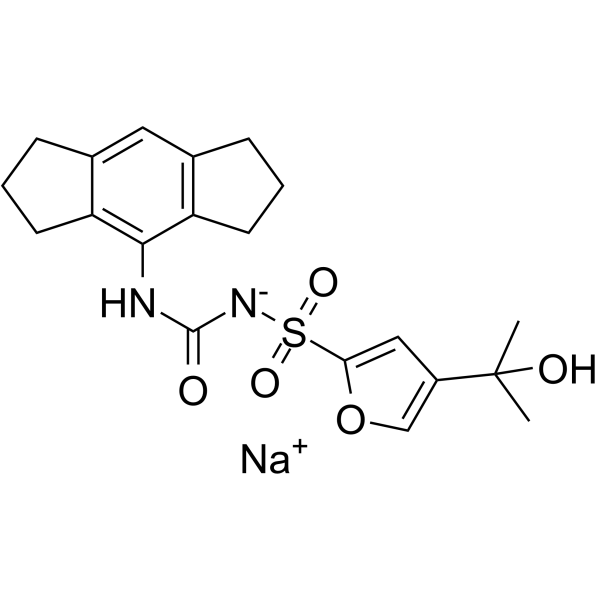
MCC950 (CP-456773) sodium is a potent, selective, small-molecule inhibitor of NLRP3 with IC50 of 7.5 nM in BMDMs.

MCC950 (CP-456773) sodium chemical structure
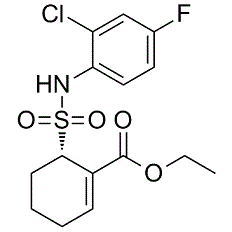
TAK-242 (Resatorvid)FeaturedFeatured

TAK-242 (Resatorvid), a small-molecule-specific inhibitor of Toll-like receptor (TLR) 4 signaling, inhibits the production of lipopolysaccharide-induced inflammatory mediators by binding to the intracellular domain of TLR4. IC50 value: 1.1-11 nM Target: TLR4 in vitro: In RAW264.7 cells and mouse peritoneal macrophages, TAK-242 suppressed lipopolysaccharide (LPS)-induced production of NO, tumor necrosis factor-alpha (TNF-alpha), and interleukin (IL)-6, with 50% inhibitory concentration (IC50) of 1.1 to 11 nM. TAK-242 also suppressed the production of these cytokines from LPS-stimulated human peripheral blood mononuclear cells (PBMCs) at IC50 values from 11 to 33 nM. In addition, the inhibitory effects on the LPS-induced IL-6 and IL-12 production were similar in human PBMCs, monocytes, and macrophages. TAK-242 inhibited mRNA expression of IL-6 and TNF-alpha induced by LPS and interferon-gamma in RAW264.7 cells . TAK-242 selectively bound to TLR4. The time course of the inhibitory effect of TAK-242 on inflammatory mediator production corresponded to that of the binding of TAK-242 to TLR4. TAK-242 inhibited the association of TLR4 with Toll/interleukin-1 receptor domain-containing adaptor protein (TIRAP) or Toll/interleukin-1 receptor domain-containing adaptor protein inducing interferon-β-related adaptor molecule (TRAM) in human embryonic kidney (HEK) 293 cells overexpressing TLR4, MD-2, and TIRAP or TRAM, respectively . in vivo: To evaluate the effect of blocking TLR4 on visceral nociception, TAK-242, a selective TLR4 antagonist, was administered peripherally (intravenous) and centrally (intracerebroventricular and intra-PFC) (n = 10-12/experimental group) . Intravenous administration of TAK-242 to mice 1 h be Fore LPS challenge dose-dependently inhibited LPS-induced increases in serum levels of TNF-alpha, IL-1beta, IL-6, IL-10, MIP-2, and NO metabolites. TAK-242 protected mice from LPS-induced lethality in a similar dose-dependent manner, and rescued 100% of mice at a dose of 1 mg/kg. Interestingly, TAK-242 worked quickly, and showed beneficial effects even when administered after LPS challenge .For the detailed information of TAK-242 (Resatorvid), the solubility of TAK-242 (Resatorvid) in water, the solubility of TAK-242 (Resatorvid) in DMSO, the solubility of TAK-242 (Resatorvid) in PBS buffer, the animal experiment (test) of TAK-242 (Resatorvid), the cell expriment (test) of TAK-242 (Resatorvid), the in vivo, in vitro and clinical trial test of TAK-242 (Resatorvid), the EC50, IC50,and Affinity of TAK-242 (Resatorvid), Please contact DC Chemicals.

TAK-242 (Resatorvid) chemical structure
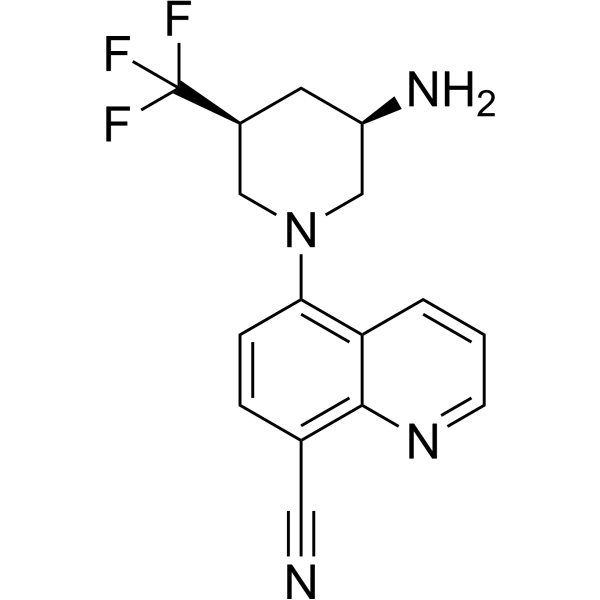
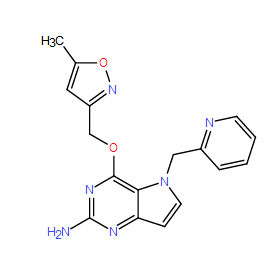
EnpatoranFeaturedFeatured

Enpatoran (M5049) is an orally active and dual TLR7/8 inhibitor with IC50s of 11.1 nM and 24.1 nM in HEK293 cells, respectively. Enpatoran can block both innate and adaptive autoimmunity. Enpatoran is inactive against TLR3, TLR4 and TLR9. Enpatoran (M5049) can block molecule synthetic ligands and natural endogenous RNA ligands. Enpatoran (M5049) inhibits cytokine release, causing great potency in pharmacokinetic/pharmacodynamic properties.

Enpatoran chemical structure
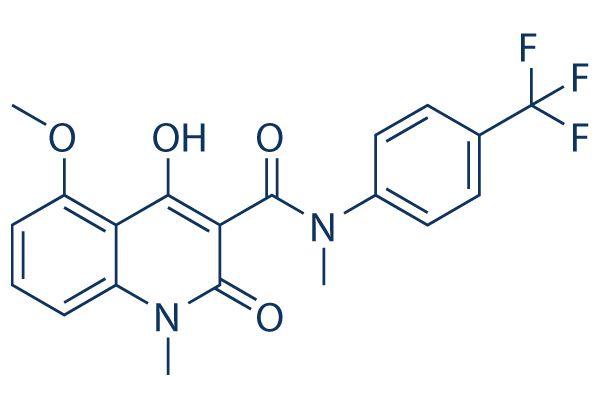
Tasquinimod(ABR-215050)FeaturedFeatured

Tasquinimod is an oral antiangiogenic agent in clinical trials for the treatment of castration-resistant prostate cancer. Tasquinimod binds to the regulatory Zn2+ binding domain of HDAC4 with Kd of 10-30 nM.

Tasquinimod(ABR-215050) chemical structure
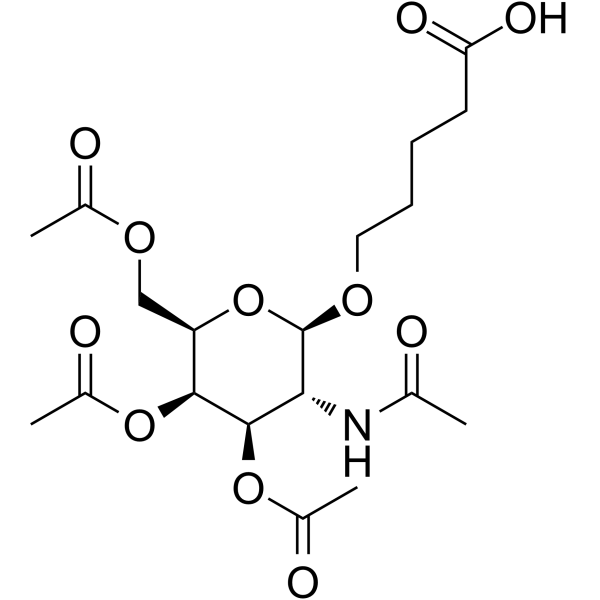
TLR4-IN-C34-C2-COOHFeaturedFeatured

TLR4-IN-C34-C2-COO is a linker that incorporates TLR4 inhibitor TLR4-IN-C34. TLR4-IN-C34 inhibits TLR4 in enterocytes and macrophages, and reduces systemic inflammation in mouse models of endotoxemia and necrotizing enterocolitis.

TLR4-IN-C34-C2-COOH chemical structure
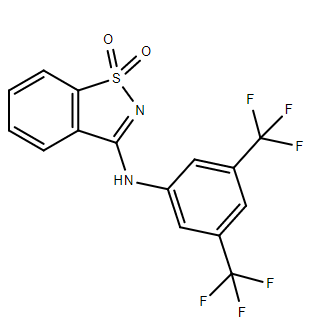
CU-115FeaturedFeatured

CU115 is a potent TLR8 antagonist (IC50=1.04 µM), and shows selective for TLR8 over TLR7 (IC50=>50 µM). CU 115 decreases TNF-α and IL-1β production activated by R-848 in THP-1 cells.

CU-115 chemical structure
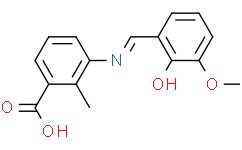
Vb-201FeaturedFeatured

Novel anticryptosporidial agent, acting as a toll-like receptor-2 (TLR2) antagonist

Vb-201 chemical structure
E6742FeaturedFeatured

E6742 (E6742) is a potent, selective, dual TLR7/8 inhibitor with binding Kd of 1.7 uM/37 nM in ITC assays, respectively, inhibits TLR7/8 agonist CL097 induced reporter activation with IC50 values of 22, 68, and 3.0 nM for hTLR7, mTLR7, and hTLR8, respecti

E6742 chemical structure
TLR4-IN-C34FeaturedFeatured

TLR4-IN-C34 is an orally active TLR4 inhibitor and reduces systemic inflammation in models of endotoxemia and necrotizing enterocolitis[1][2].

TLR4-IN-C34 chemical structure
TJ-M2010-5FeaturedFeatured

TJ-M2010-5 is a MyD88 inhibitor that binds to the TIR domain of MyD88 to interfere with its homodimerization, and the TLR/MyD88 signal pathway. TJ-M2010-5 can be used for the research of myocardial ischemia/reperfusion injury (MIRI).

TJ-M2010-5 chemical structure
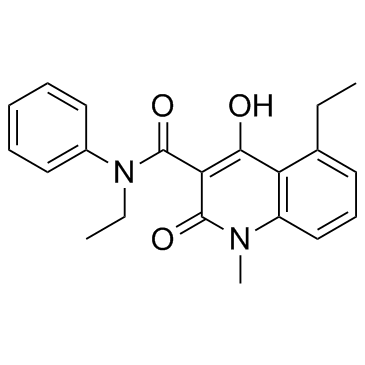
PaquinimodFeaturedFeatured

Paquinimod is a S100A9 inhibitor, which prevents S100A9 binding to TLR-4.

Paquinimod chemical structure
E104FeaturedFeatured

E014 is a potent, selective TLR7 agonist with EC50 of 69 nM in Ramos Blue reporter assays, >500-fold selective for TLR7 over TLR8.

E104 chemical structure
M1002FeaturedFeatured

M1002 is a first-in-class HIF-2a agonists.

M1002 chemical structure
C29FeaturedFeatured

C29 is a Toll-like receptor 2 (TLR2) inhibitor.

C29 chemical structure