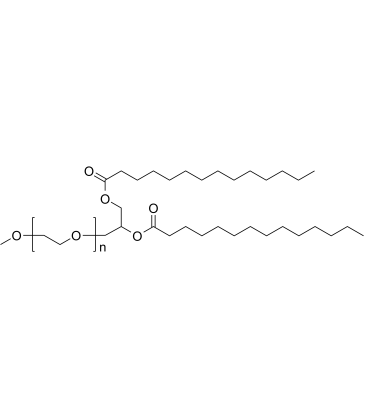
DLin-K-DM4 is listed as a pegn for laboratory research use.
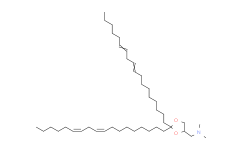

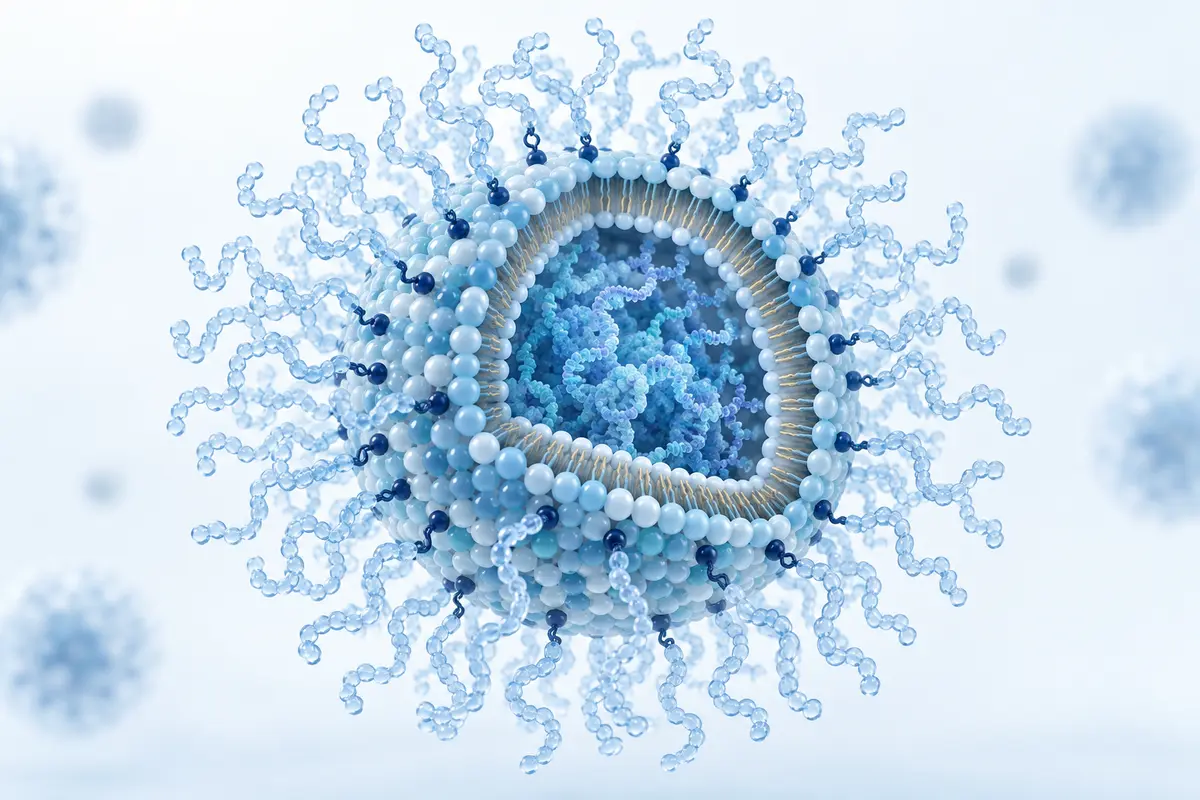
PEG-containing lipids used to tune LNP particle size and surface properties.
DLin-K-DM4 is listed as a pegn for laboratory research use.
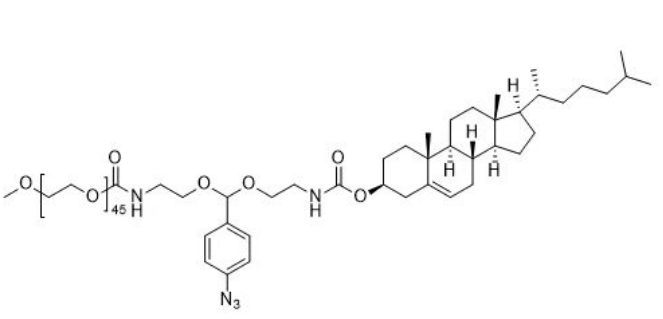
Acid-degradable PEG Lipid (ADP) composed of polyethylene glycol lipid is synthesized with the azido-acetal linker and used to generate RD-LNPs, which significantly improves the performance of LNP-mRNA complexes in vitro and in vivo.
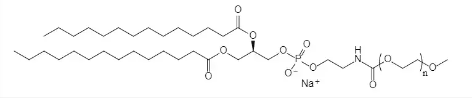
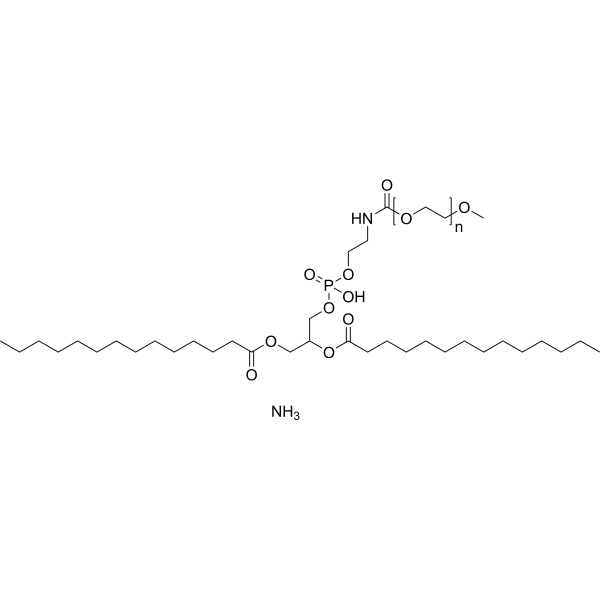
DPPE-MPEG(2000) is a PEGylated form of 1,2-dipalmitoyl-rac-glycero-3-PE (DPPE). It has been used in the synthesis of anionic liposomes for drug redistribution and toxicity prevention.
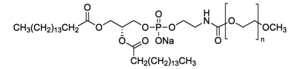
14:0 PEG2000 PE (DMPE-PEG2000) is a PEG-phospholipid conjugate to prepare nanostructured lipid carrier.
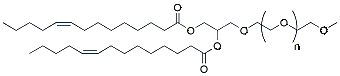
A methoxy-terminated PEG1000 functionalized with 1,2-dimyristoleoyl-sn-glycerol via an ether linkage. This compound may be used in the formulation of lipid nanoparticles (LNP's) for delivery applications. Reagent grade, for research purpose. Please contact us for GMP-grade inquiries.
DMG-PEG-OH, MW 2,000 is a polyPEG lipid that may be used for liposome or lipid nanoparticle (LNP) preparation for RNA drug delivery. The 2k PEG units elevate the aqueous solubility of the molecule.
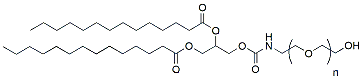
ALC-0159 (di-C18) is an analog of ALC-0159, in which the original C14 chain is replaced with C18 chain. C18-ALC-0159 demonstrates high stability in vivo, effectively prevents binding with proteins such as ApoE, and achieves a prolonged blood circulation time. It also reduces liver targeting and accumulation.

mPEG2000-DSPE is used in COVID 19 mRNA vaccines. It is a PEGylated derivative of 1,2-distearoyl-sn-glycero-3-PE . Formulations containing DSPE-MPEG(2000) have been used to prepare liposomes with long circulation time for the delivery of anticancer and antimalarial agents.. mPEG2000-DSPE has also been widely used as hydrophilic surface modifying agent for a variety types of hydrophobic nanoparticles, including recently reported lipid nanoparticle mRNA vaccines.

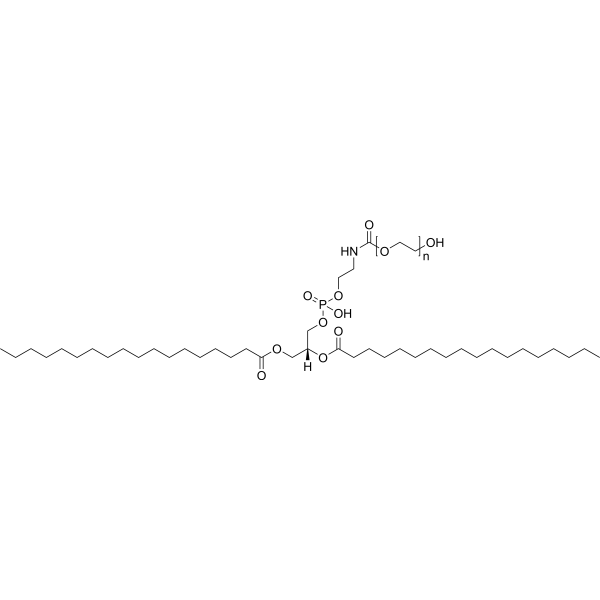
DSPE-PEG2000-OH is used for creating micelles that are able to carry drugs with low solubility.
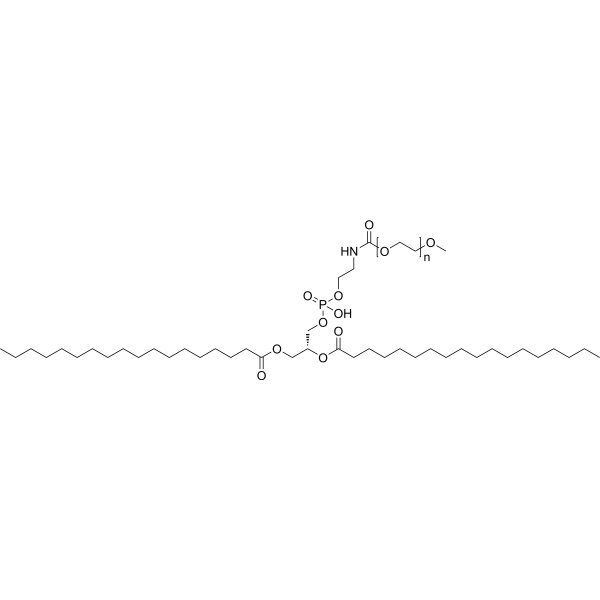
18:0 mPEG2000 PE (DSPE-mPEG2000) is a PEG-based phospholipid. 18:0 mPEG2000 PE can be used to synthesis liposomes for delivering cancer agents.
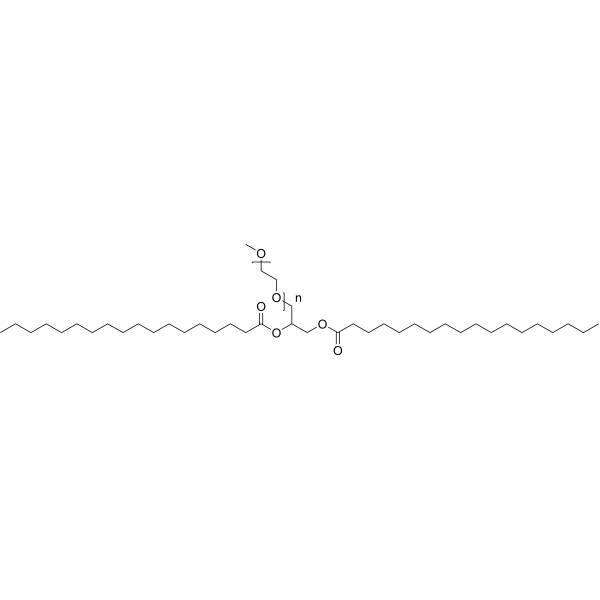
DSG-PEG2000 is used for liposome preparation. DSG-PEG, MW 2,000 has become known for lipid nanoparticle (LNP) preparation for siRNA (small interfering RNA) delivery research. .
PEG(2000)-C-DMG represents a PEGylated derivative synthesized from 1,2-dimyristoyl-sn-glycerol (1,2-DMG). This compound is instrumental in the formulation of lipid nanoparticles (LNPs), particularly when combined with other lipidic compounds, for the efficient delivery of small interfering RNA (siRNA). Specifically, LNPs incorporating PEG(2000)-C-DMG and encapsulating siRNA designed to target the genes responsible for encoding programmed cell death protein ligand 1 (PD-L1) and PD-L2 have demonstrated efficacy in reducing the expression levels of PD-L1 and PD-L2 in monocyte-derived dendritic cells. Furthermore, formulations that include PEG(2000)-C-DMG are being actively explored in the advancement of LNPs aimed at the delivery of siRNA-based vaccines, highlighting its critical role in the development of therapeutic and prophylactic strategies.
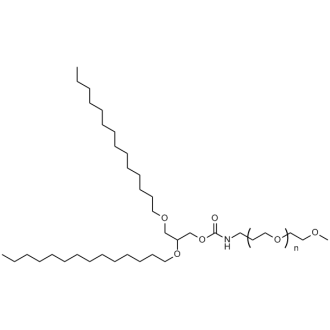
DSPE-MPEG(5000) is a PEGylated form of 1,2-distearoyl-rac-glycero-3-PE (DSPE). It has been used in the synthesis of lipid nanoparticles (LNPs) and liposomes for in vitro and in vivo two-photon bioimaging.
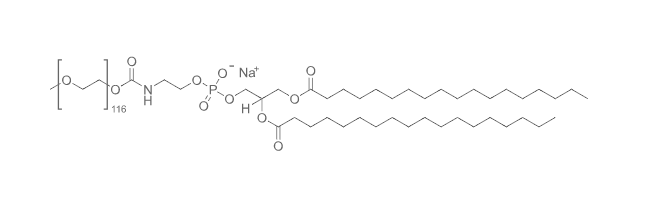
18:1 PEG2000 PE (18:1 PEG-PE) is a polyethyleneglycol/phosphatidyl-ethanolamine conjugate. 18:1 PEG2000 PE can be used for drug delivery.
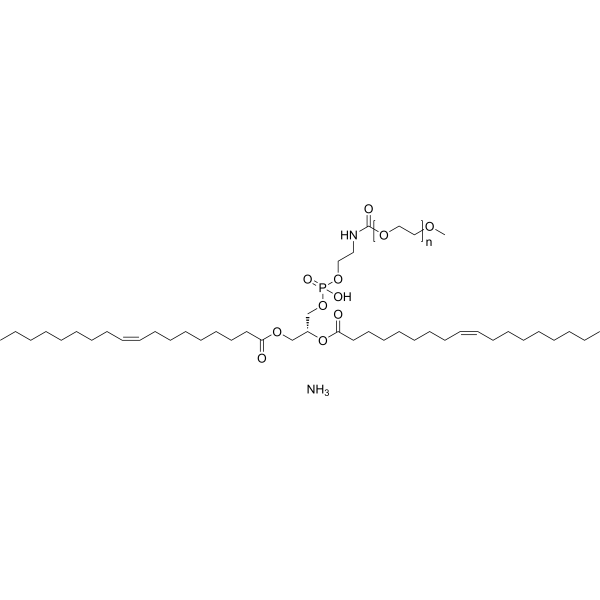
DPPE-PEG2000 (16:0 PEG2000 PE) is a PEG-modified lipids. 16:0 PEG2000 PE can reduce the nonspecific adsorption of protein and prolong circulation time in vivo.
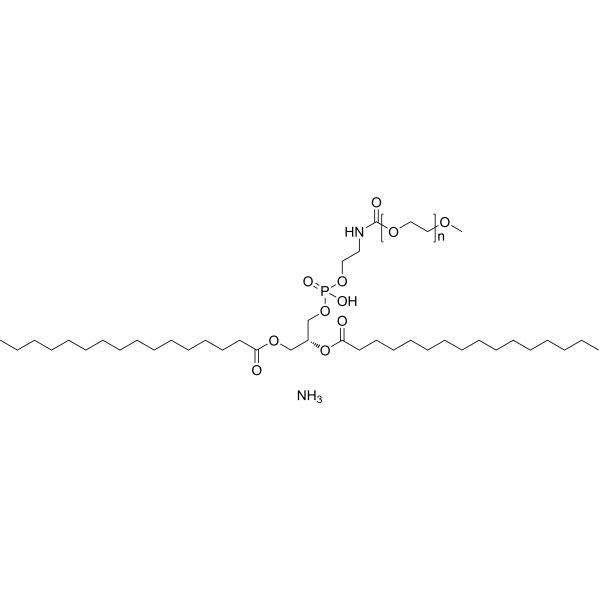
ALC-0159 is a PEG/lipid conjugate (i.e. PEGylated lipid). Formulations containing ALC-0159 have been used in the development of lipid nanoparticles (LNPs) for the delivery of mRNA-based vaccines.
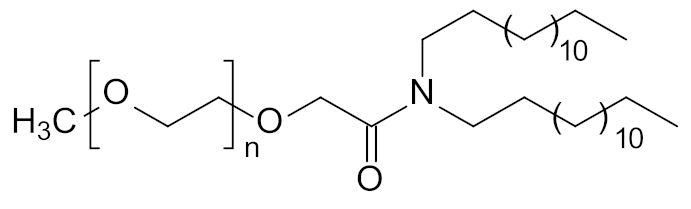
DMG-PEG 2000 is used for the preparation of liposome for siRNA delivery with improved transfection efficiency in vitro. DMG-PEG 2000 is also used for the lipid nanoparticle for an oral plasmid DNA delivery approach in vivo through a facile surface modification to improve the mucus permeability and delivery efficiency of the nanoparticles1.