YSK12-MEND particle size remained stable in Opti-MEM I, whereas RNAiMAX aggregated substantially under the same medium conditions.
· pp. 5–6 (PDF pp. 5–6), Fig. 5.sales@dcchemicals.com
YSK12-C4 (YSK12-MEND)
Formulation & Performance
Literature-reported formulation composition
| Component | Reported molar ratio | Role |
|---|---|---|
| YSK12-C4 | 85 | Ionizable lipid |
| Cholesterol | 15 | Sterol |
| PEG-DMG | 1 | PEG lipid |
| Reported ratio sum | Not reported | Original ratio retained |
Formulation calculator unavailable. The supplied article does not report the complete molar composition, so a formulation weight calculation is not available. Obtain and verify the complete composition and component molecular weights before planning component quantities.
Literature-reported performance for the cited formulation
Literature-reportedMaximum 96%Jurkat cells, 1–30 nM siRNA · RNAiMAX maximum 37%p. 2 (PDF p. 2), Fig. 1a
Literature-reportedMaximum 96%THP-1 cells, 1–30 nM siRNA · RNAiMAX maximum 56%p. 2 (PDF p. 2), Fig. 1b
Literature-reportedMaximum 91%KG-1 cells, 1–30 nM siRNA · RNAiMAX maximum 43%p. 2 (PDF p. 2), Fig. 1c
Literature-reportedMaximum 75%NK92 cells, 1–30 nM siRNA · RNAiMAX maximum 19%p. 2 (PDF p. 2), Fig. 1d
Literature-reportedNo statistically significant cytotoxicity in Jurkat and THP-1 over the tested range; significant effects at higher doses in KG-1 and NK92WST-1, 1–100 nM siRNA · Untreated cellsp. 3 (PDF p. 3), Fig. 2
Additional reported findings
Literature Data DisclaimerAll formulation parameters and performance values shown in this section are derived from the cited publication and are provided for reference only. These results were obtained using the specific materials, formulation process, cargo, dose, analytical method, model and administration route described in that study. Unless otherwise stated, the data were not generated or independently verified by DC Chemicals. DC Chemicals supplies the lipid compound only and does not guarantee that customers will reproduce the reported LNP properties or biological performance.
The administration route shown above was used in the cited study and is not a clinical-use instruction or recommendation by DC Chemicals.
The administration route shown above was used in the cited study and is not a clinical-use instruction or recommendation by DC Chemicals.
Cited literature for this formulation and performance datasetNakamura T, Kuroi M, Fujiwara Y, Warashina S, Sato Y, Harashima H. Small-sized, stable lipid nanoparticle for the efficient delivery of siRNA to human immune cell lines. Scientific Reports. 2016;6:37849. DOI: 10.1038/srep37849
All formulation and performance values are specific to the cited YSK12-MEND preparation, cargo, cell lines and comparator conditions.
All formulation and performance values are specific to the cited YSK12-MEND preparation, cargo, cell lines and comparator conditions.
Published study figures
Original publication figures illustrating the cited formulation and biological results. Select an image to view it at full size.
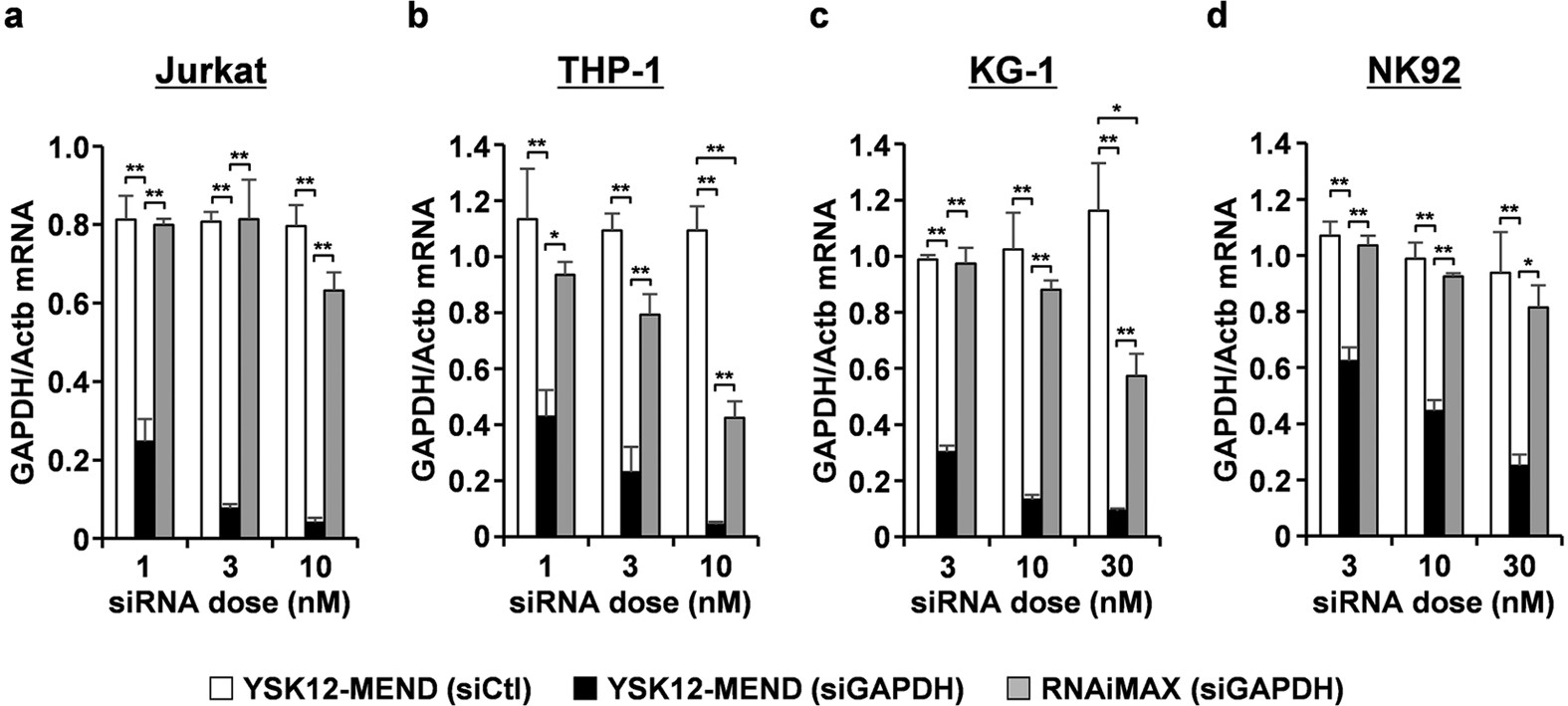
Figure 1a-d — GAPDH knockdown across four human immune cell lines
GAPDH knockdown across four human immune cell lines. Jurkat, THP-1, KG-1 and NK92 cells; 1–30 nM siRNA; 24 h; n=3–4.
Nakamura T, Kuroi M, Fujiwara Y, et al. (2016). Small-sized, stable lipid nanoparticle for the efficient delivery of siRNA to human immune cell lines. Original article / figure · CC BY 4.0. Original figure reproduced without changes.
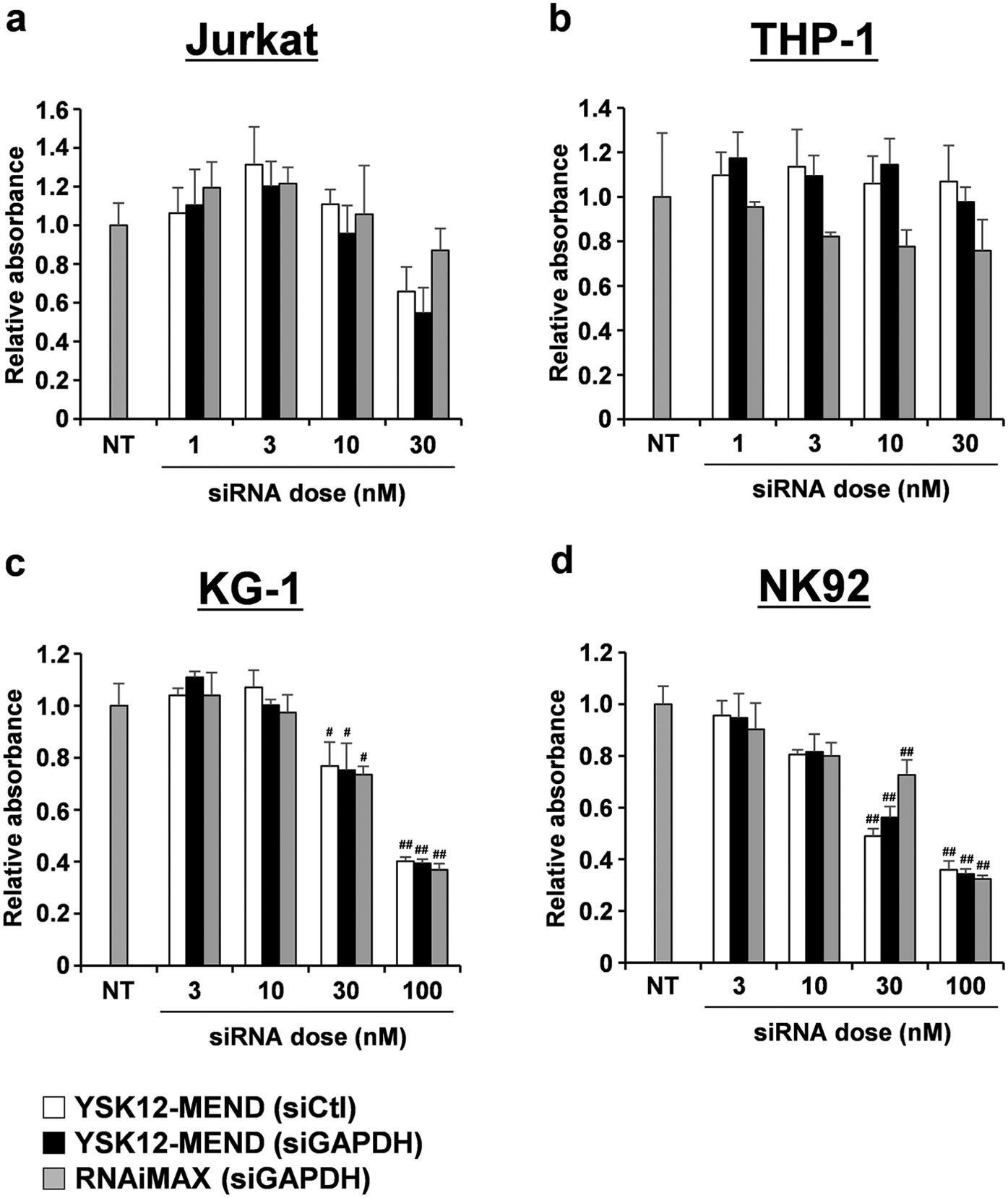
Figure 2a-d — Cell viability measured alongside the YSK12-MEND transfection study
Cell viability measured alongside the YSK12-MEND transfection study. Jurkat, THP-1, KG-1 and NK92 cells; 1–100 nM siRNA; 24 h; WST-1 assay; n=3.
Nakamura T, Kuroi M, Fujiwara Y, et al. (2016). Small-sized, stable lipid nanoparticle for the efficient delivery of siRNA to human immune cell lines. Original article / figure · CC BY 4.0. Original figure reproduced without changes.